

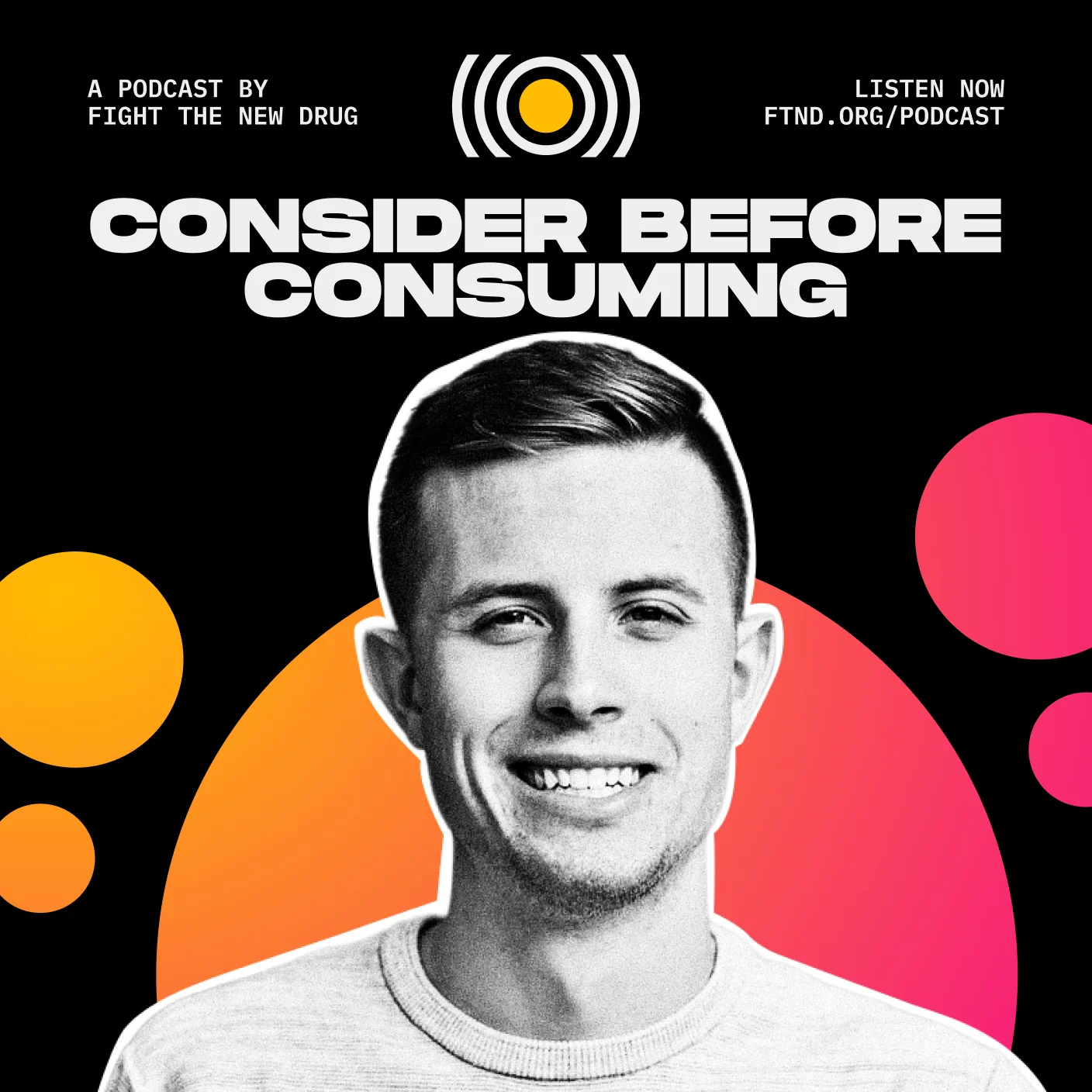
Episode 168
What Human Trafficking Actually Looks Like
Available wherever you get your podcasts
This episode contains discussions of human trafficking and exploitation.
Preston Goff is the Vice President of Global Communications at The Exodus Road, a global nonprofit organization working to prevent human trafficking, support survivors, and bring traffickers to justice.
Preston has spent years working alongside investigators, survivor advocates, and law enforcement around the world. In this conversation, we discuss the connection between pornography consumption and demand for commercial sexual exploitation, how social media is changing the landscape of trafficking, and why prevention is just as important as intervention.
What is human trafficking, and does it always involve kidnapping? Is there a connection between pornography and sex trafficking? How are traffickers using social media to recruit victims? Can platforms like OnlyFans contribute to exploitation? Preston helps unpack these questions while exploring why retrafficking happens, how to talk with young people about exploitation without creating shame, and what each of us can do to become part of the solution.
This episode is sponsored by Relay, a secure peer-support app that connects you with a small group of people who understand what you’re going through and help you stay accountable on your journey to quit porn. CBC listeners can try Relay free for 7 days by signing up at http://ftnd.org/joinrelay.
FROM THIS EPISODE
- The Exodus Road
- Stop The Demand
- Podcast: Consider Before Consuming Ep. 137: Louie Greek
- Conversation Blueprint: Let’s Talk About Porn
EPISODE TRANSCRIPT
Fight The New Drug (00:00)
Well, Preston, if you’re all set, I want to welcome you to the Consider Before Consuming podcast. Thank you so much for joining me today.
Preston Goff (00:08)
Yeah, I’m thrilled to be a part of it. Thanks for having me.
Fight The New Drug (00:11)
To start, can you introduce yourself and share a bit about the work that you do with the Exodus Road?
Preston Goff (00:16)
I’d love to. My name is Preston. I’m the VP of Global Communications at The Exodus Road, which is a global anti-trafficking organization. We really work in prevention education, in intervention itself, and actually helping people leave trafficking, and then also in aftercare work around the world. And I’ve been here for about six years.
Fight The New Drug (00:39)
Awesome.
We’re so grateful for your work. It’s so important and so needed. And in this space that we’re working in, it really is an all-hands-on-deck approach to addressing these issues. So thank you.
What first drew you into working in anti-human trafficking? And what has your journey looked like since then?
Preston Goff (00:59)
Yeah, I think the journey for me really is as a creative. So I joined with a camera in hand and this desire to tell stories that helped change the world, and found the issue of human trafficking along the way. And it was like, I have to be a part of whatever response is taking place globally to help combat this thing. Of course, I knew about this much about human trafficking when I joined the work, and have since been sobered, been inspired, been challenged, and changed by it. And I think it’s a true honor for me every day to work to really inspire and educate and motivate others to find their place in this fight as well.
Fight The New Drug (01:46)
Yeah, absolutely. A similar…Fight the New Drug was kind of founded out of a similar origin story. One of our co-founders actually had a creative agency and was a filmmaker at the time. And after seeing all of the research on these issues and personal stories, really also wanted to harness that power of storytelling to be able to shine a light on these issues. So it’s so needed. This work is so needed. And it’s interesting how so many of us in this work never planned to be on the paths that we’re on now, and find ourselves in this work. And once you know about these things, you can’t really unknow. And so, that momentum kind of builds and grows to continue to want to speak out against these issues.
For someone who’s only heard the term human trafficking in headlines, how would you explain what it actually looks like in real life?
Preston Goff (02:32)
Yeah, it’s a great question.
I think often, like as you mentioned, when you hear about human trafficking, in recent years, I know a lot of people have come into greater awareness that human trafficking even exists. And yet, often, the portrait that we have of it looks a lot more, perhaps sensationalized, than what it actually looks like on an everyday basis. So one of the things that I tell people is human trafficking is often far more mundane than you would ever imagine. And it exists in every country, in every state here in the United States. And it exists in the margins of everyday life, in the spaces that we inhabit, whether that’s in real life or even online as well, which I know we can talk about.
So it looks like an individual being extorted for labor or for commercial sexual exploitation, which is a form of labor trafficking. It takes many different forms.
It affects children and adults, men and women, people of all demographics. In some ways, it’s really so universal that it’s hard to characterize it with just kind of one definition.
Fight The New Drug (03:55)
Yeah, and it’s so interesting because, you mentioned, we tend to think of it really as what we see in movies, these very extreme, heightened versions of trafficking, which does happen, but it’s happening so much more mundanely, as you mentioned, across the globe, and it is something that many people don’t even realize what some instances of trafficking are.
Preston Goff (04:19)
Yeah, I think the temptation is to think, that’s like child kidnapping. And while kidnapping does happen globally, kidnapping as the condition that caused someone to come into a trafficking situation is very, very rare. What actually exists is power dynamics being put into play or psychological manipulation as a tool for coercion and building trust, and then extorting and manipulating that trust for gain. So yeah, it’s really tricky.
Fight The New Drug (04:56)
Yeah, for anyone who some of those terms may be newer for, can you give an example of some kind of common situations that are trafficking that fit that bill?
Preston Goff (05:00)
Mm-hmm.
Yeah, so a great example here in the US would be what we call like a Romeo pimp kind of dilemma, which would be, you you have a situation where you have a young person and this can be male or female or same gender, where you have someone who is in a romantic relationship, usually often with an older individual and that person is providing some form of stability in their life. But that stability has expectations on the other end, and that can often look like you know a young girl who is sold out for sex to help make rent, or you know a variety of things, and it becomes this habitual exploitative commercial sex act that is by nature trafficking.
Fight The New Drug (05:54)
Right. Your organization has spoken about the connection between pornography and the demand for commercial sexual exploitation. Can you help unpack that relationship?
Preston Goff (06:05)
Yeah, absolutely. What we’ve said and what we’ve really seen is that the consumption of and the participation in the consumption of the sexualized content like pornography, it really has a direct linkage to demand for human trafficking around the world as well. And I think it’s both…
It takes many different forms, and that connection can look like different things. In one sense, it can directly, literally lead someone on a pathway where they crave these in-person sort of experiences that the commercial sex industry, which often hides trafficking exploitation within it, can help to fulfill. But also, in some situations, those portrayed in pornography themselves may be victims of human trafficking exploitation for the creation of that content. So there’s definitely a direct linkage.
Fight The New Drug (07:06)
Yeah, absolutely. From your perspective, what are people not seeing when they separate pornography from trafficking or the broader commercial sex industry?
Preston Goff (07:17)
Yeah, absolutely. think one of the things that people don’t perhaps understand is that from the outside, what can look like willful participation and even enjoyment can sometimes actually be a facade, and it can be a survival instinct in a veneer that’s kind of overlaid.
So, for instance, I was actually just in a few weeks ago, and in a commercial sex district there, and one of the things that strikes me always is this dichotomy between what I know, which is that many of the women that are there are experiencing trafficking exploitation, not all, but many. And yet, from the outside, it looks like everyone’s just having this wonderful time. And so the same is really true of pornography. It can seem like willful and like it’s just innocent entertainment per se, but actually hides a darker reality underneath.
Fight The New Drug (08:17)
Yeah. And from your perspective, what are some of the things that happen to give individuals who watch pornography that idea?
Preston Goff (08:27)
Well, I mean, think there are certainly psychological manipulation tactics that can lead someone to just kind of play the game for the sake of survival. I don’t know if that’s what you’re asking, but yeah, I don’t know if you want to.
Fight The New Drug (08:44)
Sure. I guess, yeah. More like within the industry or when you were in Thailand, obviously, there’s, from the outside looking in, we perceive the situation to be one thing, but it’s actually another. And some of that is because of the way these things are presented and the efforts that the porn industry or commercial sex industry goes to to sell these things as something that’s okay. And I think that’s where people get hung up a lot of the time is because they hear all of this information, like the conversations we’re having now, but they say,
Fight The New Drug (09:16)
You know what, I watched it, and everybody was having a good time, like I’m sure this wasn’t an instance of that, and the truth is we can’t always be sure, and why is that where that disconnect comes in.
Preston Goff (09:31)
Yeah, well, one, I think the industry is really good at portraying what they want us to believe. And along that same notion, it is a very successful industry with high profit margins. And trafficking would be the same. So when we talk about human trafficking globally, it’s like a $240 billion annual industry. And $170 billion of that is commercial sexual exploitation.
So there’s high stakes involved for those that perhaps are, you know, running these schemes on the trafficking side. The same would be true in the pornography scene. There are businesses at the end of the day that are unfortunately operating on models that can be exploitative at times. And I think too, like, as humans, I think perhaps, like, our willingness to consider the darker reality is something that we don’t, we just don’t want to think about. And so when we are forced to consider it, we naturally back away from those things and say, well, maybe it happens, but surely this isn’t it.
Fight The New Drug (10:45)
Yeah, and that’s such a good point. I think when people think of trafficking or sex trafficking, it’s often this idea of like, that’s something that happens over there. It’s not something that’s happening, you know, in my neighborhood or in my state or my community. But this is something, as you mentioned, that’s happening in every corner of the globe.
What patterns have you observed globally when it comes to demand for trafficking and sex trafficking? And are there similarities across cultures and regions?
Preston Goff (11:16)
Yeah, it’s a good question. think when you think about, like sex tourism and commercial sex trafficking, I think there’s been an increased demand that we see around the world, but also another massive trend is this like big surge to online spaces as not only a tool for like recruitment and enticement and all of that, but also for actually like the transactions themselves.
And so, you know, I tell people globally, the vulnerability to human trafficking is at an all-time high for the average person, as well as the number of transactions and obviously the amount of money that’s being exchanged for those criminal acts. Yeah, I think, you know, even when we talk about it, it happens everywhere, it happens in the US, like the massive move to online exploitation of children, and how that is connected to even the global sale of child sexual abuse material, and how that contributes to sex trafficking overall is a massive part of the conversation too.
Fight The New Drug (12:27)
Yeah. You know, in this work that we do, we’re in this all day, every day, for years. We’re very familiar with these terms, but for someone listening who’s less familiar, can you explain what commercial sex tourism is and how content plays a role in shaping it?
Preston Goff (12:46)
Yeah, so commercial sex tourism is kind of exactly what it sounds like. There are regions around the world, Thailand being a hot spot for this globally, are really, they exist for the sake of…crafting these experiences for foreigners who want to come and live out their sexual fantasies. So in this particular region of Thailand I was in, in this city, there’s nearly a hundred thousand involved in the sex industry. And certainly, again, not all are trafficking victims, but many of them are. And for those that aren’t, there’s often still coercion and exploitation, kind of at play in the ownership model of those bars and establishments that are corresponding to it. So sex is a big thing. The digital side of it has been interesting on two fronts. One, I think we’ve seen this mass move towards the promotion of that lifestyle and recruitment of more tourists at a large scale.
I think, you know, I’m aware even of a few like pieces in media that have come out and are in production and will be coming out that highlight the role that these industries have in promotion of what they’re doing and portrayal of it as this innocent, like entertainment. Yeah.
Fight The New Drug (14:19)
And speaking of digital content, OnlyFans is something that is growing in popularity. It’s been in the media quite a bit recently. This growing conversation around OnlyFans and platforms like OnlyFans. What have you seen in terms of how these platforms can intersect with exploitation? There’s often an idea that everything that’s happening on these is empowering and consensual. And what have you seen with the link between that and
Preston Goff (14:50)
Yeah, so in a real sense, we’ve worked cases involving young women primarily who actually are forced into like webcam modeling, not directly on OnlyFans in the circumstances that we’ve worked on, but on OnlyFans-like platforms. So I mean, from the outside, it can seem like, yeah, like this is an individual running her own or his own business and running his own kind of presence. It’s like a Patreon, but behind it can actually be an entire network that is exploiting young women or young men, for that matter, at scale and operating that presence and withholding funds in the circumstances that I know.
I know of a young woman who was trafficked from her home country in Latin America to the Dominican Republic, actually. And it was initially supposed to be a job offer that was to work like in a restaurant. And it seemed like a great play to be able to create financial levity for her and her family, and when she arrived, she was actually forced to perform on these webcam live streams on a similar platform, and it was it was a harrowing experience for her, obviously, but from the outside looking in, you wouldn’t have known.
Fight The New Drug (16:12)
And that’s something that, I mean, we’ve heard story after story after story of individuals who find themselves in a similar situation. And again, for those who are watching this content, consuming this content, there’s no way to tell when you’re on one side of the screen what’s gone on behind the scenes and exactly what has happened. Even if there’s a video of someone at the beginning of the video or the end of the video, a video of them saying they consented to everything that happened, we know that those videos can also be coerced. So there’s truly no way to know how this thing that’s been cut, spliced, and edited came to be.
How are traffickers or perpetrators, those who are exploiting individuals, utilizing social media to recruit, groom, or control individuals?
Preston Goff (17:00)
Yeah, they are using it in all three of those ways. So first, here in the US, we’re talking a lot about the role that individuals, traffickers are playing in using social media to have access to broader networks of potential victims. You know, social media affords the ability to hide behind a profile and catfish or purport to be, you know, whoever you’d like to be. We’ve seen it really drive things like sextortion in the US, but then also like the capture and the sale, the facilitation of the distribution of child sexual abuse material globally.
So, definitely like gaining access to and even like using it as a medium for passing content is really a true thing. We also see it specifically as a bit of a feeder into more private communication platforms that are encrypted, whether that’s your Telegrams, your WhatsApp, where there are entire groups and channels dedicated to…perhaps more hardcore or more illicit materials, especially involving children on the global front, as well as a tool for facilitating in-person meetups or in-person experiences with adults or children. So yeah.
Fight The New Drug (18:24)
Yeah.
And you mentioned sextortion. For any of our listeners who aren’t familiar with what that is, can you share briefly?
Preston Goff (18:29)
Yeah, sextortion is a crime that takes place when an individual is enticed into sending a nude image, and then that image is really held over them. They’re extorted for either money, additional more images or videos, additional kind of sexual interactions. And we see it as a crime that’s unique in this space because whereas a lot of times in the past, trafficking is perhaps more of a one-to-one or one-to-seven ratio in terms of the perpetrator and the victims that they have in their orbit.
Criminal organizations are operating sextortion schemes at large scales around the world with this just intent to extract as much money as they can from often young victims. And it’s creating mental health crises. It’s creating self-harm crises, all of those things.
Fight The New Drug (19:33)
Yeah, and we’re seeing especially young people, young boys being targeted by these and even being coerced into, as you mentioned, sending sexually explicit images or is being used to create images of them that aren’t even real, but are then being used to strike fear and threaten and extort them for money or other things. And so, this is certainly something that’s affecting young people and is very, very important that parents are aware of, but also all of us functioning in this society to be aware of as well. Thank you.
Preston Goff (20:06)
Yeah.
Fight The New Drug (20:07)
How does early exposure to sexualized content influence vulnerability or normalization of exploitation?
Preston Goff (20:15)
Yeah, we talk with young people about this a lot, as well as parents. I think, just to name it out loud, the amount of sexualized content that is like flooding the screens that we all carry every day leads to just an immense number of even unintentional exposures. And all of that, it drives vulnerability. And the reason why it drives vulnerability is because, as you become desensitized to that kind of content, when perhaps a stranger that you’ve never met online that purports to be a peer your age in the neighboring town starts sending you sexualized content, your ability to see and spot that as a red flag and respond appropriately is diminished because it’s normalized. Then, on top of that, when you see it being shared so often, it normalizes this culture of the creation and the dissemination of it. And so you are more willing to participate in that yourself and see that as more of a normalized, less of a dangerous activity when, in fact, it actually is really dangerous and we’ve seen that play out time and again.
Fight The New Drug (21:32)
Yeah, and as you mentioned, especially for young people, something they often don’t realize, and parents don’t realize either, is that when young people that sexually explicit material, it is legally self-generated child sexual abuse material or child pornography. And when they distribute it to each other, so even something that seems…
Preston Goff (21:41)
Mm-hmm. It’s a secondary offense.
Fight The New Drug (21:52)
Yeah, seems simple and normalized, but sexting is the distribution of child pornography. And this is something that’s happening. I mean, schools everywhere are dealing with these issues. And again, with not just real images, but also content made with nudifying apps, or these issues have really escalated.
Preston Goff (22:11)
And even if your child isn’t participating in that, like even if you as a young person are like, I don’t do any of that, if it gets sent to you and you don’t do anything with it, you’re still in possession. And yeah, it’s one of those things we talk about, we have like an entire prevention education arm of what we do with young people called influenced. And when we talked to them about it, we were like, we just, need you to understand it will happen, statistically speaking. So what do you do if and when it does and how do we, how do we walk you through that? Because that can be alarming, it can be scary, but you can’t sit idly with that either.
Fight The New Drug (22:49)
Yeah, and if we have parents listening who say, “What do we tell young people to do if and when it happens?” What would your advice be?
Preston Goff (22:57)
Yeah, well, I would say parent, if you haven’t, first of all, have a proactive conversation. We’ve got, know, Fight the New Drug is great at this. They’ve got tons of great resources to help you on that front. The Exodus Road has resources. We’d love to help you on that front. Because you want your child to see you as a trusted source when that happens.
And then if it’s an exploitative situation, that’s a little bit of a different process. You need to help document that and report that. If it’s simply that your child is part of a chain of messages that came across the school, it needs to be deleted from the device. Then perhaps if there’s school authorities or anyone that you can involve there to help close the loop, that’s a necessary next step as well.
Fight The New Drug (23:46)
Yeah, and to take this one step further, for parents or educators or mentors, anyone who’s in the lives of young people, how can they have conversations about this without creating fear or shame? That’s something we often hear is that’s a concern for people who don’t know how to address this the right way, and what advice would you have for them?
Preston Goff (24:08)
Yeah, well, I think one of the things just to say out loud is like, how you approach it emotionally matters a lot, and where you place the blame in the situation also matters a lot. So, for instance, like we can all be disturbed and upset with this world that our kids are having to navigate. And we need to recognize that even if they perhaps make a mistake or they, you know, create and send something, they are, they are victims of a system that was not built to protect them. And having that compassion for that child who is a child in the moment to say, like, let’s navigate this together, is everything. Practicing your not-shocked face is a good thing to do. And that’s why even like sometimes, I meet parents who are scared to say the word porn around their kids. I’m like, you need to like, you got to remove that barrier. Like you’ve got to, you need to normalize these kinds of conversations so that your, your child, you know, doesn’t feel concern or preemptive shame or any of these things, and even bringing it to you in the first place.
Fight The New Drug (25:22)
Yeah, and I’m so glad you brought that up. We often hear from people who are afraid that talking about pornography will make their kids curious about it, will make them look it up, or will lead them to it. And research actually shows the opposite. It shows that young people often know a lot more than we give them credit for knowing, and they have questions. And this is the generation that will go to a device, whether it’s AI or Google, to ask their questions. And with regard to this topic, parents, you want to be the ones asking that your kids are asking these questions to, rather than the internet. And so I love that you said how you approach this emotionally matters a lot. I think that’s really true.
I think so often parents sometimes feel like they have failed if their child is exposed or stumbles upon something, and so that frustration with themselves can sometimes come out when you know they discover their child has seen something, and it’s important to remember that you know, for many generations of parents, they didn’t grow up with devices in their hands or the internet available in the same way that this generation of young people is. And as you mentioned, the system isn’t meant to protect them. In fact, it’s meant to make them customers for life, essentially. They’re being turned on. And they’re very, very young. And so we, as the adults in their lives, need to do everything we can to help support them to navigate this world.
Preston Goff (26:37)
Yeah, absolutely. I think one thing I tell parents, too, is like, you know, often if they’re listening to this podcast, I’m sure it’s because maybe they’ve even had their own journey out of like consumption of sexualized content. And I would just encourage you to think back to your little self, or like that first moment when you, perhaps, came into contact with something, and how like that felt, and what you…who do you wish would have stepped in for you in that moment? And how do you wish they would have stepped in? See yourself in your child, see yourself in the kid in your care, and really let that lead your response.
Fight The New Drug (27:29)
Yeah, that’s so important. And for any listeners who maybe are actively in a struggle with pornography, first, please know there are resources out there that can help you overcome that struggle. But second, we hear from parents who are actively fighting this who think they can’t talk to their child about this because it would be hypocritical or, and who better, actually to be able to speak to a child about the impacts of pornography than someone who’s experienced them themselves? And of course, there’s age-appropriate ways to do that without burdening children. But I would just encourage you to know that as a parent, it is important that you’re having these conversations and that there are many resources out there to help anyone on any kind of side of this issue.
Fight The New Drug (28:15)
Beyond those one-on-one conversations, how we talk about this issue more broadly really matters too. And so we started this conversation speaking a bit more about those who are exploited within sexualized content, the commercial sex industry. What does it look like to share survivor stories in a way that honors their experiences and is actually helpful?
Preston Goff (28:37)
Yeah, it’s something that I’m personally very passionate about and has been a massive learning journey for me as I stepped into this work. There’s…obviously, there’s a lot of trauma involved in the lives of those with whom we walk as they step out of human trafficking situations. And I think trauma-informed storytelling really looks like letting the survivor lead and creating and putting boundaries in place to give them all of the opportunity for true consent in storytelling, for true consent in their likeness being shown or not shown.
Like, you know, here at the Exodus Road, one of the things that we say is we will never, one, we will never publish an image of a child that is unblurred from a case that we work. We will never use the real name of a survivor of human trafficking that we work with.
And we will always even give the survivor agency and the ability to pull stories from the internet or offline at any point in time to let them know, like, you know, we may be the ones recording it. We may be the ones talking about this work, but it’s your story. And you get to decide if it’s out there or not at any point in time. So I think that’s part of it. think.
The other big value I have is not overly sensationalizing what is already a really dark and complex thing. Unfortunately, in this work, the media attention that has been given to trafficking is often overtly sensationalized. And if we say it looks much more mundane than what you might imagine, we need to give examples of what that looks like. And we need to let just the truth be the story itself. And I think sometimes, honestly, like it’s made storytelling so much harder because there’s moments where I just want to be like, I just want to be able to show their face and tell the story and give the details and prove to the donors and all of those things, but ultimately that’s not what matters.
Fight The New Drug (30:51)
And I think that’s so important in this work, where we often say we’re educating on the harms of pornography using science facts and personal accounts. So much of what we do, we back up with research, but the personal accounts are what the research says. If human trafficking were an issue that we could truly have enough tangible research to understand, we probably would have solved the problem. It’s an underground industry. And so those true stories are the stories
Fight The New Drug (31:21)
Every story from every survivor is powerful and important, and takes so much courage to be willing to share. And we get to speak with many survivors on this podcast, who we’re so grateful for their courage and knowing that they want to share their stories often, because if they can prevent what happened to them from happening to someone else or, you know, that’s what needs to be heard and the difficult thing in the world we live in is, as you mentioned, the sensationalized stories are the ones that get media attention and are the ones that that people hear.
And so, it’s so important to make sure people know that, as you mentioned, this looks more mundane than many people want to believe. And those are also the situations many people may find themselves in and not even know they’re being trafficked because they haven’t heard stories of those situations. And so truly understanding the breadth of these issues, and the courage it takes for survivors to come forward is so important.
Preston Goff (32:23)
Yeah.
Fight The New Drug (32:24)
What are some things people often misunderstand about the lived experiences of survivors, beyond just that it can be more mundane than we think?
Preston Goff (32:33)
Yeah, well, I think in sex trafficking specifically, there is a real issue with the nature of victim-blaming. So this idea that, well, they made choices that led them to that path. And I think, at the end of the day, what we have to understand is the vulnerabilities and the conditions at play within someone’s life, even within the commercial sex industry, where there is a bit of a sliding scale of perhaps someone did know that they were stepping into sex work, and it became trafficking. That still is trafficking, and that still is a crime that they’re facing, and that’s not okay. And we need to be able to hold that line, that value.
Fight The New Drug (33:24)
Yeah. Can I just expound on that a little bit to give an example to what you mean? So someone may have gone to a pornography shoot, for instance, and said, I am going to film pornography today. That may have happened. And if the person is, first of all, under the age of 18, or if this is a commercial sex act that is induced by force, or coercion, it is legally defined as sex trafficking. And so that is something that even if someone thinks they know what they’re getting into. If the moment they get there or at any point during that process, it is induced by force, fraud, or coercion, they’re coerced to sign a contract, they’re threatened, they’re drugged. All of these things—
Preston Goff (34:04)
Documents are withheld.
Fight The New Drug (34:23)
Exactly. All of these things can constitute sex trafficking legally. And we’ve spoken with survivors who’ve been in those various situations who said, I didn’t even know I was being trafficked until I was able to get out of this and really understand. And so it’s something that it’s really important that in today’s culture, where we all get to have an opinion about everything online, we take a step back to listen to these stories without applying judgment because we can’t truly know the situations individuals find themselves in.
Preston Goff (34:37)
Absolutely, absolutely.
Fight The New Drug (34:40)
I’m so sorry, though, I interrupted you. You were sharing additional, if you have additional things you want to share about those misunderstood lived experiences of survivors, ways they can be trafficked, or…
Preston Goff (34:42)
No, it’s OK.
Well, I’ll just add to it that I think another significant misunderstanding is what the pathway of recovery often looks like for a survivor.
Because of the way that we’ve seen this issue portrayed, it’s always this power dynamic where someone’s perhaps rescued. And I don’t even like using that term rescued, but that’s how it’s portrayed in the media. And then it’s just overwhelming excitement and joy and relief. And if you think about the reality of oftentimes, while it may have been trafficking, it may have been exploitative, it may have also been an act being committed by someone that was a family member, or like there’s a complex relationship involved, and so there’s mixed feelings around what is that person going to face. That may have been the only source of stability in that person’s life, though it was exploitative, and I think what that means is oftentimes like, without trauma-informed aftercare that is really crucially uniquely applied for that individual.
There is a danger for recidivism. It’s an unfair it’s also an unfair expectation that someone walks out of that and is just emotionally overwhelmed and overjoyed and just steps fully into that kind of persona, that, as a storyteller, is a really hard thing because that’s what people want to hear. But that’s just not the reality.
Fight The New Drug (36:23)
Yeah, and for anyone who’s unfamiliar with or hasn’t heard many survivor stories of that reality, can you share a bit about what the reality of that does look like sometimes for survivors after they are, quote-unquote, rescued or able to transition out of that set of circumstances?
Preston Goff (36:41)
Yeah, well, so for us at The Exodus Road, in our cases, one of the things we do is we ensure that there’s a social worker present with the law enforcement that is taking the action on behalf of this survivor. That social worker is there literally when police, in some instances, raid an establishment. And they help them just have this emotional outlet and this advocate in the space from that moment moving forward, and help to answer the necessary questions of, “Where am I going to get food now? Do I need medical care? Is there a bed for me to sleep in? Are there clothes?” All of those things. There’s a definite triage stage in that urgent moment.
And then ongoing support, that looks like, if one of the vulnerabilities, which is this is globally the number one, if one of the vulnerabilities is the lack of my own personal ability to earn money, to earn a livable wage, then how do we address that?
Because if you can solve that, that’s one of the highest indications that you’re going to reduce recidivism, or the return back, the danger of being re-exploited.
Fight The New Drug (37:57)
Yeah, and can we talk about that a little bit? I don’t think it’s talked about enough, this idea that some survivors end up being exploited again after getting out. Can you talk a little bit about that?
Preston Goff (38:11)
Well, if you think about it without addressing, again, some of the vulnerabilities that perhaps led someone into that situation. So we think about things like an unstable home life, poverty, sometimes like mental health issues. Without addressing those, you have the exact same conditions that could allow someone to miss the red flags or just be in such a vulnerable place that they take the seemingly too good to be true job offer again. And it turns out to be exploitation all over again.
And it does, it happens. It happens a lot. think a lot of the survivor stories that I hear, especially in the US, the entrance into survivorhood isn’t a linear path. Sometimes it kind of circles back.
A part of the story that we like to tell often is the sliding spectrum of perhaps the survivor or the victim-to-perpetrator pipeline. And what I mean by that is we’ve worked cases even in the last like six months where a perpetrator, someone who is pimping out another individual, is a minor themselves. But their entrance into even the criminal activity that they’re doing was first as a victim.
And so, how do you apply justice, and also like holistic healing for everyone involved in that situation is really complex. And from the outside, just want to hear, generally, the audiences just want to hear that the bad guy got their justice and the survivor is now free, and sometimes that’s just not how it works. So yeah.
Fight The New Drug (40:14)
Right. Yeah, and I think that’s really important to note because, especially as we mentioned earlier, where this isn’t only happening in the ways it looks like in the movies and kidnapping, et cetera, there are many instances where individuals who are exploited have known their traffickers for a very long time. It could be a family member. It could be someone who, you know, maybe started exploiting them at a young age to the point where this is normal to them. They’re not even aware of an alternate version of reality. And so, I think it’s really, really important to be sure we think about all of the ways that this can look. And again, avoid shaming those who find themselves in these situations. From the outside looking in, you know, so many people are quick to say, “Well, if someone was abusing you, why didn’t you leave?” Or if it was a romantic partner or something exploiting someone, but it truly isn’t that simple or that easy for anyone.
Preston Goff (41:13)
Yeah, I think in general, that’s a great life lesson: having more compassion for things that we don’t understand and understanding that situations are probably more complex than they seem from the outside.
Fight The New Drug (41:26)
Yeah, and throughout this conversation and in the work that you do is an effort to shift the narrative from what these stories can look like to a better understanding of them. Are there examples where you’ve seen this shift lead to better outcomes for survivors or better prevention efforts?
Preston Goff (41:46)
Yeah, certainly better prevention efforts. I mean, I think, you know, when you think about even, as we talked about earlier, like the sextortion and kind of the online crimes facing kids here in the US, when you start to talk about it and you start to normalize that this is an experience that lots of people are having and it’s not embarrassing to have fallen for that, you create this healthy pathway for more disclosure of those events and for people to start to get the help that they need and the support that they need. Then you see, well, more data begets more resourcing for it. So you start to see legislation efforts and more resourcing to actually address those root causes. You see more law enforcement work in going after the criminal groups behind it, all of that. So yeah, when we practice what it looks like to have healthy dialogue over these things, it rises the entire tide of support.
Fight The New Drug (42:50)
Yeah, absolutely, breaking down the stigma around these issues that are typically things that happen secretly, and actually, exploitation thrives in privacy and secrecy. Breaking down that stigma really is the way to move forward for all of us.
What things have you learned from survivors or communities that have changed the way that you see this issue?
Preston Goff (43:00)
Yeah. There’s so many. I mean, I think for me it is that compassion element.
You know, I’m a dad myself, I myself, like, you know, I teach with young kids and students often about the dangers of pornography consumption and sexualized material consumption and its pathway to some of the more nefarious dangers that I see every day in my work. And I think, what my work with survivors has helped me to do is one, be wide-eyed about the reality of the vulnerability that any one of us face, compassionate for their circumstances, and able to realize that compassion plays a huge part in understanding the context that even led them into the situations that brought that exploitation in the first place.
And then to apply that to those that I see around me who are perhaps on pathways of vulnerability that look the same is a crucial thing. So I can say, I know young persons here in high school in America that it feels like you’re invincible. But let me tell you about these stories that I know and help you to understand that we can have healthy communication about this, not in a shameful way, but in an empowering and uplifting way.
Fight The New Drug (44:47)
Yeah, absolutely. And for anyone who wants to help with anti-trafficking efforts but is a little bit unfamiliar with this space, what could it look like for them to actually become part of the solution?
Preston Goff (44:59)
Yeah. The first and most crucial step is to educate yourself. And I would challenge you to step out of like, commercial media and into direct relationship with like, a trusted nonprofit or leader in your local community, because it’s really helpful to know what the issue looks like in a hyperlocal setting. That’s where you can have the most impact.
And then escalating from there, you know, what’s being done at the state level, what’s being done nationally, internationally.
And then also, like figure out what pricks your heart because that’s what’s gonna keep you engaged. So find that space and then lean in further for you, that is, you want to support efforts that lead to people being removed, or maybe it’s you really want to engage with the aftercare side of it, and what does it look like, or maybe it’s prevention education. Like, the issue is vast, and your ability to participate is only limited by your creativity.
Fight The New Drug (46:06)
Yeah, that’s beautifully put. This issue can seem really, really daunting. It’s a global issue. Many people are being exploited. What hope do you have to share as you continue to do this work?
Preston Goff (46:22)
Yeah, well, I mean, I think I have seen the benefit of increased public discourse about this issue.
Like we said earlier, when we talk about it, and we normalize talking about it, and we normalize talking about the truth of it, more resourcing becomes available. More action is taken. More survivors are supported. The entire culture becomes less stigmatized with that topic and willing to engage and create a healthy space for it. So that gives me a lot of hope and encouragement.
It’s a unique time to be doing this. I think, too, I see things like, you know, the double-sided sword of technology, technology as a facilitator of the abuse, but also technology as like, a massive tool for policing the crime and resourcing vulnerable communities to prevent exploitation in the first place, and all of those things. That gives me a lot of hope, too.
Fight The New Drug (47:23)
As a storyteller, in the work that you’ve done, are there any stories that really particularly stick with you that you’d like to share?
Preston Goff (47:34)
I think as a storyteller, there are always moments that you’ll carry with you. And for me, during this work, there have definitely been like, kind of milestone moments with stories or with survivors specifically. One is a survivor named Valentina who lives in Latin America. She’s actually the one that I mentioned earlier who was trafficked from her home country to the Dominican Republic. And her story sticks with me not just because of where she’s at now, which is now she’s a mother with her own young son. She’s an advocate. She’s back home. She’s fiercely independent. She’s gone through education, opening her own business, all alongside our team, which has just been so fun to watch. But also because her story is this perfect glimpse of what survivors actually have.
So when she returned, she carried with her this desire to like, completely dismantle the system of exploitation that hadn’t snared her. And because of her testimony, 29 other women were freed from this trafficking operation, and all these arrests took place. It was a joint operation with Interpol. It was a big deal. And you just, I just love that story arc that like, here is Valentina who, with a little bit of help, is able to completely turn an entire trafficking operation on its head. And that will always stick with me.
Fight The New Drug (49:08)
That’s amazing. Thank you for sharing that. And then, I also wanted to ask you, with the way that trafficking has been in the news recently, with regard to Epstein files or modeling agencies, I’m just wondering if you can share a little bit about your thoughts or your response from your organization regarding this media.
Preston Goff (49:26)
Yeah, absolutely. I think it is one of those things that is driving a lot of attention around the issue. And I think it’s because, you know, from the outside looking in for the general public, rightly so, it’s one of those moments where it’s like, I can’t believe we exist in a world where this is taking place. And I think the temptation and the that if we, if we aren’t careful, is to see it really as this like politicized moment. And I think one of the things that I want to clearly say is like, this is, it’s really not a political moment. It is a crime that kind of spans, spans the aisle, is something that all of us should be concerned about, and should want to see like, you know, justice involved in that entire process.
I think the other thing that it’s done is it’s really opened eyes to like, the different mechanisms that can be used and employed to ensnare people. For instance, there’s a lot of recent dialogue about the role of modeling agencies in the Epstein files and the reference to modeling agencies there. I think those moments are helpful for the general public. Those should be moments where you lean in, and you ask, “Is this a known phenomenon? Can nonprofits or organizations, trusted entities that work and have worked alongside human trafficking for years speak to this?”
And so for us, even like we’ve said and we’ve seen in so many cases, the role of modeling agencies. I don’t know specifically any details about modeling agencies in the Epstein case, but like overall, as a mechanism, we’ve seen modeling as like one of the kinds of core job offers given to young women, and used as this mechanism to ensnare them into what becomes trafficking. And that really is well documented. So I know it’s a really difficult situation to make sense of. The other thing that I would say is that general feeling of, can’t believe this happens.
This story is a microcosm of what human sex trafficking looks like globally. And I want to encourage people to understand like…yeah, I can’t believe we live in a world that looks like that, too. I also can’t believe in a world that we live in a world where, like I mentioned, I was in Thailand, and there are entire sex tourism districts that are supported and sustained by American, British, and Australian men, primarily who look like my cousin and speak my language. And what do do about that? Because that deserves our outrage, too.
Fight The New Drug (52:14)
Yeah, absolutely. That’s very well said. This is a moment where we have more access to information than ever before about what’s happening globally and what’s happening in our own backyard. And it’s something that, I think, again, can feel so daunting and so alarming and so sensationalized, even that easy for us to want to just say, not my monkeys, not my circus and look away. But this is something that is affecting so many people, and it requires all of us to demand better and to change our culture and to change the narrative around these things so that individuals aren’t being exploited. And that is a fight that will take time, but we will continue to push forward in this work alongside you.
Thank you so much for joining me today. It was such a gift to be able to have this conversation with you. For any of our listeners interested in learning more about your work and your resources, do you want to direct them?
Preston Goff (53:12)
Yeah, of course. So we’re The Exodus Road. So theexodusroad.com and @TheExodusRoad on all your major social platforms.
Fight The New Drug (53:23)
Amazing. Thank you so much.
Fight the New Drug collaborates with a variety of qualified organizations and individuals with varying personal beliefs, affiliations, and political persuasions. As FTND is a non-religious and non-legislative organization, the personal beliefs, affiliations, and persuasions of any of our team members or of those we collaborate with do not reflect or impact the mission of Fight the New Drug.
MORE RESOURCES FROM FTND





A database of the ever-growing body of research on the harmful effects of porn.