

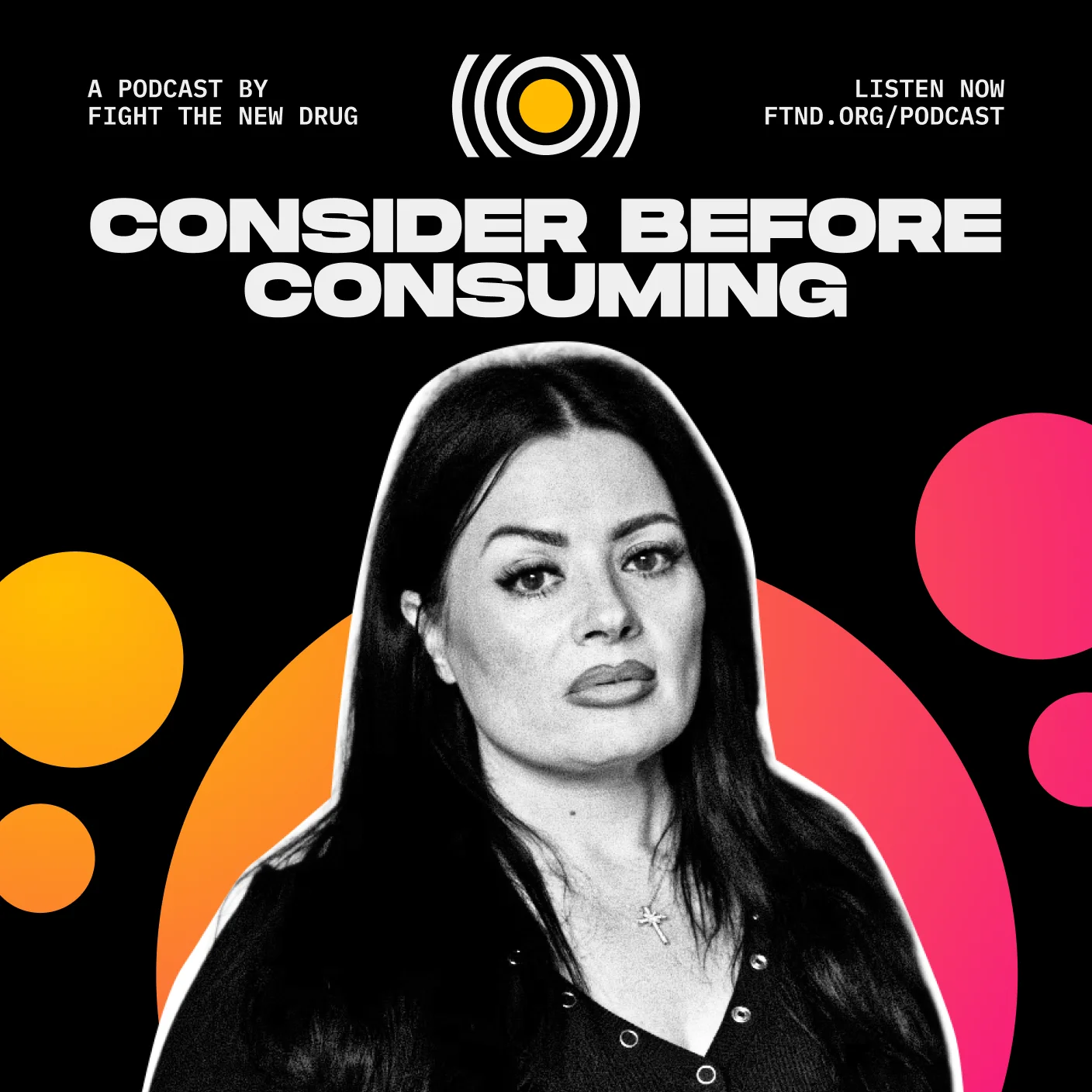
Episode 169
My Students Made an AI Nude of Me—Then Shared It Across My School
Available wherever you get your podcasts
This episode contains discussions of sexually explicit AI-generated images, sexual harassment, exploitation, suicidal thoughts, and image-based sexual abuse. Listener discretion is advised.
Angela Tipton spent more than 20 years teaching middle school before discovering that students had created and shared a sexually explicit AI-generated image depicting her. What began as one fake image quickly spread throughout her school, reached her own children, escalated into fake social media accounts meant to make the image seem real, and ultimately changed the course of her career.
How convincing are AI-generated nude images? What happens when students create and share AI nudes of a teacher? Why do fake explicit images cause real harm? How should schools respond, and what role does pornography play in shaping the way some young people think about consent and other people?
In this episode, Angela shares the emotional toll of becoming the target of deepfake abuse, why the effects continue years later, and what she believes parents, educators, and communities need to understand as AI becomes more accessible. She also offers hope and encouragement for anyone who has experienced image-based sexual abuse or is supporting someone who has.
FROM THIS EPISODE
EPISODE TRANSCRIPT
Fight the New Drug (00:00)
Angela, thank you so much for joining me today. I’m looking forward to having this conversation with you and appreciate you giving us some of your time. Can you tell us a little bit about yourself and what led you into education?
Angela (00:11)
Well, my name is Angela Tipton. I currently live in Indianapolis, Indiana. It’s interesting what led me into education because I think it’s a little non-traditional, and most people I know are like, I always wanted to be a teacher. I actually did not always want to be a teacher. My goal in life, I wanted to be a mom and I wanted to be a missionary. And I chose the career that I thought would best fit being a mom if I wasn’t able to be a stay-at-home mom.
And that is literally how I came to being a teacher is because I was like it’s the career that I feel like would best suit being a mother and allow you the most maximum time with your kids. And it just so happened that I really, really love it, and I think I’m pretty good at it. So it worked out all the way around.
Fight the New Drug
And what kind of teacher did you hope to be?
Angela
I would like to think I’m the kind of teacher that understands the kids and understands where they’re at academically. One thing that I recognize as an English teacher is that not every kid loves English. And I came to that conclusion because, for me, I do not care for math, still don’t really. So I tried to teach from that perspective that everyone doesn’t love what I teach, and doing my best to make it fun and interesting for even the kids in my class who don’t particularly like English.
Fight the New Drug (01:23)
Amazing. And, you know, there was a point when your life completely took an unexpected turn. You take us back to that day and tell us what happened to you and how you found out?
Angela (01:34)
Yes. Well, it was a Thursday night, and I was actually finishing…I was the secretary for our district’s union, and I had just finished up a meeting with administration and went to the parking lot and when I got in the car, I checked my messages and one of my sons had texted me and he said the text message said, “Mama, what do you do when we’re not at home?”
Then the next message said—I didn’t answer that one because it had come in while I was in my meeting. And the next message said, “The kids at your school have nudes of you.” And at that point, I left because I don’t have those photos. So I was like, they’re not, no worries. This isn’t a thing. And I said, send it to me.
And when I got it, I was absolutely stunned because it was so obviously my face. And if I didn’t know what I looked like, completely nude, because the photo was completely nude, I would have thought it was me. And then I instantly felt like it, it was like an out of body experience because it’s like I know for a fact that’s my face, I know for a fact that’s not my body. And I just kept zooming in and staring at it in in in shock. should say initially it was just pure shock, like I wouldn’t say I felt anything other than like confusion.
Fight the New Drug (03:01)
Right. And for listeners who may not be familiar with AI-generated explicit images, which is what you experienced, can you explain what had been created of you?
Angela (03:12)
Yes, it was a completely nude female body, and she was the front of the photo was her holding her legs open, and it was her vagina. And then I was, you know, ’cause the body of the person was in the back and the front was her privates, and then it was my face. But it was so perfectly on there that it looked real. But it was pretty graphic.
Like pretty in the fact that my children’s response was not, “This isn’t you,” it was, “What do you do?” concerned me even more. So I’m like, if my own children think this is convincing enough to be me, they should be the first ones to know, like, that’s not my mom, and that was not their initial reaction. At the time, they were in ninth grade. The kids who created it were in eighth grade, and my kids had just left that same school. They were in my class the year prior and knew these kids who were seventh graders at the time, and they had just left and went to high school
Fight the New Drug (04:15)
Yeah. So these eighth graders created this, sent it not just to your children, but to others as well. And then your children sent it to you, and that’s how you found out about this experience.
Angela (04:27)
Yes, it…they actually initially, I’m told that they had it in December of that year, that that’s when it was created, and kids had been passing it around kind of privately. I didn’t discover it till March, again, when it was sent to my children, is how I discovered it. And then they, after the initial discovery, it was then, after the fact, airdropped to the entire school.
So any student in grades six through eight who had an Apple device, it was airdropped to them, and then also, after the initial fact that I, when I discovered it, it was an Instagram account was created and students tagged hundreds of students. I used to teach on the high school level as well as my children, and then kids just were chiming in, and some were defending me, some were picking it apart.
I know that there was someone who tried to create an OnlyFans account and do something similar. My guess is they wanted to make it look like it was me in order to defend themselves because it was the OnlyFans account was like sent to me to verify, and I did not verify it. And I feel like it was they were very…they were trying to make themselves innocent or be like, look, this really is how she is, and they went to great lengths to, you know, try to make that look true.
Fight the New Drug (05:54)
Yeah. So these students of yours created this image in December, passed it around until finally it got to your children in March, and then what happened in the days and weeks following that?
Angela (06:06)
It was pretty rough. It was a lot of ups and downs. Initially, I will say that the Friday, I did go to school, but I did not sleep the night before. I was hysterical, and I was told by HR that I could stay home if I wanted. I chose not to stay home because I felt like staying home made me look guilty of something. And I was like, I was constantly reminding myself I didn’t do anything wrong. This is not me. Like, the kids are wrong, and I’m gonna show my face and hold my head high. I was not able to do that like I thought I could.
The next morning, I was I was a mess, like crying and red, and I went in about an hour early to talk to my administration. They were very supportive initially. They asked me, you know, what I would feel most comfortable with. We discussed consequences. They asked me if I thought I knew who did it, and at the time I absolutely had no idea who did it.
And I did have an idea who what group of kids didn’t do it, and I told them like, well, I don’t think it’d be these kids.
And when I found out the children who did it, I was quite shocked because they were, by all accounts, to me, very well-behaved, good students, very respectful, and I was stunned. And then I think the administration was equally as stunned. They were not the kids who I think they like to think are the bad kids. You know, they’re kids from great homes and, you know, parents who are doing, you know, who are very professional and two-parent homes, and you know, they checked every box.
And then that’s when I felt pretty betrayed by my administration because once they discovered this, they tried to lessen the impact on my children and me. And they tried to almost eliminate any consequences to these children.
And went as far as to really flip on me and try to, you know, say the way I’m handling it and the way I’m responding is a problem, because I should just get over this because it’s just my face. It’s not my body. It’s not real. Like, like, basically, we don’t know why you’re so upset.
Send us a picture of your face so we can really compare it to this. Is this even you? It’s like all of a sudden they wanted to minimize everything because these were good boys. They were, they had good homes and good families and like we can’t make this seem as bad as it really is. And we really don’t care about the impact on you and your children is how I felt.
Fight the New Drug (08:25)
Which is so devastating for so many reasons, because not only is this impacting you personally, which I want to talk more about in just a moment, but what does that say to, you know, for the future of anyone who wants to create these explicit images of anyone else, whether it be other teachers or other students, that there will be no consequences, right? Which is really concerning because this is a very serious problem. And you know, to anyone who says something like, Well, it’s just your face. It’s not real, which is something we’ve heard a lot as people try to understand, you know, AI-generated explicit images and nudifying apps, and you know, kind of all of these things that are that are possible with technology now in really horrific ways, they don’t understand the true impact it can have on someone. And can you tell us a little bit about the personal impact to you?
Angela (09:24)
I can tell you that it doesn’t go away, and that I’ve, I’ve gained a new respect for PTSD. I will say before this event happened to me, and I would hear about people with post-traumatic stress or, you know, impact from big events of them in the back of my head, because I knew it wasn’t politically correct to say out loud, I think, well, it can it be that bad? Like maybe they just need therapy, you know, and and I think I was.God really humbled me going through this and understanding and fully understanding that when these things happen to you, and I do think it makes a difference as a mother, as a woman, and as a teacher.
I initially it was like fight or flight, and I’m definitely a fighter, just by nature. I’m not a person to just, you know, sit down and give up very easily. And so initially, I felt very hopeful and that I could prove that this wasn’t me, and I thought that I could help the district create policies to protect teachers and protect students.
I had a lot of very supportive staff members who, members who like agreed with me that if we don’t consequence this enough, it’s not gonna be safe for other female teachers and girls in the school. And I’ve had students who said they felt the same way. So initially it was like a lot of camaraderie and like what can we do to fix this and make this a learning, you know, moment for the boys who did it and a time to make sure everyone in our school and school district feels there are moments where it’s very empowering. And then when I discovered that they were trying to downplay what the kids did, and really protect them, protect their reputations and their families’ reputations.
And I started to see how things were twisting, I would go through panic mode. And it it was just an emotional roller coaster. It still is, I’ll be honest with you. It’s three years, and it is an emotional roller coaster still. One of the reasons I am moving is because it drains me.
I’ll give you an example. Two days ago I was on a walk with my friend, and I live in the neighborhood where I taught, and a little boy went by on an e-bike. And about 15 minutes later, we hear the buzzing behind us, and he says,” Excuse me, excuse me, I think I know you.” And I was like, “No, I don’t remember you.” And he was like, “Is your name Miss Tipton?” And as soon as I hear that in my head, I go, my gosh, should I tell them it’s not true? Should I tell like I’m like, this is why you’re stopping me? And are you just doing it to humiliate me? Like why are you talking to me?
And it’s like all these thoughts that as a teacher, when I’d run into a former student or someone who knew me, that would never it’d just be like, my gosh, like over school and you’re so big, you know. And now it’s panic. It’s like are th are they just trying to get a closer look? Do they they want some confirmation from me? Is this true? This is three years later.
And I asked him, I said, “What’s your name?” He said, ” You didn’t have me in class,” and I was like, that’s even worse. Like, you know, when I didn’t have you in class. And he would have been in sixth grade the year the school year after it happened, I had returned as a sixth-grade teacher briefly, thinking that going down to the sixth-grade level from eighth grade, that they’d be new students of the school, I wouldn’t deal with it. Unfortunately, it became a nightmare.
But so yeah, it’s it’s I wish I could say like, it went away. I think about it every day. I’m confronted about it at least once a week by a former student, a parent, something. And I don’t think anybody means—I hope nobody is trying to be mean, but it’s like it’s horrible. So it’s just our emotional roller coaster.
Fight the New Drug (13:03)
Yeah. And and I I think that’s so important for people to hear because again, people may think, well, if that happened to me, you know, it’d be no big deal. I would know it’s fake, it’s no big deal. Or people may think, if I create an image of someone, it’s no big deal, it’s just fake, it’s harmless. And that’s not true, right?
This is something that’s impacting you years later. This impacted your career, where you were teaching. This has impacted where you’ll be living, you know, and then going through every day anticipating how someone’s gonna respond to you, that’s really traumatic.
And you know, at the time we can say, well, people know it’s fake, but maybe everyone doesn’t know that it’s fake. I mean, you yourself said it looked so convincing. And if you weren’t aware of what your body looks like, you may have thought that was real. And so, was the reaction, you know, from people who maybe didn’t believe that it was fake? And and what did what was that experience like?
Angela (14:02)
I I think that what I saw from students who were trying to defend me online, no, not one of them said it was fake. ‘Cause it was very convincing.
But what they tried to say was, That’s her business. If she took that picture for her boyfriend or her husband, it’s okay. And I was like, my god, like, but it’s not me. And it and I think it was like they’re kids, and it’s like out of the goodness of their heart, they think they’re defending me.
but I didn’t hear anybody say, that’s not her or that’s probably not her because it looked real.
And my solution to that is like I wanted what I told my administration when they asked what I’d like to do would make me feel better, is I wanted there to be a a public apology at the school and I asked that the kids who participated in it, and I’m sure there’s more kids than we could find, but the initial like the main group who created and spread it that we identified, I had asked that they spread their apology and correction is is widely as they spread the misinformation and the defamation.
And I don’t feel like that was too much to ask for them to go on to whatever platforms they posted this on and make like a video statement and make the correction because my biggest concern was kids. Cause my adult my own personal children who know me, even though the picture was convincing once they understood the technology and how it was made and, I mean, they know it’s not in my character. My friends know it’s not in my character. My biggest concern was the kids I work with. Because A, it’s middle school. It’s the most dramatic time in life. And I knew that from that point forward, because it’s salacious and it’s exciting, that I’m gonna be the teacher who was the porn star and has this photo and it was gonna keep going. So my thought was the louder this correction is made by the kids who did it, or the main kids who did it, that it’ll kill the hype and the excitement of it. And then if you just let it fester or say nothing and allow them to just keep building on the story.
So I literally went to the local news. I was like, once I learned the problems of deep fake, and when it happened to me, a couple of months later, it happened to the girls in New Jersey. Then it happened to Taylor Swift. And I was like, okay, this is, should be a big enough thing for people in the community to care about.
And I was hoping that doing that would also help take the excitement out of it for kids, so that I can just go back to my job and it’d be established like, that’s you didn’t hear that wasn’t her. And unfortunately, that did not happen.
Fight the New Drug (16:46)
Yeah. Which becomes such a massive mental and emotional burden for you to have to essentially go on a PR campaign for yourself to address something that’s not real. Like even if it were a real image that were leaked or something that, you know, you thought there was always a chance that could get out. But it wasn’t real. You had no a way to anticipate that this could even happen, yet here you are having to go to bat for yourself in an ongoing way because this is being minimized.
I am curious to know, were there ever consequences for those individuals who created these images? This image?
Angela (17:24)
For the boy, the boys, so, they put them in two groups. One group was the group that created the image and the other group was the group that spread the image in mass levels. There’s obviously no way to figure out who spread the image just individually like one to one, but the kids who did spread it on the you know, social media platforms and large group chats, those were not the kids who actually created it. So they
They definitely punished more harshly the kids who created it. The kids that I was more upset with, it was the kids who spread it.
And those kids also were kids who my children considered close acquaintances or friends. And the impact of what they did with that photo hurt us more and hurt my reputation more than the people who just created it. In a perfect world, I wish the thing never existed. But if those kids, the three boys who created it or initially would have had shared it amongst themselves forever and I would have never known about it. My kids would have never known about it. The impact on my life would have been non-existent. so those students, I do believe they were expelled or removed, the ones who created it. however the kids who caused the bigger problem in my life, which they were, like I said, the well-off popular, everybody-cares-what-they-had-to-say type of kids. It was five days suspension, and they play baseball, and they got to come back to school the first day of baseball practice in the spring. And that morning, they came back to school. I thought they wouldn’t be. I thought surely these kids are going to be expelled, put on virtual the rest of the school year. The it never crossed my mind they’d be back in school.
And that morning, I was called into the office, and I was told that these kids were going to be back in school. They were actually gonna be back in my class, and I lost it. I was probably very unprofessional in that moment because I was in disbelief.
I didn’t want them anywhere near me. I didn’t want to run into them in the hallway. I certainly didn’t want to be walking around in front of them in a classroom for the rest of the school year. And one of the things that district admins said to me was, “Do you know what these boys were thinking of you before this picture?” And I lost it. Like, obviously I I do not care what they were thinking of me. I it did not impact my daily life, it did not impact my children, but now it does. So it was the minimizing. And suddenly the energy was shifted to like, how dare you try to accuse these, or it’s completely normal.
And you’re just overreacting was the vibe I was getting from that. And that day, I ended up walking out, and I refused to come back to work, and eventually, they reassigned me to elementary school. I filed a Title Nine, and then I ended up coming back the next school year, teaching sixth grade, only because the Title Nine would have been dropped if I didn’t return to the same school.
And I basically had to do that in order to get them consequenced. So that was how I got their other consequences; they were found guilty of sexual harassment via the Title IX process. But the fact that I had to go through as much as I did to get that done, the school should have filed that, not me personally. And they didn’t.
And I was just steady like fight like I step ahead, fall back, step ahead, fall back. And it just didn’t have to be like that. It was just accountability they wanna avoid at all costs. So, to some degree, I think it was consequenced, but not in a way like I’d a fight for it. It wasn’t in a way that made the school feel safe for the employees or the girls who were there.
Fight the New Drug (21:23)
Which is so discouraging, and I’m so sorry you had to go through that. And I think it is it’s difficult to hear that there are schools essentially excusing, you know, type of behavior and that is resulting in real harm on teachers, on students, and primarily of women and girls. As you as you pointed out, yes, men and boys are exploited in these same ways, but you know, pornography, our media, it teaches young men and boys that women are objects and that you know they’re objects to be consumed rather than people to to be known and loved and seen. and it’s tough to know that that’s where schools are at. I’m curious, did you learn throughout this process of any other instances of this happening to other teachers or students in your school?
Angela (22:16)
I was told that after I left that school year that and I was told by other teachers and students who I would run into in public that they felt like once I left it made it feel like I was the problem, and that they felt that kind of the the disrespectful attitudes from the male students increased. I noticed that the, one of the students who was the main kind of spreader of the information, he had two other write-ups that school year. one disrespectfully teaching, talking to a teacher, calling her the B-word. And this kid would have never otherwise been like that. But it was almost like he was empowered by the way that his parents and the district rallied behind him as the victim f for a consequence. So I know his behaviors escalated, and I heard that from multiple other teachers and students.
And the teachers, after I left, did do a walk-in, and they all wore teal because they were saying they didn’t feel safe.
I know that same school year, I heard that there was a girl who there was a real video that she had. I don’t know if she consented to or not, but they’re all children and underage, it was sent around the school, and that was the same year, and I’ve heard adults say they feel like again it it just felt easier to do. Like once my situation happened, and it didn’t seem to be consequenced heavily. Like you’re almost like have a license now to do this to women and girls.
Fight the New Drug (23:52)
Yeah. And you know, for our listeners, this isn’t unfortunately, this is not a unique situation of teachers experiencing sexual harassment from students, especially women experiencing it from male students. And we had another considerable for consuming podcast interview with a woman from Australia who was was working with a group doing research and surveying schools, and the rates are pretty alarming of teachers feeling unsafe in schools, teachers being sexually harassed by students, it’s only increasing with technology in these ways, and so it’s something that so many people may hear this and say, Okay, well, that’s an isolated incident, you know, that is that’s terrible that this happened, but this, you know, this can’t be happening all over, and it is the truth, is that it is the truth is that young people are learning how to use technology in ways that their parents aren’t even aware that technology exists.
These things are spreading in schools, and it’s impacting students and teachers. I’m I’m curious to know for you, Angela, have you spent much time thinking about why students would create something like this in the first place?
Angela (25:06)
I think that pornography and pornog— pornographic culture and devaluing of females in particular plays a huge part in it. I think that obviously, tied now with technology, where someone could make anybody part of their fantasy, is a huge thing.
I think an average kid who isn’t deep into pornography or this isn’t regular for them to objectify women, there would be a shock or a gasp. But there’s children who, I believe who are exposed to stuff, and they are completely callous to it.
And instead they laugh when they see it, and they spread it, and it’s funny. There’s no like what is wrong with you? And I saw that on the thread when kids were commenting on the Instagram post. You can tell the difference from the kids who are very jaded and obviously pornography is just like the norm ’cause it was the n the filthy jokes and the inboxes to my children that were alarming, and then kids who are like, You’re really gross, like why would you do this to someone? And you know, like boys too, who just like, No, that’s not okay.
Fight the New Drug (26:23)
I think that’s what’s so frustrating to me. You know, I’ve been doing this work for eleven years now and addressing the harmful effects of pornography, and I’ve seen this landscape of sexually explicit material evolve. I’ve seen access to pornography change, I’ve seen what social media has done in terms of exposure and normalization of these harmful behaviors. And essentially what we’re talking about is rape culture, you know, joking about these things and
And joking about objectification is all part of rape culture, and that is something that is really being normalized, and you know it’s maybe not normal for young healthy individuals to create this type of material or to spread this type of material or to joke about this type of material, but it’s unfortunately being normalized.
And I think both for adults and young people to know that we should all be taking a stand against this because it’s not okay, and it’s leading to real harm to so many individuals, much like yourself.
Angela (27:22)
And I agree. It’s, and I think that what’s interesting too is when I had the adult men, particularly adult men who are in leadership or positions of power, who tried to downplay it. That concerned me because y these are people in particular that young men are looking up to. That they’re they’re looking, you know, is this okay or not? They’re learning. ‘Cause honestly, I have a ton of compassion for the kids.
They’re kids. I have boys, too. I had boys that same age, and my initial response wasn’t like, my god, I hate these awful children. I thought they’re children, they need to learn and they need to, you know, learn to take accountability and become good men so they won’t grow up and be the men who think, I could do whatever I want to a woman, and my parents are gonna protect me, and society’s gonna protect me, and she’s gonna be the problem.
And that was my initial thought, was not like these are some terrible children, they’re children.
But when I realized that the adults, both parents and people who were in leadership in the district, not not everyone in leadership in the district, but there was a particular couple of people who had a leadership position who really could have made a difference in these kids’ development and what they learned. And when they stood behind them more and downplayed it. It’s just like you’re teaching them such a dangerous lesson, which is a danger to women that they’re gonna come into contact with throughout their lives now. And that’s very scary.
Fight the New Drug (28:58)
You mentioned one of the administrators had said, “Do you know what these boys were thinking of you before?” And that is really difficult to hear because it’s almost as if they’re justifying what happened to you with a quote-unquote boys will be boys mentality. And as you mentioned, you know, boys are learning from these individuals in leadership, but so are young girls. Young girls are learning what people think of them, and what how to get into a position of power, and what to submit to.
And and I want to commend you for being so brave and willing to go to bat for your experience in this and willing to stand up and say this isn’t okay, even when you are repeatedly being met with, you know, a new brick wall to have to fight through. And so it’s it’s so important that we don’t just accept these ideas that or these stereotypes, rather, that you know, boys just will objectify women, that is what it is, and women just will have to submit to objectification because that’s not how it is, and that’s not how it should be. shouldn’t accept that, and we shouldn’t teach our young people that that’s that that’s acceptable either.
Has this experience changed the way that you think about, you know, what young people are being exposed to online?
Angela (30:17)
Absolutely. And I think, a little bit, you know, I may have lived in La La Land, because I think our experience comes like our ideas often come from our own experience. And in my generation, we did not grow up with this. I grew up in the eighties and the nineties, and we did not have this sort of technology. I feel like if you heard about kids, usually boys that were, you know, dealing with pornography, it was like they found their dad’s Yuckie magazines or something and you would hear about things like that, but it wasn’t as accessible and as normal I think as it is today.
So once I had this experience, I kind of became hyper aware of what all kids might be looking at and, you know, what their knowledge base might be, and I was unaware of and, you know, more particular about my own, my younger kids at the time, and what they were consuming and had access to. And it’s it’s pretty worrisome.
Fight the New Drug (31:13)
Yeah. What do you think needs to change so that fewer, ideally no people have to experience something like this?
Angela (31:21)
I think that there’s two parts. I think it’s the way that we raise our children. I think raising your children with a moral base and integrity is going to be in the long run what will change things because they’re the ones that are gonna be faced with a decision of what they’re consuming and what they might be saying to friends who are…things that are inappropriate.
So I think long term that that is gonna be the difference is parents accepting that this is a problem and it’s one of the many things we have to address when we’re raising our children so that we raise good men and strong women. And the other thing would really be showing that those consequences in in the short term, it has to be I do believe that my situation would be completely different for both my children and me emotionally.
And for the development of the boys who participated in this, if there was hard consequences and firm, you know, like a a a firm “No, this is wrong,” instead of a blurry, you know, a blurry area. So I think that schools and other companies are establishing even if there’s not a law made yet and it’s, you know, a particular state or area or there’s the law’s not being enforced, that schools absolutely have the power to create expectations and consequences without the state having a law.
And I think once those are enforced and it’s clear, it will be a game-changer. So, in the short term, I think it’s just schools naming the problem and actually doing something about it and following through, which is not what I felt happened adequately in my situation.
Fight the New Drug (33:05)
I think you said it perfectly, you know, reinforcing that for parents, educating your kids, and educating yourselves, knowing what’s out there. Because this, you know, this isn’t only happening to adults like you, who, in your case, were brave enough and strong enough to fight the system that didn’t stand up for you, and that didn’t make you feel safe and supported as you navigated this experience. This is happening to kids as well.
This is happening to young people, who are, you know, still developing their brains and still building their social circles. And these things can be really, really catastrophic for young people as well, and really detrimental to their lives. And so knowing that there are consequences, you know, whether someone’s handing down the consequences or not, there are negative consequences of these experiences. And it’s so important that we’re talking to kids about it. You know, this image was passed around to how many students before you found out about it? If just one of them had said, “This isn’t okay,” and gone to a trusted adult and said, “I think something’s wrong here.”
And we could spend all day, you know, theorizing why someone did or didn’t do that, or if they did, who were they supposed to bring it to, etc? But at the end of the day, this went around for months before you were aware of it. And then you dealt with this for, you know, how long after? And this is something you’re still dealing with today, years later, and technology is only more advanced.
So, it’s so important, parents, that we are we are demanding better from our students, from our schools, from our community leaders, and that we are participating in a culture that can help create a better community for everyone. I want to ask you if if someone listening has experienced something like this, or is you know currently experiencing something like this, or supporting someone else.
Angela (35:10)
First of all, I would affirm them in their feeling that they were betrayed and disrespected. You don’t deserve it. I feel like that is, ugh, sorry. Something that I had I have to tell myself every day is that you did nothing wrong. You did nothing wrong. And I was I will say that I consider myself blessed to not have photos like the one that was created of me. However, I know women had reached out to me online after the local news story, and this has happened to them, and they said they didn’t go to the police because maybe they had some consensual images that they shared with someone. And for that, they felt that they deserved it. Or like, because I consensually have done this and shared it with my husband or with my boyfriend, that now I can’t stand up for myself, or I’m somehow deserving of this image to be created of me. And I think that you just have to remind yourself over and over that you did not consent to it, you did not deserve it, these people are wrong, and you deserve justice.
And it is in that for me is what kept me going. It was what kept me alive, in some cases, just reminding myself also that if I was younger, like you said, I would have one hundred percent probably not been here right now. If I was younger, because if it wasn’t for my children and, you know, God, there were so many mornings I woke up and I didn’t want to live. So, just yeah, if if this happened to you and you’re listening, like it’s not your fault. Everything you feel is valid, and you deserve justice.
Fight the New Drug (37:00)
Thank you for sharing that. And I’ll just echo: you know, no one deserves to be exploited. If it’s with AI or images that were taken consensually or weren’t, and then shared non-consensually, no one deserves to be exploited. And you matter to our listeners, you matter. Angela, you matter. And there are resources available to help.
You know, one thing I I just want to mention at the end is we’ve been seeing a rise in sextortion cases where targeting young teenage boys actually where they’re being sent what you know they they meet someone online, they think it’s someone different than the the predator they’re speaking with, they are sent images of them that are sim…in many cases similar to what you experienced, which are AI generated, or you know, nudifying apps are used, and then they’re extorted saying if you don’t pay me X number of dollars in X amount of time, then we’re gonna share this with your whole community, share this with your family, and share this with everyone.
And there are far too many cases of that reported last year, let alone that weren’t reported, and we have seen far too many individuals who have lost their lives to suicide as a result of this sextortion. And so these things are very serious.
If you are experiencing this, there are resources to help you. We will include some in the show notes. But please, please, please reach out for support if you need it, and know that you’re not alone in this. And to all of our listeners, let’s work together to make our world a better place where this isn’t something that anyone has to experience at any point in time.
Well, Angela, thank you so much for your courage and vulnerability and being willing to come share this experience with us here so that others can learn and so that we can hopefully radically reduce victimization from sexual exploitation together. For our listeners, please remember to like and subscribe for more conversations like this to help us all consider before consuming. Thank you.
Angela (39:05)
Thank you for having me.
Fight the New Drug collaborates with a variety of qualified organizations and individuals with varying personal beliefs, affiliations, and political persuasions. As FTND is a non-religious and non-legislative organization, the personal beliefs, affiliations, and persuasions of any of our team members or of those we collaborate with do not reflect or impact the mission of Fight the New Drug.
MORE RESOURCES FROM FTND





A database of the ever-growing body of research on the harmful effects of porn.