

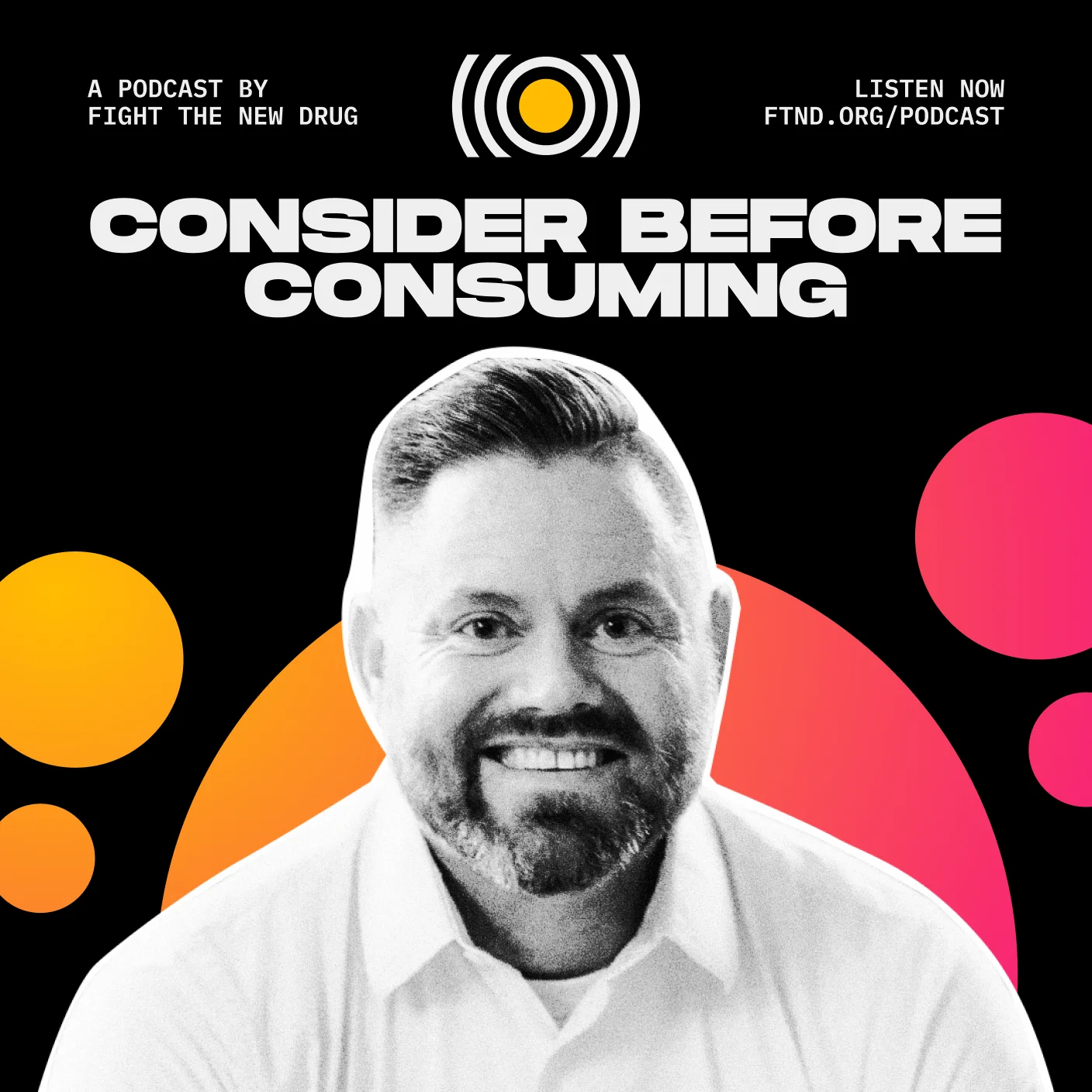
Episode 162
I Lived A Double Life of Porn Addiction and Affairs
Available wherever you get your podcasts
This episode contains discussions of sexual addiction, infidelity, and suicide attempts. Listener discretion is advised.
Chris Bennett is a life coach who helps individuals and couples work through sexual addiction, shame, and compulsive behaviors. But long before he was helping others, he was living a double life—hiding years of pornography use and engaging in multiple affairs during his marriage.
In this episode, Chris shares how his relationship with pornography began at a young age and escalated over time, eventually leading to real-life behaviors that deeply impacted his wife and family. Even after being caught and entering recovery, he struggled to fully commit to change, continuing patterns he knew were harmful.
We talk about the role shame played in keeping him stuck, why partial honesty wasn’t enough to create real change, and what finally shifted when he chose to fully disclose everything. Chris also opens up about how unresolved pain and early experiences influenced his behavior, and how learning to process emotions and meet his needs differently became a turning point in his recovery.
This episode explores questions many people are asking: Does porn addiction escalate over time? Does Porn Addiction Lead to Cheating? And what does it actually take to change?
FROM THIS EPISODE
- Article: How Porn Can Harm Consumers’ Sex Lives
- Article: How to Actually Quit Porn This Year
- Chris’s Website: Chris Bennett Coaching
- Chris’s Social Media: @ChrisBennettCoaching
EPISODE TRANSCRIPT
Fight the New Drug (00:00)
Chris, thank you so much for joining me in the studio today. It’s great to have you here. Thanks. I’m excited for our listeners to get to hear this conversation today. For anyone who is unfamiliar with who you are, can you tell us a little bit about how you would describe yourself, who you are today, and kind of what you do today?
Chris Bennett (00:03)
I’m super excited to be here.
Yeah, totally. first of all, like I’ve been married to my wife for, well, this coming Saturday, it’ll be 29 years. Exciting. And I’ve got three amazing kids that are like 26, 23, 21. Awesome. A new grandpa. I’ve got a new grandma. Congrats. So that’s just a freaking riot. It’s so much fun. Yeah. And then like professionally, what I do, I am a motivational speaker or inspirational speaker and a certified Master Life coach.
Chris Bennett (00:46)
I work with a lot of people, both men and women and couples, find their way out of shame and get rid of the sexually compulsive behaviors that they have, step into a new identity of who they are. And with my work, I do things more experientially. So we’re not just like how me and you are just talking right now. We don’t just sit here and talk. Like we do things experientially because I want people to actually experience what it’s like to feel that way of being released from the shame, released from the addiction, all the things. so we do things experience-wise to get that involved so that it’s a full body experience and we’ll put things to action so that they can experience what it’s like.
Fight the New Drug (01:33)
And for any of our listeners who are new, a lot of what we talk about on this podcast is pornography, sexual addiction, and kind of all of the surrounding facets of this topic. And you’re really the perfect person to be addressing shame and helping people through this because this is something you’ve experienced yourself. So I want to ask you a little bit about, you’ve shared who you are today. How is that different from a past version of yourself and who you’ve been in the past?
Chris Bennett (01:58)
Totally different. I used to hate myself. And what’s crazy is that most people wouldn’t even know, wouldn’t have known that I hated myself because of the way that I had posed. I would become someone different to be around certain people. But internally, I was dying. I hated the person I had become. I hated all the things that I was doing. I felt like I was destroying myself. I was destroying my wife and my family.
And I even thought, I’m showing up. It’s everybody else that has changed. Now it’s totally different. Where like even, I was even in a place where I didn’t like being around my wife. I came home because I had kids and didn’t want to be around her. After, we’ll talk about my story, but I got to the point where I was like, if she told me she wanted a divorce, I’d be like, okay. But to now where like I get to be with my family and celebrate this amazing marriage that we have now and how beautiful it is.
And the person that I become, because I know what it’s like to feel like I’m alone. Because so many men feel like they’re alone. And so I run a men’s retreat. We have 10 different retreats that we’ll do this year. that equals out to almost a thousand men that will attend that retreat. And in that, I just go after the hearts of men. Like that is a passion of mine to be able to help men find who they really are, change their identity, because if you want to change your life, you got to change your identity.
Fight the New Drug (03:32)
And to get to the place that you are at now, I would like to talk about your story and go actually all of the way back to when you were a kid. And obviously, you’re a complex human being and there are many more pieces to who you were than just what we’re going to talk about today. But specifically with regard to sexual compulsivity, starting with pornography, do you remember the first time that you were exposed to pornography as a kid?
Chris Bennett (03:54)
Yeah, so I was nine or 10 and I say nine or 10 because I know the house I was living in. Right. It was like every two years we were moving. Because we didn’t have a lot of money growing up. So we were always moving, getting evicted, everything. so nine or 10 years old, I, some buddies of mine, we found a bunch of magazines in this garbage bag. And so we took a bunch of the magazines and we’d hide it in a field next to my house. So every once in a while we could, we were like, we’ll just go and look at it.
And from that on, like, I was just so drawn from the very moment that I saw it. even remember the pictures. Like, it’s that vivid still to this day. mean, I’m 48, and that’s like almost 40 years ago. And I still remember that. And so we’d go back, look at the pictures all the time, and just knew what it made me feel. So from that point on, I was just off and on accessing porn when I would have access to it, or at a buddy’s house, had like these old super massive like 10 foot satellite dishes and their dad would have all these channels and so we’d end up finding some channels or something to watch.
Fight the New Drug (05:03)
Yeah, and as you got older, what role did pornography play in your life as things kind of evolved?
Chris Bennett (05:09)
So for a while I actually was doing pretty good. So I didn’t say anything to my wife about it. Because I didn’t let anybody know that I ever even looked at porn ever. And so got married and was into it. And then off and on even just as a marriage as the internet finally came out.
Fight the New Drug (05:29)
How old were you when the internet entered your life?
Chris Bennett (05:32)
So, would’ve been 95, so I was probably 16,
Fight the New Drug (05:37)
So just right at that, kind of on the cusp of going out into the world as an adult and then having this new thing thrown at you.
Chris Bennett (05:44)
And so I graduated because I was 16 as a senior, like the first month of my senior year. And then right after that, my dad took his life. So, and I didn’t realize this until later, but if I looked at, I laid everything out for all the trauma in my life that I had. And then above that, I laid out like all the exciting things that happened in my life or different things.
I didn’t realize that when my dad took his life right after that is when I really started like acting out sexually with other women, girls at the time, guess. And so just started acting out sexually. And then porn became, when it obviously more readily available on the internet, I would access it as much as I can, especially when I started a mortgage company on my own and nobody was in the office. It was just me. And I would just spend like a huge amount of time, hours, just watching it. Because it would take forever to just load…not as fast as it is now, but like it would just I would just be consumed by almost every single day. Wow
Fight the New Drug (06:50)
And you mentioned this wasn’t even something that you had told your wife at the time that you had gotten married. What was that transition like for you of meeting her and dating her and getting married and thinking maybe this was something that would go away or just thinking of something you didn’t need to share? What was that process kind of like?
Chris Bennett (07:18)
I was like, well, shoot, as soon as I get married, this will all go away. I won’t need pornography and masturbation anymore because I’ll have sex now. And it’s okay for me to have sex now because now I’m married. And so we can have it any time we want. I’m not going to need it. And after interviewing myself, of interviewing like lots of people that have struggled with this and clients that have come in,
Fight the New Drug (07:29)
which is a really common experience.
Chris Bennett (07:46)
Every man that I’ve talked to that has gotten married, that had the addiction before they got married, thought the same thing. Everybody.
Fight the New Drug (07:52)
It’s so common. We hear it all the time as well in our work. So that was something that you had kind of kept secret from your wife. At what point did your porn use escalate into behaviors outside of pornography?
Chris Bennett (08:08)
So when I said I started a mortgage company on my own and was consuming pornography like almost daily, pretty soon that just wasn’t enough for me. so I started an affair with an account rep that was coming into the office. And I knew she was into sex. We’d had conversations before around it. And so I started this affair with her. And that affair actually carried on for 20 months. And then there were multiple affairs within that timeframe.
Fight the New Drug (08:36)
And how long had you been with your wife at this point?
Chris Bennett (08:39)
When I started the affair, almost seven years.
Fight the New Drug (08:41)
And you had kids?
Chris Bennett (08:43)
Yep.
Fight the New Drug (08:44)
And how did your relationship with porn at the time, viewing porn, how did that affect the way that you saw the women you, or in this case, the first woman you were having an affair with, but then eventually the women you were having affairs with, and also affect the way that you saw your wife?
Chris Bennett (09:02)
I saw my wife as an object. Yeah. And if she didn’t have sex with me, it was like I would pout and I wouldn’t… I’d be super angry. I would… And I wouldn’t ever voice it to her. Sure. I would actually like withhold that. I would internalize it. And then the resentment towards my wife would just stir. And so I would try to be sexual with her and then she would deny me somehow. And so…
I felt rejected over and over again. And so I kept telling myself that there’s something wrong with me. Right. Because there’s obviously something wrong with me if she’s going to keep rejecting me. Right. Not realizing it was the way that I was showing up. And so I was just consuming so much pornography. And so my desire was just kept trying to, I never like pushed the boundaries with my wife as far as like what kind of sexual acts that we did. But just the drive was just intense all the time. And so I just saw her as someone to meet my needs.
Fight the New Drug (10:02)
And when you say the way you didn’t realize it was the way you were showing up, you mean for her, she wasn’t feeling close to you anymore. She wasn’t feeling connected. She wasn’t feeling safe to be able to experience that closeness with you. so that’s maybe why she was pulling away.
Chris Bennett (10:15)
Exactly. And I didn’t know that until later. Yeah. And she, like, because like I said earlier, like, I thought that I was the one that was doing awesome and that everybody else had changed. Like, wow, what’s wrong with my wife? And she had changed and other people around me had changed. And then she’s like, no, you just became a jerk. And even to this day, like even even now, there’ll be something will come up and she’d be like, you know what, what you used to say was this.
And I’m like, are you serious? And she’s like, yeah. And I’m like, I am so sorry. That’s who I became. And so I viewed other women as total objects. Well, if my wife isn’t going to want me, well, then I’m going to go get my needs met by other women that do want me because they’re going to validate me as a man.
Fight the New Drug (11:03)
Almost an entitlement to that.
Chris Bennett (11:05)
Yep. Yep. And I was doing really well. I was successful on the mortgage company, making a lot of money. And so that validation of making the money and driving a BMW and, you know, and then, you know, being successful and then I’m going out to these women and then they will, they would accept that they would accept me and they were like, they were pursue me. I’m like, this is the life. This is how I wish my marriage was that my wife was pursuing me, but she wasn’t because I was being a jerk to her. So why would she pursue me? So I’m looking for that validation.
Fight the New Drug (11:39)
Yeah, the validation piece almost becoming part of the entire equation. It’s not just having those needs met, but also being desired and having those needs met and just escalating from there. What was your relationship with your wife like through this period of time where you were having affairs?
Chris Bennett (11:56)
It was, we were fighting a lot. In fact, we were, we were at the point where we were, I wanted to have a third kid and she didn’t. I’m like, no, I know that there’s a third kid for us. And she’s like, okay. So we tried for a little bit. She didn’t get pregnant. And she, she was like, because we were fighting so often, she even came to me and said, I, we’re fighting too much and I really don’t want to have a kid right now.
The very next day she found out she was pregnant. Oh my gosh. And she just cried and cried and cried because she was like, I don’t want to bring a kid into this crappy relationship we have. because she knew it wasn’t where we, neither one of us wanted it to be. Right. And so we were fighting a ton. Yeah. Just arguing a lot.
Fight the New Drug (12:46)
And how did you feel finding out you were going to have another kid? That’s what you had wanted, but were you also in the same place of just, this isn’t the time?
Chris Bennett (12:55)
I was excited about having the kid. I thought that was gonna be really cool, because I loved having my kids. I loved being a dad, still love being a dad, and just that was really cool for me. I just hated the relationship that Autumn and I had. I married, literally, Autumn, I married my best friend. We didn’t even date before we got engaged. Because we just knew our feelings for each other. I had four women break up with me because they’re like, you are in love with Autumn. And I’m like, you’re crazy. We were best friends for like two and a half years. We hung out all the time. And then I lost totally lost sight of who she was. I can only see her in this negative way. And I would always like nitpick everything that she did.She couldn’t do anything right. And so I would always like be on her about certain things and wish that she would keep the house clean. Why isn’t it always clean? Why isn’t you’re home? What do you do all day? Something’s wrong with you. And, you know, so I would always just find anything negative and that’s all I focused on.
Fight the New Drug (13:57)
And do you looking back with hindsight, do you think that was part your process to like justify your behaviors at the time?
Chris Bennett (14:05)
Totally. Yeah. Because the more that I saw her in a negative light, then I could be like, see, it’s okay for me to do this. It’s okay for me to go and act out with these other women because they want me, I want them, and I think it’s okay. Not that I thought it was okay, but it was like, yeah, just validating that point that I could validate that she is in this negative space, she’s never going to be happy, we’re never going to have an amazing relationship, so I’m going to go find it somewhere else.
Fight the New Drug (14:35)
Can you walk us through, as much as you feel comfortable sharing, you mentioned that first affair went on for 20 months and that there were other affairs. What was the process like of, did Autumn know that there were affairs happening when she found out? What was that experience like?
Chris Bennett (14:50)
Yeah, so she knew, but she didn’t know. So she had, her intuition was amazing. I would leave from being with an affair partner and she’s like, where have you been? And I’m like, just went and picked up an appraisal. And she would look at me and she’s like, are you sure? Are you sure that’s where you’re at? And I’m like, yeah. Like, what’s the big deal? So she would know and she would ask me, she would even know the women that I was having an affair with. And she would be like, are you having an affair with so and so?
And I’m like, no, like, why would you think that? And then she’s like, I want you to bring, it got to the point where she’s like, I want you to bring home your phone records. So I literally spent, was like, I’ll bring them home tomorrow. I literally got into Adobe Acrobat or Adobe Acrobat Photoshop, went in and literally took eight hours and changed two months worth of text messages and phone calls and changed the numbers and everything so that she wouldn’t see how often I’m actually communicating with these people.
Fight the New Drug (15:52)
And that investment of effort in like protecting the secret, all while she knew and, and she’s being gaslit, right? Like, she knows she’s confronting you and you’re gaslighting her and you’re backing this up. Do you think that at the time there was part of you that believed the narrative you were pitching to her that was like, I’m not doing anything wrong here.
Chris Bennett (16:12)
I knew. I don’t know if I believed that there was nothing wrong with what I doing, because otherwise I wouldn’t have been hiding. So I knew what I was doing was wrong and I just knew it was going to destroy her. Because if she knew, because that was something that happened with her mom and her dad when she was eight years old. And so that was Autumn’s biggest fear was to have this affair. And so I’m like, if she finds out my marriage is over, this is going to destroy her. And it literally almost did.
Fight the New Drug (16:45)
Tell us a little bit about what that was like.
Chris Bennett (16:47)
So I was in the middle of an affair with a buddy’s wife of mine and, um, I had started drinking. And so we had just gone to the alcohol store, picked us from alcohol and, um, cause we were going hunting the next day and my wife never comes hunting. But my buddy and his wife, they were going, And so I picked her up, went to the alcohol store, dropping her off and she received the call and it’s her husband and she answers it.
And she looks at me and she’s like, he knows. My heart sank. So he knew, which means my wife knew. Yeah. So my wife started to call me like crazy. And because I was with this woman, I was like, I’m not going to answer the phone. So I got in my car, picked up the phone, and Autumn is beside herself. She’s just screaming. She’s totally upset. She’s like, you need to come home right now. You’re not so many nice words. Sure. And rightfully so.
Fight the New Drug (17:17)
This was your friend.
Chris Bennett (17:40)
And so I had been in my house for 10 days. We just built this house and this is how I meet my neighbors. So this is not a good way to meet neighbors. So I’m driving home and I still have my old house. And so I’m like, well, I’m not going to let her know that I’m drinking. So I’m going to drop the alcohol off at my old house and then come down. By the time that I got there, my mom called me. And she’s like, you need to call 911 because Autumn’s tried to take her life.
So I picked up the phone and I called 911. I didn’t know what I was walking into. And I was scared. I just didn’t know what was going to happen. And walked in and I had a four-year-old son at the time and a baby that was one and a half. And my four-year-old was like, dad, mom’s sick on the floor. And so I ran in and she was in and out of consciousness and I just picked her up. And I was just, I was just praying. I will stop everything if you just let her live.
And at the time, I mean, she had no idea what was going on. She would pass out and I was just sobbing because my wife was trying to take her life because of my addiction. Because she thought this woman could come in and be a better wife to me, a better mom to my kids. And she spent three days in the ICU and then another week in the hospital,
And I slowly just started coming out with the other affairs. She would ask me by name, did you have an affair with this person? I’m like, in the ICU. So I was only allowed in the room for like 10 minutes at a time because her heart rate would just go through the roof. And so I would slowly come out and start telling everything. But what was crazy is that it still took me six weeks to even admit that I had an issue with porn.
Chris Bennett (19:38)
I had so much shame around that, that I didn’t want her or anybody to know. Right. And so I finally disclosed that, took another, you know, that six weeks to finally disclose that and be like, I’ve been looking at porn too. Yeah. And she’d asked me numerous times, I know you’re looking at porn. I’m like, no, this is, it’s just an affair thing. And she was totally right.
So, um, then, then we started some…therapy here, we started it and I didn’t, I’ve never heard of an addiction, sexual addiction in my life back then. That was like right when things were really starting to come out in the world that there was something called sexual addiction. Tiger Woods just got, was in the news for having affairs on his wife and he’s going to these, um, intensives for a month at a time because he’s got an addiction and all this stuff. so I was like, I, maybe that’s me. I don’t know.
And so sure enough, it was right. It was totally an addiction and I was just in it. And so I started working through this sexual addiction recovery program and my wife did everything she can to make sure that I did my homework. Because I just wasn’t ready to do it. I did it because she wanted me to. And she decided to stay. It wasn’t because of financial reasons or anything like that.
She just knew. Because she saw glimpses of the man that she knew I could be. She’s like, I know that this man is in there somewhere. I just don’t know where he’s at and he’s lost. And I totally was. had lost my identity of who I was. And I started making some changes. I wasn’t perfect. I started doing some things. And then within a year, I actually was back into being with other women again because I was still consuming pornography. And it got to the point where I finally hated the person I become.
I hated this man that was destroying everything. It took me a while, took me about a couple of months to finally get the courage to come out and like disclose everything to her. But in July of 2008, I disclosed everything to my wife. All the affairs, every single affair that I’d had, ones that I was hiding, all my porn use, like everything from a kid through the rest of my life, I disclosed everything.
And she said, I mean, if she was here listening or she was here talking with us right now, she would tell you, she goes, I literally watched him become a new man. Like, like right in front of her, goes, as soon as you said everything, she goes, I just saw something change, like physically change inside you and you became someone new. And I was like, okay. I didn’t know. She told me that later. And it was pretty awesome to have, that she believed in me long before I ever believed in myself.
Fight the New Drug (22:52)
And what do you think that shift was between being in the place that you were in for all of that time and then choosing to make that final disclosure? Was there something you can identify that led you to be able to do that then at that time?
Chris Bennett (23:09)
Just recognizing that I hate, hated this man and I knew that wasn’t who I was. Like, I was like, no, I am so much better than this. There’s so much, so much more good in me. And I, I got that a lot from my mom. She and I were really, really close and she’s very much like me. She’s, she’s, she was fantastic. She passed away in 2014, but, like she was like super awesome and I just had a lot of those same qualities and I’m like, I know that there’s something amazing inside me. I just don’t know how to tap into this yet. And I’m like, I’ve got to find this person and I got to discover who I really am so that I can make these changes.
Fight the New Drug (23:55)
Yeah. I just want to pause and take a minute and thank you for sharing all of that because I know you have some distance from that time now, but that’s certainly not ever an easy experience to share. And some others may have similar experiences. And I think it just, it says so much to be able to pause and note that you’re sitting here today and able to share this story to help other people who might find themselves with the amount of shame that you were experiencing at that time, going through those experiences together. And there may also be partners who experienced similar things to what your wife went through and hearing her second hand from you, how difficult that was for her to go through and also noting that she did choose to stay, which not everyone does, but that you’re able to sit here now and tell us with some distance where the two of you are at celebrating your anniversary this weekend.
I think just it’s important to take a moment and pause and note that there’s lots to talk about of what happened between then and now, but just to note that like this is possible. There is a lot of hope and there is a lot of healing possible.
Chris Bennett (25:07)
Yeah. Thank you so much. Thank you.
Fight the New Drug (25:10)
You mentioned going back to the sex addiction recovery program and just for our listeners to note at the time, you mentioned this was leading up to 2008. So Fight the New Drug, a nonprofit that has been addressing the harmful effects of pornography, wasn’t even founded until 2009. This is our 17th year. And when we first started, we’re called Fight the New Drug because no one was talking about how pornography could be addictive or a compulsive habit could developed with this. Sex addiction was so new and so just to give some context to the experience you were having of knowing you were going through something but like no one’s talking about this.
Chris Bennett (25:47)
Nobody was open about it. Ecclesiastical leaders were like, don’t tell anybody. Keep this to yourself. So he’s really saying, hey, this is shameful, so keep it to yourself.
Fight the New Drug (25:59)
Right, which just adds to the shame that keeps people stuck in this cycle.
Chris Bennett (26:03)
I’m not letting anybody know that’s happening.
Fight the New Drug (26:06)
Yeah, and it’s so telling, I think, to just note that even after you disclosed all of these affairs that were with close relationships to your family and your wife and people she knew, and even after disclosing all of those things, there was still almost more shame about the pornography consumption and the pornography use, and that that was something that was harder to break through because it was so secret and something you’d held for so long.
Was it something, when you finally did kind of come clean about everything, specifically with regard to pornography, what shifted for you in terms of the role porn played in your life?
Chris Bennett (26:46)
I just looked at it as, as I was making just massive changes I had to do, I had to do some lifestyle changes. And so I had to look at it totally different as like, this is not for me. It’s kind of like if someone was to ask you, hey, would you like a cigarette? And you’re going to say no, because you’re like, your identity is no, I’m not a smoker. Right? I had to take on that identity. I’m not a porn consumer. Like this is not, that’s not me anymore.
And so the last time literally was January of 2008. And so it’s been now a little, just a little over 18 years that I’ve had sobriety from pornography and April will be 18 years from being with other women. And I had to just take on that identity of like, this is no longer a part of me. And so that doesn’t mean that temptations didn’t come, especially like it was, it was every single day for a long time that those temptations were coming in to consume it. Because I’d gotten into a rhythm. I’d been doing it and I’d been consuming it for so long. So when I’d get an uncomfortable feeling and an uncomfortable emotion, I didn’t know how to cope. My whole life was spent lying.I had to learn how to be honest with people.
Fight the New Drug (28:04)
Do you think you believed the lies too? Like that you told?
Chris Bennett (28:07)
Yeah, especially the ones that I told myself, especially even the hateful lies that I told myself about, I’m not good enough. If people really knew this about me, then they wouldn’t love me. Like all those things, these negative core beliefs that I had about myself, I believed them. That is why, mean, shame comes in and to manage that, I’m like, if I know how to, the way I manage shame is by going to porn. And so I go into this addiction cycle, I go to, I know porn can, will make me feel better.
So I get into my rituals, which is the pre-planning, all the things before I even act out, locking the door. is sure nobody’s around, making sure I’m pulling up a certain web browser so that can belong. Those are all the rituals that I get into, right? Or even rituals with women would be reaching out to them through instant messenger. That was my way of talking to them and getting an idea of what kind of relationship they had with their husband.
Because I was like, if I have an affair with a woman that’s married, she’s not going to disclose anything. She’s not going to say anything to anybody. So that was safer for me. So I would go that route and be like, I want to find out where they’re at. That was my way of creating those rituals. then it would always lead, those rituals always led to acting out. And then I’d feel shame again. And then I know how to resume, or I know how to resolve my shame is going back into porn.
And so I to get some new neuro pathways so that when these temptations came in, I had to look at it differently.
So there’s a book, it’s by Hazelden. Hazelden has a bunch of like daily affirmation books. They have some that are spiritual, they have some that are not spiritual, that are just connecting. For me, I wanted to have some more spirituality in my life. So I actually took that book and I kept it in my truck. And every day before I go into work, I’d pull that out and I’d read what it said for the day and it would have this daily affirmation and what emotions to kind of pay attention to during the day. I’d never done that before.
So doing something like that was new to be able to, and then to discover I actually do have emotions and it’s okay for me to feel those emotions and like middle of day all of a sudden it would come up for what I just read that morning. This is what it’s talking about. I’m like, sweet.
So I started like really feeling that and allowing myself to feel these emotions, even if it was hard. And then started checking in with my wife every night. And I would check in with her physically, emotionally, spiritually, and sexually. And I was telling her how I was being honest. This is the key piece that allowed me to start learning how to be honest. I was actually telling my wife, I was at the store today and I watched this woman.
And I even followed her in the aisle and I thought about going out to her and talking to her. I’m telling my wife this. Now I wouldn’t tell necessarily to clients to do that. But that was what I needed to learn how to be honest. But that was something that I had to do so that I could get to the place. And she actually got to the place where she was like, you know, I don’t need to know all the details. You need to go to your accountability partners. Because my wife was like, I’m not your accountability partner.
Chris Bennett (31:28)
Anybody out there listening, right? Wives are not good accountability partners. Spouses are not good accountability partners. Find a good accountability partner. Right? And so being able to do that was huge for me. Because then I’m still disclosing, this is what I did today. And we had a 24-hour rule. Like if I acted out, we had a 24-hour rule. Totally would recommend that for anybody to still have that and decide if you’re within a couple.
What does that look like? Is it 24 hours? Is it 48 hours? I know some guys just carry so much shame that if they just talk, if they talk about it within 24 hours, they’re not going to be able to show up. Right. And so for me, I was like, within 24 hours, I’m totally down. And the longest I went was six hours. Because, yeah, because I was like, I don’t want to sit here and stew about it and think about it and beat myself up for the next 24 hours when I know I’m going to have to tell her anyway. Right. So there were times that I would just call her and tell her.
Fight the New Drug (32:12)
Before you shared.
Chris Bennett (32:26)
Yeah. There were times when I assumed I got home, I would tell her like I was like, I’m not gonna let this just consume me anymore. So I had to get into that rhythm too of being honest and disclosing this is really what’s going on for me.
Fight the New Drug (32:39)
And really the process you described looking at these affirmations, looking into realizing you had emotions, you kind of initially mentioned these were the coping mechanisms and the rituals that you went to when you felt a temptation, which you’re associating with the act itself. But when you really take a step back and look at the emotions you’re having, then you can start to see that it wasn’t actually about that on the surface. It was about what’s the emotion that you’re running away from or what’s the feeling you’re trying exactly what are you trying to numb and so what was that discovery process like for you of being able to go a little bit deeper and and kind of explore what was actually fueling all of these behaviors.
Chris Bennett (33:18)
It was a really crappy experience, but at the same time, it was a beautiful experience because I was finally discovering how emotional I actually was. Like I cry all the time now.
Fight the New Drug (33:28)
Yeah, great. Same.
Chris Bennett (33:30)
Right? It’s just, it’s because I’ve allowed myself to finally fail. And, you know, I never dealt with the emotions around my dad taking his life. I was 17 freaking years old. What 17 year old knows how to do that? When I was 14 is when my dad really started coming out and saying that he wants to, he wants to kill himself. I’m 14 and I, am I supposed to know what to do about that? No, it’d destroy me. I’m scared to death of…
What am I going to find when I come home? Am I going to find my dad? You know, and so I didn’t know how to deal with that. My mom didn’t know how to teach me how to deal with that. Obviously my dad was just out there. He didn’t know what he was doing and he didn’t know how bad it was hurting me.
Fight the New Drug (34:18)
And that’s a really hard thing to experience, especially at any age, but especially as a teenager.
Chris Bennett (34:25)
Yeah. Because then I internalize that as, this is proof that I’m not lovable. So when everything started coming out with my wife of her rejecting me, this is just proof that I’m not lovable. Something must be wrong with me. And so it just kept doing that. And then I’m like, when I started feeling these emotions, I was, it was like daily cry for me.
Because I was finally able to just open my heart and be like, man, this is hard. But I have someone that I could talk to about it. I could talk to my therapist about it. And I could be totally open about that with my therapist. And then I started talking to Autumn about it. And that was huge for me.
Fight the New Drug (35:11)
And when you really look at the depth of the grief and the pain that you had been carrying, and so many people who are experiencing something similar are also carrying a depth of pain or something they’re trying to numb as well. And it makes a lot of sense that you would do anything in the world to avoid feeling the depth of that because it is so scary and it is, it takes a long time and the right support systems to be able to navigate those things and heal through those things.
And it’s a very common thing, like for anyone listening. I mean, it is something that kids stumble upon as you did even today, especially with the internet, so young. And it becomes a coping mechanism before they even, in some cases, know that they have things they need to cope with. And so it becomes a natural part of existing for so many people in a way that it takes so much work to be able to discover what it is that you’re trying to numb and cope with, and then healthier ways to cope.
And what did that process look like for you finding those healthier coping mechanisms after just disclosing and working on honesty and working on transparency? What did finding new healthy coping mechanisms look like?
Chris Bennett (36:20)
I first quit being numb because I used to think that if I numb these negative feelings, it’ll be okay. But I was so checked out in life because you can’t just pick and choose the emotions you numb. You start to numb all emotions. Right? And so as I started getting clarity, what that looked like was obviously communicating with my wife and with my therapist and connection with brothers. my brotherhood just became…so important to me to actually be like, Hey, this is what I’m going with. I got this temptation that is coming at me right now and I need to figure out what this, what this looks like. And so they would walk me through it.
And because I, I tried for so many years to do it on my own and it never worked. And so finally getting to the point where I’m like, I got to call someone. And so that’s been, excuse me, that right there was a huge game changer for me because
Making that phone call is the heart one of the hardest things I’ve ever had to do in recovery. Being honest was the first hardest thing. Then the second was when those temptations came in picking up the phone and calling someone and saying hey, I’m struggling right now was so hard because I’ve never done that before.
Fight the New Drug (37:39)
Sure, and that’s vulnerable. And it’s scary, what if they don’t respond the way I want them to respond? What if they hate me? What if they, you know, that shame really kicks in in those moments too.
Chris Bennett (37:48)
And what’s cool is that I never got any of that. All those guys were there for me every time. And it’s not like they were sugar coating things. They were holding me accountable. They’re like, what are you doing, right? Right now, what are you doing to be able to stop what you’re doing?
I’m like, I’m making this call. Like, I’m going to go for a walk now. they’re like, what are you going to commit to? Right? So I’m making commitments to them of following through with, hey, I’m going to go get a drink right now. I’m going to remove myself from the situation. I’m going to go pray. I’m going to go connect with some other people. Whatever it is that I had to do to get me out of that situation. Because I started recognizing that all emotions change. Even temptations, when they come in, they come and they go. And they will always disappear. And then they may come back again.
And one of the other things that I started doing too was when that temptation came in, I was like, you know what? I’m just gonna give it 30 minutes. Let me just see what happens in 30 minutes and see how I’m feeling then. So I’d get wrapped up in work, 30 minutes would go by and it was gone. Or sometimes it was there and I’m like, you know what? I’m gonna give it another 30 minutes and see what happens. And pretty soon I would put it off and then it would eventually go away because it always did.
I’m like, this is actually really cool. Just to recognize what that’s doing for me.
Fight the New Drug (39:18)
Yeah, and I think that’s, it’s really important to spell this out because for so many people, the canyon between struggling with this and healing from this is so, it feels so big. It is so big because you are, as you mentioned earlier, building new neural pathways, like teaching your brain to know there are other ways to navigate these things. And so I think it’s really helpful to spell out what this process actually looks like and noting that like every single time you made that choice to pause and sit in whatever the discomfort was or to call someone else. You’re building new trust with yourself, right? You’re proving to yourself that, okay, I actually am capable of this. And every single time you’re just building up that foundation to keep going. And I think that’s something so important because even if you have a setback, you’ve still built up so many wins along the way to just know, okay, I actually am capable of taking control over this. And I think that’s really important for people to know.
Chris Bennett (40:19)
Yep. And so have you ever read the book Atomic Habits? So one of my all-time favorite books. Love that. And what James Clear says in there just became really, really clear for me. And he says, don’t rise to the level of your goals, you fall to the level of your systems. I didn’t have any systems. Nobody taught me any kind of system that I needed to have to stop looking at porn, to not look at porn, to not act out with women.
Like I didn’t have a system in place. And I have now a system in place. And I still use that system 18 years later because just because I have sobriety doesn’t mean that temptations don’t come in. totally come in. But I just know what to do with them now. They come in and most of the time they come in and they leave just as fast. But sometimes it’ll come in and it’s a full body experience. Like I can feel it in my body and I’m like, I need to go to my system.
And so that’s what I do with clients is helping them with their system and helping them build their system so that and I tell my clients look if you never see me ever again and we build this system for you and you use your system every single time that you have this temptation come up you will never look a point again. Because it’s that it is that powerful when you have a system and you use it every single time. Right. Why wouldn’t you keep doing it? It’s gonna pull you out every time. And it always did for me.
Fight the New Drug (41:45)
And just noting that the system isn’t just about not engaging the behavior. The system’s also about like what to do positively, proactively to take care of yourself, to take care of the emotions you’re experiencing in that moment, to take care of the stress, to take care of whatever it is that’s coming up. It’s the system that a lot of people also don’t learn as kids. We don’t learn, we don’t always learn healthy ways to cope with everything, healthy ways to navigate everything.
So it’s building those systems that aren’t just going to help you not engage in that behavior, also probably help you in other avenues of your life as well.
And for these types of systems that you built for yourself, how long would you say it really took for those things? Even once sobriety started, it’s still a practice to reinforce these things, right? Like how long would you say that process took for you to get to the point where you kind of are at now?
Chris Bennett (42:38)
Just because the temptation were so heavy in the beginning, it was daily. Like I was doing these things every day. And there’s still things that I do daily because people talk about dailies, right? Dailies are things that we can do to help us like live a life of recovery. Because recovery is a lifestyle. And so like, what can I do daily? So there’s still things that I do daily. And with those, some of those is praying, some of those is just like connecting or connection, finding connection.
So the process really, like because it was daily, it probably took about 18 months or so of doing those things every single day. To where I didn’t have to do them every day. Like it wasn’t like consuming me all the time, right? Maybe even less but but it was about 18 months that I was like I’m not looking over my shoulder anymore. I’m just waiting for the boot to drop or waiting for the addiction to sneak up on me again. It was like, I’m just living my life different. I’m just living a different lifestyle. And that’s when I was like, I am living a life of recovery. This is awesome. And like everything changed for me. My relationships changed. I started stepping more into my aliveness. And that’s one of the things that I tell my clients. When you step into your aliveness, everything changes.
For me, when I step into my aliveness, I could care less about porn and other women. It doesn’t matter to me. And my passion is, is hiking and inspirational speaking. And I love being able to do that and being on stage. There’s nothing like being on stage and, and being a director of hope for someone. And that’s just like, there’s not a better feeling. It’s just amazing, right? And coaching my clients, there’s so much fun that I get from that, that consuming pornography or women is the furthest thing from my mind. That’s why I say when you step into your aliveness, everything changes because you see yourself differently. You see others differently. Everything changes.
Fight the New Drug (44:47)
And what you’re really focusing on is this idea that when you’re living a life where there’s so much to cope from, it can be so difficult to see that there’s something better than the coping mechanism, right? That’s how addiction happens.
And you’re really talking about the process of gaining control over that in the way where it’s no longer controlling you so that you can be president and meet those needs with things that are actually healthy rather than things that are unhealthy. You’re searching for the same thing in the brain, right? Your brain is searching for dopamine and to feel good and it’s just that you’re finding it through healthier mechanisms that often lead to more connection and deeper relationships and deeper intimacy, making it ultimately better in so many ways than so many of these unhealthy coping mechanisms that we use.
Chris Bennett (45:39)
Yeah. Well, and so with needs, people hear, you know, everybody’s got needs, but most people don’t know what those needs are. So there’s 10 essential needs that everybody has, aside from food, water, shelter, right?
And so those 10 are connection, belonging, purpose, trust, safety, autonomy, self-expression, being able to just express who you really are. Respect, play, gotta have play. It’s one of my favorite part of these, right? Connection and play. And then rest.
And so rest is not just about getting the sleep that we need. It’s about peace and calmness. And so what I recognized is I didn’t know that because I didn’t know that these needs were there. I didn’t figure this out until like maybe like, three and a half, four years ago when I started really getting into working with my clients, I didn’t realize that I just got really good at meeting my own needs. I was putting all the needs onto my wife and I’m like, hey, you’re gonna meet all these needs for me and if you don’t meet those needs for me, I’m gonna go somewhere else and guess what? I found that these other women and that this porn would meet those needs.
Although they wouldn’t actually meet the needs, they would…falsely meet the need, right? And I put it in quotations, they would falsely meet the needs because they actually don’t ever meet the need.
And that’s why I would always go back to it because I’m always like, this would meet the need, this would meet the need, and it never does. So it’s always trying to consume that because I wasn’t good enough or I wasn’t good at meeting my own needs. When I started meeting my own needs over and over and over again, I found sobriety. And it was awesome.
So being able to look at emotions and manage those emotions, finding that connection. And there’s so many different ways of meeting my needs. Like, I just got really good at meeting my needs and I still meet my needs today. I don’t put that on my wife. That’s a lot of pressure for her to meet her own needs. And then I’m like, hey, you got to my needs too. And she doesn’t know that she’s supposed to meet all my needs.
Fight the New Drug (47:49)
And I think that’s such an important part of this entire conversation because think that’s why this issue in particular, pornography, sexual addiction, sexual compulsivity, affects relationships so much is because relationships are about connectivity and intimate relationships, romantic relationships. There is overlap of those pieces where you do meet those needs with another person and through another person, but also it’s your responsibility to do it on your own. I think really being able to boil it down to that.
And I love the way that you said, when I learned that, then I found sobriety because I think that’s the piece that so many people think it’s about just stopping the behavior up here, right? Just stopping the behavior. But really it’s about meeting the needs, meeting the needs with healthy things. It’s a symptom of the problem, which is that your needs are unmet.
Chris Bennett (48:37)
It’s you not meeting your needs.
Fight the New Drug (48:42)
Yeah, well said.
Chris Bennett (48:43)
And what’s cool about that too is like, when I knew I was trying to get on, or not when I get on, when I show this to my clients, we actually laid on on the ground and I have them do all the cards and I have them do all 10 of those. And I’m like, okay, show me all the needs that you’re having your wife meet. And they’re on a scale of 10 down to zero and down to negative 10. And I’m like, put it on there. So they’re like close to the positive 10 on like most of those needs, right?
Then I’m like, okay, now let’s look at what porn is doing. How is porn meeting those needs? Those are even higher. They’re like all like right at the eight, nine, 10. All those 10 needs are just placed up at the top.
And I’m like, now how about you meeting your own needs? And they’re like in the low, single digit numbers, like, and then they’re like in, they’re in the negative because they don’t know how to meet their own needs. And when I lay that out for them, they’re like, my gosh.
Like, no wonder I go to porn. Because if my wife doesn’t meet their needs, then I don’t know how to meet their needs, so I’m gonna go to porn.
Fight the New Drug (49:45)
Right. And how do you help the men that you work with anyone who’s struggling with pornography, what advice would you give them on learning how to meet those needs themselves? Especially if it’s something where people say, I don’t know how to do that.
Chris Bennett (49:58)
So, we’ll break it down on each one and like lay some things out and be like, okay, what are some healthy choices that you can do? Like if that becomes part of their system, right? And so we’ll lay 10 to 15 things out in their in their system. And so I won’t tell them that we’re doing this because we’ll just lay this out on what are some healthy, healthy choices that you can make instead of going to porn.
And they’ll lay that they’ll lay it out and they’ll be like going for walk, going for a hike.Calling someone close to me, and sometimes it’s just making the call or making, or sending the text. And we’ll just lay all these things out.
And I’m like, tell me what these things are doing. And when they, and I’m like, think of your needs and they’re like, every single one of them is meeting my needs. I’m like, what’s cool about that is when you look at each one of those things in your system, they don’t just meet one need. That one act is meeting like five, six, seven needs all at once right so I don’t let my clients get wrapped up and be like now, what need is it that I need to get next right? I don’t know what it I’m like it doesn’t matter just start meeting needs right and because that’s when it because you’ll just find it just starts meeting multiple needs and then you don’t have that drive to go to porn, or these other women or maybe men or whatever the addiction is too because you’re meeting your own needs. Yeah, it’s fantastic.
Fight the New Drug (51:21)
And something at the core of that too is if you can sit in the moment where there is that desire or impulse and ask yourself what need of mine is not being met right now? Like what need am I trying to meet with porn? What need am I trying to meet with an affair or with attention from someone else or whatever it is? And if you can identify that, then you have all the information you need to know the step you need to take to solve that. So if the need is connection, okay, great.
Calling a friend is the most helpful thing right now or, you know, depending on what the need is that you’re missing, that can give you information to help you. So it’s not just something where you’re stuck in that place, but it can actually be something if you can be curious about it instead of letting that shame kind of win and being judgmental, then it can give you kind of the tool you need or the answer for what to do next.
Chris Bennett (52:12)
And what’s cool about that is that when they make and call and make that connection, they don’t have to tell that person, this is what I’m struggling with right now. They just have to connect. That’s it. Like somebody could call their mom and be like, Hey, how you doing mom? And they’re just like connecting. They’re not even like talking to them about, Hey, this is what I’m struggling with. I got this deep porn drive right now. Right? Because maybe that person isn’t safe, but maybe they’re safe enough to connect.
And you’re meeting connection, you’re meeting safety, you trust them. When you talk to a guy from like me talking to brotherhood, like I feel belonging there. Yeah.
Fight the New Drug (52:53)
Yeah, and it’s to say that every, you know, every single action you take is going to all of your needs, but just to point out that like, if you have all of those needs met, then you will be less likely to go back into that cycle where you’re not meeting your own needs. And how freeing to be able to meet your own needs.
When you really think about it, I know that like, that’s such a challenging piece of this is like, especially if you’re used to saying, you know, my partner rejected me for sex. So I’m…I’m rejected and I’m feeling alone and I’m feeling, if you’re putting all of that responsibility on someone else, you have no control, right?
That’s why addiction wins. That’s why the control takes over. if you take that ownership back and that responsibility back and say, you know what, I’m gonna meet my own needs, you have so much freedom. And like, what a gift, you know, to be able to experience that on the other side of a struggle like this.
Chris Bennett (53:44)
Yep, totally.
Fight the New Drug (53:49)
When you work with the men that you work with, are there some common themes that you’ve seen or things that would be helpful for any of our listeners who might find themselves kind of in the depths of a struggle right now and not really knowing where to start to move forward?
Chris Bennett (54:01)
Yeah, obviously needs is a huge thing. They just don’t know how to meet their needs because they don’t know what needs those are, right? But the biggest thing too is the shame and what it’s doing. Most people have no idea how to create shame resilience. Right?
So, we’ve all heard the quote from Brene Brown what the difference is between guilt and shame. So shame is an identity. We take on that identity of I’m not good enough. Every single person that I have come in, whether they’re man or woman, doesn’t matter, they all feel, I’m not good enough. I’m not good enough. I’m unworthy. I’m unlovable. Something’s wrong with me. That is all identity based.
So we know that that’s where shame is. So we’ll lay things out to help them uncover what shame is actually doing and how it’s consuming them. So we call it the shame shadow monster. And so it’s kind of funny because we do it experience on a wall and let them experience, like, what this looks like attaching like negative emotions. We’ll have them do like 10 negative emotions and 10 positive emotions.
And I’m like, have them do an illustration of themselves and I’ll have them put it, put it, all those emotions next to each other or next to their body of how often they feel it. And so a lot of those negative emotions are like right on the body. Right. And I’m like, okay, if it’s a perfect world, everything’s amazing. How would you like it to be? You have one rule. You can’t throw away the emotions because a person that is healthy can know that they can experience a negative emotion. Cause now we’re not saying, if I have a negative emotion, that’s bad. It’s saying I have a negative emotion, which means I have needs that are not getting met. So I can meet some needs. So emotions are just telling that we’re either getting our needs met or we’re not getting our needs met.
I can feel the emotion, the negative emotion, whatever it is, and now I can start to get into shame resilience of like, why am I feeling ashamed? What is the message that I keep telling myself over and over? And how do I pose to the outside world to let them know that I’m okay. Nothing’s wrong with me. I don’t want people to know that I feel ashamed, so I’m gonna show up differently into the outside world. And then we get back to the core message of, how is this going to drive, like naming all those negative emotions, all those, inner, whatever the inner critic says, in those shame messages that you received from years and years that you’ve been telling yourself over and over again, let’s rename them, reframe those and find the truth around them. What does the authentic and true self truly say about what those messages are? And it always gets them, pulls them out. like a lot of my clients are like, I didn’t even know I can challenge these. You can challenge them and that’s how we create shame resilience. Over and doing it over and over and over again. It’s awesome.
Fight the New Drug (56:57)
And removing shame is such a huge part of recovery. Also just healing in general. Anyone who’s in recovery or even in the place you’ve been where you’ve had sobriety for years and years at this point, not that you don’t experience all of the things that used to trigger you into the place that you got it. It’s not that you don’t experience negative emotions, but it’s that you have the resilience to be able to handle them when they come up now. And you have the capacity and all of the tools to know, to trust yourself to know, okay, I can actually navigate my way through these things because there will never be a perfect world. The emotions will never all go away, unfortunately. So it is just building that resilience to know you can handle it.
And I would love to ask you with all of them and that you’ve worked with, who’ve experienced pornography struggles and who either are currently on or working through this process, would you ever say, that there are any who have just had no success whatsoever, there’s no reason for them to believe in any future other than the one that they’re in.
Chris Bennett (58:03)
Yep. And those are the ones that decide not to do any work. Every time. I’ll know based off of what they do really quick if they’re going to make some changes. Because I’m like, I’ll show them all sorts of different systems. I’ll show them their main system, right? And then I’ll show them different tools to be able to manage certain things, ⁓ how to do this. And they always do a couple of things. One is they always try to do it on their own.
It just doesn’t fricking work. Right. You have to, I don’t know, I’ve been doing this for a long time, right? I’ve been in recovery since 2007. And I’ve been doing this a long time, almost 20 years. So I don’t know one person that has ever done it without community. That’s how powerful community is. It has to be part of your life. You can’t do it on your own. So people that decide, no, I don’t, I don’t want to reach out. I don’t want to have community. And then those that, that don’t do any of work.
So I’m like, this is your homework for the week. This is what I want you to do. Pay attention to this, write this down, do this. And those that don’t do the work at all, then they still come back and like, tell me about, yeah, I acted out five times this week. And what’d you do to stop that? And they’re like, nothing. It’s because they don’t have the drive. And the reason why, so I love this quote. This is from one of my partners over at a company called Acceptant.
This guy, his name is Steven Shields, he and I run Unashamed and Unafraid together, the podcast, right? And so he says, people don’t change because they hit rock bottom. They change when there’s hope for a better life. my nickname on my podcast, Unashamed and Unafraid is Hulk of Hope. And so…
Fight the New Drug (59:51)
We love it.
Chris Bennett (59:53)
What I love about that is because people ask me, they come up to me all the time. I get to meet people from all around the country that will come into these men’s retreats that we do. They’re just like, they’ll hear my voice and they’ll come out and they’re like, man, you changed my life. You changed my life. Right? But it’s because there was something that provided hope. And so what I do is I’m working with clients to help them facilitate hope, to show them, look, there is hope for you, man. Those that stay in it will refuse that, that they keep doing it.
And so it’s always helping them change that mindset to find that hope. Because once they have that little bit of hope, then they’re like, wait, I can do this. I do have what it takes to be able to do this. I don’t have to live my life this way anymore. And that’s where change really starts to happen.
Fight the New Drug (1:00:42)
I love the way you laid that out because truly only difference between staying stuck in this forever or not is believing that you can change. Is choosing to allow yourself to take a step forward, to lean into the hope a little bit, which is so scary and so vulnerable. And there are plenty of reasons that people avoid it for so long. It’s not an easy thing to overcome an addiction.
Fight the New Drug (1:01:11)
It’s not an easy thing to change the coping mechanism that supported you since you were a kid in so many cases. It’s unimaginable for so many people to think that they can live their lives by removing something that’s been a tool for them to survive most of their lives until the point that they’re out. So it’s not easy at all, but everyone has a chance to create change if they just lean into that hope a little bit and lean into the possibility a little bit, and know that the journey isn’t gonna look perfect.
Can you speak to that piece of it a little bit? Cause I think that’s something that keeps a lot of people from ever starting.
Chris Bennett (1:01:50)
Sometimes for many people, it’s so hard to find that hope because they’ve never experienced it. They have tried and tried. So we call it the try harder gospel, right? And I’m not talking about just like religious gospel. I’m talking about like trying harder to like do things more. And so it’s like, it’s doing the right things. And so people are like, I’m never going to stop.
Right. And if you believe that, you’re right. You will always consume pornography because you don’t have this belief that you will be able to overcome this. And so finding the hope is the the hard- one of the hardest things to be able to grasp. But you won’t find it unless you start doing some of the work. Like I just had to start doing the work so that I could, I didn’t believe in myself. My wife did. She totally believed in myself, believed in me. She was, she would talk to me and she was like, do have what it this takes. This is a woman whose heart was destroyed by her husband. And she would tell me, I know you have what it takes. She just saw those things in me, right?
And so I was like, maybe there is something to doing some work and really getting into it. So when I started doing that work is when I started to find the hope. I started to see, Holy smokes. Like I actually got a week.
When I couldn’t ever find a week, I would go to, to SA meetings, Sexaholics Anonymous, I’d go to these meetings and there’s guys that would be, Oh, I’ve got seven years sobriety. I’ve got three years sobriety. I’m like, there’s no fricking way. I can’t even get two weeks. And so it was like every day I had to look at this different because I had to believe that there’s hope somehow. And it was by doing the work.
And instead of being like, I want to get to a certain timeframe, 30 days, 60 days. Cause every time I hit those, those marks, would act out. It wasn’t until recovery really started changing for me and finding more and more sobriety was just today. The only thing I have to worry about is just today. So today I choose to be sober. This all comes down to a choice. Always. It’s a choice when you have the temptation to come up.
You choose either to act out or reach out. Reaching out means like using your system, going to the system, using the tools that you’ve been taught. Like you have the choice, one or the other, and you have to make that choice. And sometimes that choice is really hard. But making that choice over and over again, every single day, it doesn’t just show up with 18 years of sobriety. It’s because I did it every single day. Over and over again, every day, saying, today I choose sobriety.
Some of my clients, I’ll even have them write it on their mirror and be like looking at every day before they, as they get up first thing, when they’re going to bed, like they like choosing sobriety so that when the temptation comes up later that day, they’re like, I don’t even have to make the choice anymore. I already made the choice that morning. Now it’s not, it’s not that simple, of course. But it’s starting to change the mindset to provide a little bit of hope because when hope is there, you can find the sobriety that you need.
Fight the New Drug (1:05:05)
Beautifully said and just taking that, you know, just getting through the next thing. Every time you do that, you can prove to yourself that you are actually allowed to have the same hope that everyone else is allowed to have, right?
I think so often the shame can perpetuate the narrative that, you know, they maybe deserve, quote unquote, deserve or are allowed to have that hope, are allowed to recover. But I’m not good enough to be allowed that same thing. And I think it’s just being able to break that down enough to say, I’m just gonna try this next thing. And every single time you’re able to do that, you prove to yourself that that hope does actually apply to you too. It can apply to everyone, right?
Chris Bennett (1:05:54)
And some of that might be as simple as looking every day back on your day and texting someone, this is my win for the day. Just one win. You don’t have to like go into detail. This is something that is a win to me today. And what I’ve done when I’ve done this with clients, I’m like, text me a win every day. Nine o’clock at night, 10 o’clock at night, I don’t care what it is. Just text me and text me your win for the day.
Because then they, instead of focusing on all the negative things that they’ve had happen to them throughout the day, and then they act it out and all these things, they’re actually looking now for those wins. Cause they’re like, let’s see this win. And then they write down, Hey, I actually have five wins today. And they’ll text that to me. And I’ve won this way. won this way. won this way. So, so if any of you out there, like just start with sending a text to someone of your win for the day. That’s it.
Fight the New Drug (1:06:31)
Love that. So focusing on those wins, you had just mentioned a moment ago when you first started going to those SA meetings, you were hearing these guys say seven years, porn free or eight years, 10 years, whatever that was, and you just thought there’s no way at all. And now you have nearly two decades of sobriety from all these things and you’re taking…hundreds, thousands of men through these conferences, helping support them through this same journey every year. What does that mean to you?
Chris Bennett (1:07:23)
I didn’t expect to get emotional about it. It means so much to me because the event, so it’s called Warrior Heart and Warrior Heart is just some of the top five life transformational experiences men ever have. And it started for me in 2009. And we’ve now grown it to where we have them. We have, like we have 10 this year in 2026, we have 10 all across the country.
And so we’ll have almost a thousand men that will come through here. But what’s really cool is to watch men as they come in and they feel so broken. They’re scared because they don’t know what to expect. And they just feel like they’re alone because they’ve done so much alone. They just feel like their whole lives have been alone. And they come into this and they find this brotherhood unlike anything they’ve ever experienced before.
And it isn’t like a rah rah thing. This is, this is about them and their experience and creating the experience that they need to have with changing how they see their identity. And what I love about it and the reason why I’m so passionate about it is because I knew what it was like to not have an identity.
And so now stepping into who I really am and living an authentic self. It’s changed everything for me. It’s changed the way I live my life every day. It’s changed my relationship with my wife. Like I literally just, sometimes I just come home and cry because I just get so excited because I get to come home to my beautiful wife who just, we’re just passionate about each other and we fight for each other.
And my kids experience it too, because they see how alive I come into just going after the hearts of these men, where there were times where men came after my heart and I didn’t know what that looked like. I didn’t know what they were doing.
And then when I started really experience people coming after my heart, I was like, this is brotherhood and this is what I need. And I’m not alone. It was the first time that I had ever stopped feeling alone. And so I refuse to do life on my own anymore. I don’t do it alone.
And that’s why it’s so amazing for me is to just watch these men that come in feeling so broken and then watching them just in three days, their lives completely transformed. And it’s not just a little bit of their lives. No, they completely transformed their lives and become someone new. And it is amazing. We have C-level executives, we have presidents, we have church leaders, we have all sorts of people that come to this event and change their lives over and over and over again. And it is the coolest thing I ever did experience.
Fight the New Drug (1:10:18)
That’s really beautiful. Thank you for sharing that. And thank you for joining me today, Chris. It’s been such a pleasure to get to speak with you. I know that our listeners take away valuable information from this conversation. And I hope that the hopeful Hulk, is that the appropriate nickname? Hulk of hope. The Hulk of hope. I hope has inspired you in the ways that you’ve certainly inspired me today. I look forward to following your journey and continuing to see the work that you’re doing out there.
For anyone listening, if they want to learn more about you or your resources, do want to direct them there?
Chris Bennett (1:10:51)
Yeah, totally. So you can go to ChrisBennettCoaching.com. You can also find me on Instagram @ChrisBennettCoaching. With Facebook, ChrisBennettCoaching and the same thing on TikTok. So it’s all there. You can find me there and shoot me an email and you can go love to see you at one of our events, which is AWarriorHeart.com. So you can go there and our podcast is Unashamed and Afraid and it’s all about sexual addiction recovery.
We’re in a hundred different countries now too, so it’s like super cool and it’s unashamed of sexual addiction recovery and It’s just so awesome to have people come on and share their stories have therapists and coaches come on to share their share certain insights. So yeah, you can go there too.
Fight the New Drug (1:11:35)
Awesome. Amazing. Well, thank you again, Chris, and thank you to our listeners for joining us. And we’ll see you next time on Consider Before Consuming.
Fight the New Drug collaborates with a variety of qualified organizations and individuals with varying personal beliefs, affiliations, and political persuasions. As FTND is a non-religious and non-legislative organization, the personal beliefs, affiliations, and persuasions of any of our team members or of those we collaborate with do not reflect or impact the mission of Fight the New Drug.
MORE RESOURCES FROM FTND





A database of the ever-growing body of research on the harmful effects of porn.