

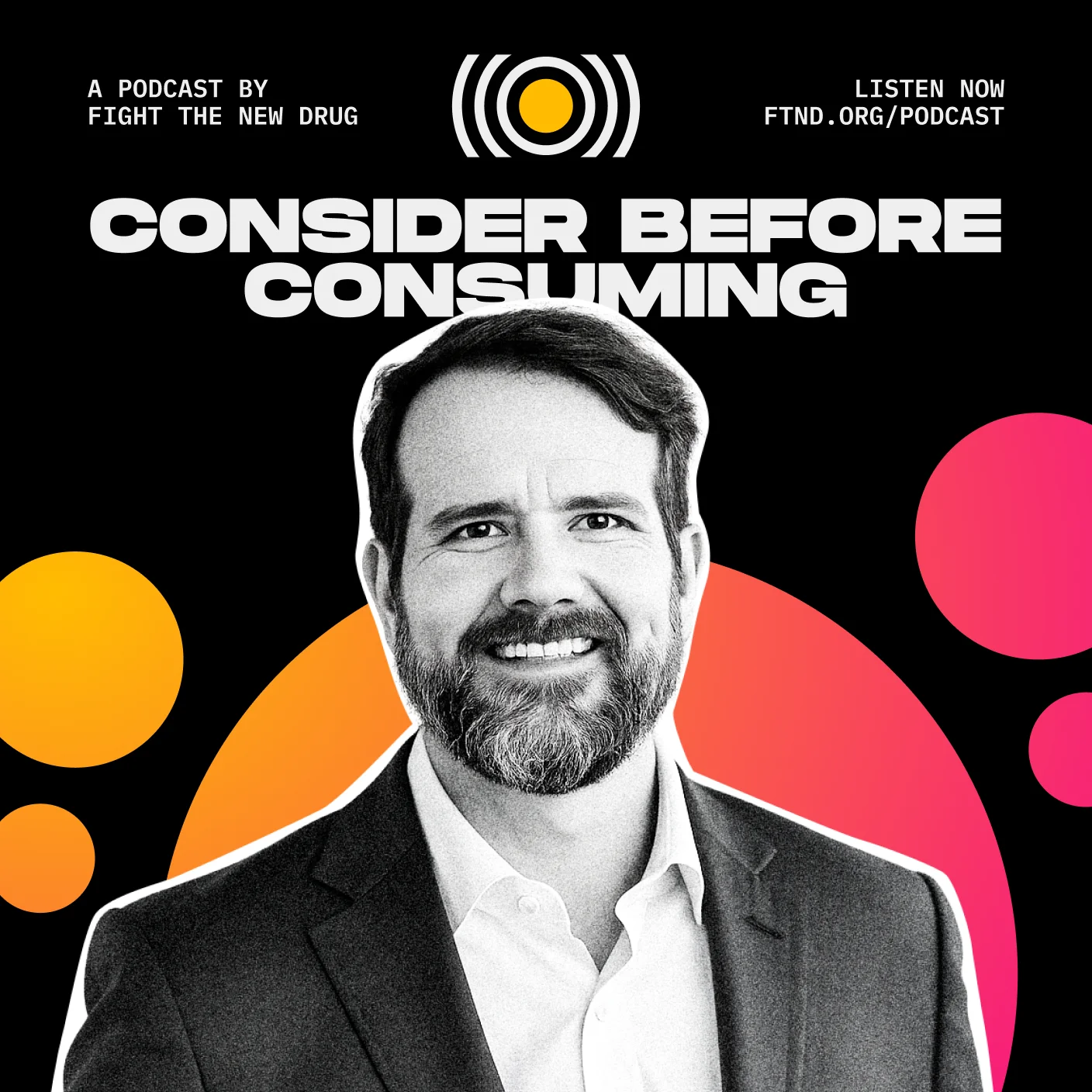
Episode 166
A School Principal’s Story of Porn, Escalation, Arrest, and Recovery
Available wherever you get your podcasts
Brian Shillingburg is a former school principal and recovery coach who spent 25 years working with students before his own struggle with pornography escalated into behavior that ultimately led to his arrest.
Drawing from decades in schools, Brian shares what he’s seen as pornography and sexualized content have become increasingly accessible to young people. He discusses the realities of early exposure, how pornography can shape expectations around relationships and sexuality, and why many parents underestimate what young people are navigating online today.
Brian also shares his personal story, including his first exposure to pornography as a child, how it became a coping mechanism for stress and pain, and how years of use eventually escalated into buying sex. He opens up about the arrest that changed his life, the impact it had on his family and career, and what accountability, recovery, and rebuilding have looked like since.
EPISODE TRANSCRIPT
Fight The New Drug (01:19)
All right, Brian. Well, thank you for being here with me today on Consider Before Consuming. You have such a valuable perspective to share with our listeners, and I’m really looking forward to getting to have this conversation with you. So to start, can you just tell us a bit about yourself and the work that you do today?
Brian (01:34)
Natale, thanks so much for bringing me in this space. I’m just honored and humbled to talk to y’all today. My name is Brian Schillingberg, owner and lead coach of the 9th Inning Project. It’s where we help men, churches, and families step up in sexual sobriety. And so we do stuff like one-on-ones, small groups. We support churches, building recovery programs, parent workshops, supporting pastors in their recovery journey, and also helping pastors navigate that world in their space.
So I am a dad of two incredible children and wife. My wife is just unbelievable. I don’t have words for my wife, who she is. Just grateful to be a husband and dad first and honored to get to do this work for people.
Fight The New Drug (02:30)
Awesome. Well, part of why we wanted to chat with you today, in addition to the work that you are currently doing, is because you’ve spent decades now in school systems, 25 years, I believe you’ve mentioned. So, you know, we want to talk to you a little bit about the very unique perspective you have on these issues. What have you noticed about, you know, the age and context in which young people are first being exposed to pornography in your experience in schools?
Brian (03:00)
Yeah, great question. I think, you know, I’ve had this really cool opportunity where I started back in the early 2000s with kindergartners and finished my career working with high schoolers. So, and I’ve kind of worked everywhere in between. So that’s been such a gift in my world. You know, even in, I’d say early 2000s up until, you know, early 2010s, pornography was not a big piece of our world, or what we did in the school system, you know? I say mid-2010s, 2012, 2015 is where we really started to see a lot of challenges in just, in the community, our students, in the student body. Dealing with it more and more, and the effects of it between students, and what was going on in the classroom.
I’d say, you know, man, we’re talking about exposure, right? So…we see kids now anywhere from eight years old, elementary, getting exposed to pornography very early, because they’ve grown up with an iPad. They’ve had a screen in their hands since they were little, right?
So, you know, exploitation, man, is also something that we often see, you know, predators prey on young girls and young men. And so we’re seeing, you know, 12 years old as a first experience in exploitation. That’s when boys are getting their first smartphone around then too, right?
It’s just being in a porn-prevalent culture, being a part of that. And as that has become more a part of our society and part of our culture, the more of a rise we’re seeing that in younger and younger kids today.
Fight The New Drug (05:04)
Yeah, which is, I mean, so startling. We do know now that it’s not if kids will be exposed, it’s when they will be exposed to pornography, statistically speaking. And there is such a gap in what parents understand about, you know, this world that young people are growing up within, which we’ll talk about a little bit more in a moment. But just thinking about it from when you first started, early 2000s, you know, the internet wasn’t in everybody’s pockets, and you have been in the school system
But with the ubiquity of the internet and smartphones and devices, really, we’ve seen this age decrease. We’ve been around for 17 years, and we’ve seen that average age of exposure decrease. And that’s just what we have statistics on. We often hear from people who say, I was first exposed at five, at four, at six, younger and younger. And so, going back to that exposure, from what you’ve seen, how prepared are young people to process that kind of exposure when it happens?
Brian (06:03)
Yeah, man, our kids aren’t prepared. They don’t, I mean, you know, I want to preface this to say that I’m not a shock and awe kind of guy. I’m not walking into this space to say that everything’s doomed. Man, I have so much hope. I have so much hope for our kids and our future and what lies ahead. But early on, I say this, adults don’t get addicted to porn, kids do.
And the work that I do with men, I rarely have I met a man that says, yeah, as an adult, I got addicted to porn. It happens, right? But what we’re seeing are kids. Kids are getting addicted to porn, right? I think that’s something that we really need to recognize in our culture today. I really saw a total shift in our students.
At the time when the pandemic came, I was a middle school principal. 14, 1500 kids, and we watched our kids go from happy and healthy. You remember when that happened, everything shut down, and then for a good several nine weeks, that we that last semester of that year. Natale, kids were isolated.
They had two things: technology to try to navigate school, right? A screen, right? And they had privacy, and they had isolation. And when we got our kids back after the pandemic, it was an absolute nightmare. It was something I had never seen before. It was enough for me, what I was dealing with in my own life. It was one of the hardest things that I experienced as a school leader.
And because our kids were just absolutely a mess, they had no control, they had no ability to function between each other. They were acting out; they couldn’t handle or manage anything. Everything was super sensitive. They’re very, very sensitive to anything, any problems, you know? And so that’s evidence enough for me as a school leader to watch.
You know, and I know not every kid was in there watching porn all day, but listen, you know, just exposure to technology and social media is enough. And isolation really, really harmed our kids. They weren’t prepared for that. And I would say and argue today, we are still recovering from that. Our kids are still recovering from what they went through during that time. So, yeah.
Fight The New Drug (08:51)
And I think that really speaks to the power of the influence of technology, but also what’s being normalized for young people right now, both through pornography and also just sexualized content generally. In your experience, how does repeated exposure to sexualized content, including pornography, begin to influence what students are seeing as quote unquote normal over time?
Brian (09:16)
You know, I go back to that porn-prevalent culture. Part of our culture has really accepted and just normalized sexuality in a way that is a, it’s a catch off for kids coming up. You know, we miss that subliminal messaging that we see. Sex sells. We know that. We know that in this world today.
But what I think we’re missing, and I want to hit on this specifically, is that, for instance, my daughter watching YouTube Kids, I’m always looking over her shoulder. I’m always checking in, like, hey, what you doing? What you watching? We’ve got our boundaries and what we set and we do that out in the open. There’s no privacy in that space for my 10-year-old daughter. But in this, you know, walking through, watched her, she was looking at a YouTube video, and I was like, whoa, what are you watching? And I came back and it was a real popular girl who is a preteen, dressed like she was 25, And something my daughter, very innocent, looking excited about makeup, learning about how to put on things, it’s so exciting for her. She’s getting exposed. She’s getting exposed to that sexualization really quickly.
And I think that’s the thing that exposure begins to influence because what we see is kids moving towards, okay, now I get my social media following, and now I’m looking for likes, and I’m looking for follows, and I wanna shoot videos, and I wanna get, I wanna start a following.
I don’t think you can talk to any teenager today that’s not thinking about, man, I’m just so excited about getting a video out there and gaining a following, you know? But what we’re seeing now is this culture of grooming in these teeny bop sites that are really pushing this. I don’t think people understand or know the connection between that to OnlyFans because we’re seeing kids 15, 16 getting hundreds of thousands of views, and that being the example for our kids, and then them making this big exclamation, hey, all my followers, guess what? I’m gonna be jumping over to OnlyFans when I turn 18 tomorrow. I hope to see you there, right? Man, they’ve already got an automatic following, and they’re ready to go, making posting the millions that they make, you know? And I think that’s the part that we’re missing is seeing the underlying causes that’s taking us into social media and then grooming them and getting them ready for what’s next.
Fight The New Drug (12:09)
Right. And it’s taking things that are natural and normal for kids in a healthy way at their age to be curious about sex or to want to build their social circles, or these things that in healthy ways, it’s normal. It’s this sexualized content that pornography is normalizing things that are age-inappropriate or unhealthy for kids. And it is affecting their behavior, their emotional health, their interactions with each other.
Brian (12:41)
I mean, Natale, 25 years, 1,500 kids of junior high, I mean, over a decade and a half in high school, know, two and a half years. I saw, I’ve seen some stuff. I’ve seen some things. You know, I think the worry, we’re seeing kids acting out earlier, we’re noticing that even in junior high, young kids getting caught acting out with each other in restrooms, right? And getting caught.
You know, obviously, we’re seeing more of porn use in the classrooms, right? Which is awful, in libraries and in private settings. If you guys think of VPN for a school, or I think if you think the school’s firewall is working, it’s not. Kids can get around that. I’ll tell, I’ll have a story about that.
You know, we’re seeing kids also getting pulled more and more into these chat rooms where it’s normalized. And Natale, you can go online anywhere, jump on, and within 20 seconds, you’re talking to a predator. I mean, you really are, you can.
That is so scary for our kids today, right? It’s something that we have to be aware of and mindful of, and know who they’re talking to. So, you know, seeing kids jumping into chat rooms, getting impressed on by adults, bringing that around into the student body. Man, a ton of sexual photos of their friends, sending them out to other people.
You know, I…man, one horrible thing is that kids get these photos and collect them, put them in group collections and Snapchat, and make private rooms for that. We’re seeing a lot more of that today. And AI is just turning everything on its end, right? And education, but with deepfakes and kids’ faces getting out there, we’ve seen stuff where kids are…photos and deepfakes are made and then it’s put out on social media, you can create a fake account easy and point a bunch of Instagram people to that. And then what you’ve done is you’ve just brought light to this kid who’s never done anything wrong. And now they’re living with that for the rest of their lives.
So it’s really, when you talk about the impact social media has on our student body and who they are as people, it’s wild. And we don’t really see it from a school perspective. We see it way more because of how many problems we notice during the year.
Fight The New Drug (15:46)
Right. And I think that speaks volumes. We often go into schools, we speak to parents, they know that, you know, pornography could be an issue, but they often think their kids aren’t, you know, experiencing it. And they don’t realize, you know, the entire scope of other things that are really tethered to this issue of pornography, of sexualized content, the way that children are being exploited, the way that things are being shared. And as you mentioned, so many parents assume, well, there are safeguards in schools and in libraries, and so, you know, my kid can’t access anything in any of these safe spaces. Can you speak a little bit to that?
Brian (16:25)
I have a story. So a young man that I had worked with actually fostered him into our lives. I typically mentored a kid every year, and was working with this young man, and I had something come through on my desk where a kid was looking at pornography in a library. And I was frustrated about it, and you know, I was talking to that student. said, man, this…how are kids doing this? And he was like, watch this.
He jumped onto the computer and then he downloaded this kernel that was a, it was like a VPN that you could just download immediately, two clicks. He had open access to the internet, two clicks. And this was almost six years ago, okay? Like kids, if they know that they can get around something.
There’s no safeguards. I want parents to understand this. The only safeguard that we have is our relationship with our kids.
And we forget, man, age verification is a total joke. It’s not helping anybody. But the problem that parents don’t understand also is that when, even if you take your kid’s phone, even if you put all the restrictions around everything that you could possibly imagine, your kids are still around other kids with devices. And that changes and shifts everything. It shifts the whole, whole game, right? So, peer exposure, it bypasses any safeguard that we’ve tried to put on the books today.
Fight The New Drug (18:21)
Yeah. And you know, that’s such a tough place for parents to be because you’ve mentioned, you know, there’s so much hope. There are so many parents, you know, doing the quote unquote, right thing and, and learning what they can and putting every safeguard on. And kids still exist in this world. And, know, while we’re doing the work we’re doing, you’re doing the work you’re doing to try to combat so many of the things that are happening and being normalized in this world. The truth is that this is still the world that we live in. And so the best thing that that we can do is talk to kids and prepare them for this world and to know they can talk to safe and trusted adults when things come up. And we’ll get into that a little bit more later.
But I wanted to ask, following that story, I think so much of the value of what you have to share and what your perspective brings is these kind of true stories that people say, well, that’s not happening in my kid’s school, or that’s not happening. And the truth is, these things are happening everywhere.
We want to be careful not to mention, you know, too many things that are too specific, but do you have any particular stories that stand out to you that would be helpful to share to illustrate just how much kids are being impacted today?
Brian (19:29)
Yeah, you know, I had a young student that was in middle school. I can’t remember what grade, sixth or seventh grade, but I had actually another parent reach out to me and say, hey, my daughter has noticed some activity of a friend using her phone to talk with another guy.
And so we went in, we investigated, we looked up, we notified parents, we got them involved and we noticed and uncovered a whole world of grooming with this little girl that we had no idea was that that parents had no clue was happening. And when you get to a place, that’s what I’m talking about.
Kids can even when in the parent, when I had talked to them and said, hey, we’re limiting access. We’re doing everything we were trying to do as kids. But she was looking up and contacting and making contact to that predator via another kid’s phone. You know what I mean?
And so I think, you know, how do you arm a parent with that? How do you give them help? How do you show up for them in that moment where you’re basically saying there is nothing that you can do as a parent other than the relationship you have with them, right? And you can do all the safeguards, and we will get into that about how important that is, but you know, that’s the part where I send a total message of what’s your plan as a parent and what does your communication look like with your kid to know and have this open dialogue of trust and honesty to where you can be really transparent about the hard stuff, about boys getting interested in that, understanding what masturbation is, understanding how porn plays into that, the shame.
Man, the shame that comes with girls and boys at that age, right? I want parents to take heart and say the best way we fight this thing is by the relationships in our home and the things that we’re doing with our kids and communicating, building that world of communication, you know?
Technology breaks that wall for us. It kind of separates us where we feel connected, but not really, you know? And so I think the push is to be, is to know and to be involved in communicating and connected. It’s connection, it’s relationships, that’s where it’s at.
Fight The New Drug (22:22)
That’s so well said, and while we’re here, something we often hear from parents is, well, we know how many people in my generation had a sex talk with their parents or had one conversation, and it was kind of like, okay, well, that’s it, and figure it out. And I think something you just mentioned is that relationship with your kids is, we see parents who say, I have a great relationship with my kids, but this is not something
Brian (22:39)
Yeah.
Fight The New Drug (22:51)
they have ever spoken about with their kids because often there’s this fear that in talking about it, they’re going to make their kids curious about it or they’re going to, you know, push them to seek it out, and we know that research shows us that it’s the opposite. It doesn’t cause kids to become curious about this, and often young people are looking for answers to their questions about these things and they want a safe and trusted adult to be someone who can who can be their source of information on this and we often say that, you know, parents you want your kids to ask you about this and not to search the internet because you can give probably more age-appropriate answers in a lot of instances.
Brian (23:35)
Yeah, yeah.
Fight The New Drug (23:37)
I want to ask a little bit about your personal experience. So you’ve had a front row seat to how this has played out in students’ lives. And when you reflect on your own experiences as a teenager, what do you remember about how pornography first entered your life?
Brian (23:52)
I’m showing my age a little bit, 45 here. I experienced pornography first on a playground in the fourth grade on a piece of paper, right? And I’m sure it was ripped out, folded up, and put in that kid’s pocket. But when I saw that…
And then immediately, I want to say maybe a couple months later, I remember getting invited over to a friend’s house, and he exposed me to his dad’s porn stash and videos and all these things. Like, man, at eight, nine, like I didn’t know what that was. It didn’t make sense to me, but I liked how it made me feel, right? I loved that feeling.
And going through a lot of my life right around that age, moving and some hurt my family’s life on top of some abuse that I had experienced from another kid, really pushed me into escape and struggling to be able to live and cope, and wanting to isolate. So, in my growing up, my early teens, and pornography played a vital role.
And they kind of played on each other all the way through my mid-30s into how I dealt and coped with life. And right around, I think, 17, man, my dad and I, we were so excited to get a computer and learn how to build one and put it in my room, but…he, man, at that time, people weren’t talking about, you know, how easy pornography was to download, you know, and how accessible it was even at that time. So 16, 17, 18, I had already established, you know, four or five years of behavior. So that was like fuel on the fire, right? For me, growing up. Yeah.
Fight The New Drug (25:52)
Right. And how did your relationship with that change? You’ve mentioned some of that, but how did that evolve, and what role did escalation play in that experience for you?
Brian (26:03)
I think, you know, this is hard. When I was a middle school principal and right around the pandemic, when things had gotten so hard, man, I was dealing with anxiety attacks. I was struggling. I was going through my own stuff and had gotten exposed to, I still kind of use that pornography thing. I’d pull it off the shelf. I could isolate it. I could keep it. I had kept it so tight and so, you know, hidden, it was just the thing that I could use and pull it out anytime I wanted to, and I could cover it up like it never happened, right? But that escalation happened when the problems in my life were getting harder, and I was seeking relief.
I went to a massage place very innocently, got that experience, and man, it was like everything was great. My anxiety was down. My body felt good. I was in a right place. But when I was propositioned at one of those moments, I didn’t say no.
And that was like, man, was like, all I could say is like a hook in my back. It was like a hook in my back. It was like pornography and everything that I had exposed myself to and how I viewed women, and everything that I had done had worked up to that moment where I had experienced that. Man, that wasn’t enough. That wasn’t enough, getting a massage. It was going and seeing a, you know, an escort was the next easy, the next step.
So people who think that pornography can be managed and you can keep it in contained, that’s very true. But what you also see with people who struggle with addiction is that often they deal with one, they deal with multiple addictions, but two, they’re also diving into that chemical hit in their brain and they’re wanting that next bigger, better thing.
OnlyFans is like that, really easy kind of transfer where you think you’re having this personalized experience, you know, where pornography is not enough. I mean, I want to talk to the real person. Let me experience that. Let me chat with them. Let me get some photos. And then here we go. We’re moving. We’re just pushing ourselves closer and closer to having that real life experience.
Again, when you look at pornography, too, we don’t realize how quickly kids get inundated with these sites, of them wanting to go to chat rooms and them getting exposed to real life experiences. That’s the part that is missing.
Man, it’s my mission. It’s my mission. After what I have been through and what I’ve been exposed to and my knowledge of what I had as a school leader and teacher, I’m armed and I see it with the men that I work with today.
Fight The New Drug (29:21)
And can you share as much as you’re comfortable, know, where that behavior really escalated to kind of a breaking point for you, and what that experience was like?
Brian (29:33)
Yeah. December of 23, I was wrapped. I had the opportunity to be a school leader in probably one of the most prominent schools in Texas. It was an honor and a privilege to be a part of these parents, this community. I had gotten right out of about…2000, I guess 2000 parents and students, getting to speak at that event and be, you know, a part of something so amazing.
And I was full-blown in my addiction. I was already visiting escorts and decided to go make like, I think within 15 minutes of that moment, texted someone, and went and visited that escort. And within about 30 minutes, I was arrested.
I had handcuffs on. I got pulled into a solicitation…of prostitution sting. And so, man, I don’t really remember much at that moment, just because it was like I remember feeling sheet white and a lot of sweat, sweating and I found myself in a jail cell, a padded…they were afraid I was going to end my life. They said I made comments about stuff like that.
And, you know, I just remember sitting in that…I didn’t really…I had a hole to urinate in. I was naked with the smock on. And, you know, I just remember sitting in that room just alone. Just broken and alone and defeated.
Also, in a moment, not wanting to go outside because I knew the life that I had being…all I had ever wanted to be was a principal, school leader, I knew that was gone. I knew everything ahead of me was, was gone.
And you know, they bring you, and they arraign you, and walk you through the courts in that smock naked, it’s wild, and then they put me in a holding cell, and then right after that they, you know, give you clothes, and you’re sent up to the population with everyone else, and I remember walking up into that room, and I see our big newscast on the six o’clock news. I walked in right at the six o’clock news and I was the title, former high school principal busted in a sting. And the person that was sharing this information was a student at my school, a woman that I had so much appreciation for who had come spoke to our kids.
Jail cells like people shaking the walls. It was like a movie, man. I couldn’t believe what had happened. The brokenness of that moment really helped me see just how much pornography had devoured and ruined everything that I had worked so hard for.
Fight The New Drug (33:08)
Thank you for sharing that with us. I’m curious to know, you mentioned that pornography initially was something when you were stressed, it was something you could kind of put in its box, and it could happen over here. And even as that behavior escalated and you were with escorts, did it still feel like that was a separate life, or something separate that happened over here? Was there ever a thought in your mind that that could affect?
Brian (33:43)
Absolutely, but that’s part of the addiction. That’s where it all starts. You remember, I was that kid that exposed myself to pornography over and over and over and over over again. It distorts your mind. It keeps you from really maturing. It breaks the way that you can see women as an adult.
And then as you get into more riskier and riskier behavior, addiction is like that, right? Why do we do, why do addicts do the things that they do? They do these things because they pretty much shut off any, you know, our prefrontal cortex is where we make those decisions. Not the amygdala is what we use to fight, you know, that fight or flight. And when we expose ourselves to that chemical again and again and again, it’s like, it’s like a dopamine hit. It’s like our decision-making factory is shut off.
Yeah, absolutely. Absolutely. I knew what was at stake and what I was risking. But a part of that is also the risk and the chemical I get from being exposed to that. It just wasn’t enough for me anymore. It wasn’t doing it for me and resolving the problems of my life, you know, and now that I work with men today, I see the same exact thing, same thing where they’re exposed for so long or abuse in their life. What fires together, wires together. Those things take and travel with them into adulthood. So yeah, I knew what I was losing, but that’s part of what addiction is.
Fight The New Drug (35:37)
I want to get into something that, as you said earlier, you know adults aren’t getting addicted to pornography, kids are. Because that’s really where this starts with that early exposure for so many kids, what we know about addiction, it’s that escalation. It’s that always seeking a little bit more and a little bit more, and how that is a slippery slope, and, you know, I just want to thank you again for sharing that so vulnerably. I can only imagine you know that that’s difficult to do every time that you share that, and I appreciate you sharing that because I think it’s something that is helpful for so many of our listeners to hear, really how something like this can escalate, and I also think it’s helpful for them to hear of the process of healing from that point.
So, you know as much as you feel comfortable sharing, I want to ask you, what did it look like for you to begin taking ownership of what happened, and you know, what’s the process of rebuilding your life since then look like?
Brian (36:38)
Yeah, hope, man. There’s hope today. There’s hope today. There wasn’t. There wasn’t hope for me. Really hard couple of months after all that went down. And you imagine like our, you know, home being surrounded by news people for over like a week, right?
What my wife went through when she had to come pick me up from jail. I can’t even believe she picked me up from jail. The impact of a school community of students, of people that trusted me. Man, you know, I realized who I had become, you know? And the thing that I loved the most about who I was and what I did was gone. So really everything was done. Everything was done. There needed to be a rebirth and a regrowth.
You know, I was sitting on my bed that next day, trying to figure out what to do. had a, had a friend, a childhood friend actually, from Be Broken Ministries called me, and he said, Brian, and he didn’t mix words. He didn’t come to me, giving me a hug or saying, man, it’s really hard with what you just went through, and that stinks. He was like, no, man, you’re fighting for your life. Your life is what you’re fighting for now. You’ve got to get to the root. You got to get to the root of what is doing this, man. And I hold onto that to this day. I hold onto that because he was right. I was desperate. It was either die for me. It was either die or it was figure out why I was the way that I was. Right.
And so in our faith communities, we went to a retreat. It’s called The Gateway to Freedom workshop, where I got to learn about my past. We got to role-play and, you know, we all carry wounds. We all carry wounds of some sort, and it’s like an onion, you know? As it grows, as layers grow and grow and grow, it’s harder to see on the inside, to see what’s going on deeper, right? It’s hard, but we gotta get in touch with that inner child. We’ve gotta see the shame lies that I had developed over the years that had caused me to be the man that I was today, or at that moment, right?
So going to that retreat was powerful. I said, you know, I’ve got to get help. I’ve got to find somebody that can help me with the themes of where my brokenness was. I got in touch with the CSAT here down in the Houston area, and Will, man, he was incredible for me. He just met me where I was. He told me, and I use this to this day, said, you know, meeting you at your greatest area of need right now. We’re going to, we’re going to work on that. And so what happened was just months of unpacking. We had to unpack my life. We had to really expose my…who I was as a kid.
And then man, right after that, I walked into, I don’t know if you’re familiar with a formal disclosure process, but I went through every sexual broken story of my life that I had. And then Will read it, and he edited it and cleaned it up, and sent it to his peer to edit it. And then in a therapeutic space was read to my wife. And then after that, a polygraph.
So that journey was amazing in terms of how healing it was, but it was so painful and so hard. But through the process, you know, I started coming out of this fog and I started getting around other men who were dealing with this same thing. And in that community, I just kept on coming back. I kept on hearing guys in recovery dealing with this thing. And then I started learning the tools. I started figuring out what a recovery action plan was. I had no clue what that was. I had to set these boundaries with my wife.
I had to learn about guardrails. I had to learn about my inner, middle, and outer circle behaviors. I had to learn what an outer circle was in terms of like doing things that were joyful for me or fun. Like, how do I live in that space, right? And then, as community built, I got to start leading a group. I got to start working with other men and sharing my own story.
And then like, I probably wouldn’t be sitting here today if it weren’t for Demand Disruption. My buddy Joe Madison, he got in touch with me through, actually, the courts put me in touch with him. And Joe is a part of a huge nonprofit down here in the Houston area for anti-human trafficking, but he does something way different. He works with the buyers. He focuses on their needs, which, let me tell you, is such a need in our nation today. He works with those men. He empowers them.
He called me in, and we started working together. He saw my recovery, and then we just started going lockstep, you know, working hand in hand. He got me into a podcast, and I told my story there. I mean, Natale, I got a crazy story to tell you, man.
You know, just a year into recovery, Joe calls me, and he says, listen, man,I have this vision of you getting on this podcast with another buyer and three former prostitutes, and we’re going to all talk about what the solution is, and we’re going to learn a lot, and we’re going to go through some pretty heavy things. Can you do that? And I was like, man, if you think you can talk my wife into something like that, that’s fine, right? Let’s go.
But anyway, he started off with just a dinner. We all got together at dinner, and I was scared to death. I was shaking. Like I was shaking. I didn’t want to go in. I was sitting there with my wife, and my wife was like, come on, let’s go. Let’s find out what it’s about. And you know, I sat down real sheepishly, and we kind of talked about what we would bring at that table. You know, I just talked about openness and honesty, how important radical honesty is in my life now, and then my wife spoke, my betrayed partner spoke, a woman who’s had to find recovery on her own, who’s surrounded herself with incredible women who have been there for her in the darkest of days. And she started to tell her story. And then everyone, I’m sorry, this is.
Every one of those women who had, been in their own recovery, some 25 years, right? And one of the women there found just an incredible moment of healing to say, I don’t think I’ve ever really sat and talked with a betrayed spouse, you know?
So then that’s kind of where the podcast took off. And I think since then, I’ve realized that our brokenness, my brokenness can be used in, in to honor and help men along the way, you know, and help families, get, get away from how devastating pornography can be in people’s lives.
Fight The New Drug (44:52)
Thank you for sharing all of that. I’m so grateful you mentioned this podcast because looking at the demand for the commercial sex industry generally, I think, often easy for people to just think of sex buyers as loners, creepy people, like there’s some stereotypes about sex buyers that we know there are a lot of you know average people who find their way down this path of addiction as something escalates and find their way into these positions where they are buying sex and contributing to the commercial sex industry in this way or only fans as you mentioned person purchasing you know content on there as well, and I think there’s often a lack of empathy or compassion for individuals who have been down that journey and how they got there.
And as you mentioned, again, oftentimes, this starts when people are kids. And so, looking at the demand and finding resources to help rehabilitate sex buyers is how we decrease the demand. It’s how we, you know, if we want to stop sexual exploitation generally, we have to look at the demand and figure out what is causing this behavior generally, as you mentioned, on your individual journey, but also on a societal level. And so, just to speak to how important that organization is that you mentioned, and this work that’s being done.
Brian (46:25)
Yeah.
Fight The New Drug (46:29)
I want to just commend your wife. I know she’s not here on this podcast, but, you know, sharing a story of betrayal is also exceedingly difficult, and knowing the journey of healing she’s had to go through as well. So many of our listeners can resonate with that experience as well. And so. I appreciate you sharing her experience with us as much as you can.
Brian (46:47)
Yeah. Well, I mean, I don’t think I’d be with her today without the recovery that she has sought on her own and the women that have just poured into her, right? And met her where she was, and gave her the authority to take a stand for herself, right? And to put some real clear guardrails in place for herself, right?
I’ll tell you, the way that she handled this, the way she walked through it, fueled my recovery. Because she would be courageous enough to stand by a man that had been through something like that, but was willing to wait. She was willing to wait. She was willing to say, all right, I’ll hang in there. I’ll see. She talks a lot about what her people say in there. They’ll talk the talk, but they won’t walk the walk. So it really wasn’t anything I could say, but it was what I was doing and my actions for my own recovery, not to get back in her life, right? Not to recover my family, not to be a dad again, but it was for her to see me become a well, good man. Honest. Radically honest. Yeah. She’s amazing.
Fight The New Drug (48:14)
Yeah, which is it’s so beautiful to see that. And, you know, we often get to hear on this podcast of, you know, quote-unquote success stories where both individuals separately in a scenario like this are able to find healing and go through this together. And then we we do also hear from individuals who that’s not the right path for them or someone does walk the walk, but or talk the talk, but does not walk the walk. And, just for any of our listeners who might be anywhere on this spectrum, just to know that there’s no one correct way to navigate one of these experiences, and there are lots of resources available to help you, regardless of any side of these issues that you might be on or experiencing. And so, we’ll link some resources in the show notes as well, but feel free to reach out to us as well if this is something that you’re experiencing and looking for some resources for.
Brian, I wanna ask you about the work you’re doing now that is, you you have this personal experience that is something so many people don’t share so vulnerably and quite so openly, but this has fueled you in the work that you are doing now. How does your personal experience shape the way that you talk to those that you’re mentoring about this issue today?
Brian (49:33)
I think it’s empathy. It’s just empathy. You want to say, in any scenario and in my own recovery, I’ve had to take an account of who I am. And man, I don’t, I say this probably two, three times a day, I don’t have a stone to throw. I don’t have a stone to throw in any situation, in any person that I talk to. I think I can meet people where they’re at, right?
You talk about the men that we need to help in the buyer scenario, right? It’s messy. It’s hard. It’s painful. People don’t wanna talk about sexual problems. They don’t wanna deal with, you know, exposing these kinds of sensitive things. You know, and when I can meet with a guy and sit with him, and just hear his story and connect to so many things. I’m telling you Natale, it’s wild how, from when they tell their stories, it’s like, yeah, I’ve been there. I’ve been there. I’ve been there. Yeah. I know what that feels like. They know, and they can see, and they can touch a person that’s walked this road, been through recovery, is still in recovery. But now got I’ve got to I can now reconcile those as I’ve been reconciled. Right?
And so it’s an honor to get to these spaces with other men and get transparent with them and start unpacking their lives like I had to do for me and start giving them the tools, right? Man, you start seeing men getting confident, and they start becoming better communicators. They start becoming better spouses, and watching their own maturity grow from from removing that stronghold in their life and then in starting to see them become dads and showing up for their kids and showing up for their wives. Man, I can’t think of a better thing in my life than getting an opportunity to do something like that. It’s so ugly and messy, but it’s…I’m honored. I’m honored.
I have a quote that I read every day. It’s on my computer, and it says, these are the wounded healers of the world, and healers who have fully faced their wounds are the only ones who can heal anyone else.
So that’s me, man. I got a chance to face my wounds. It was die or find a solution, right? And I’ve gotten a chance to do that. And so now I get to extend that help to other people. For parents who are fighting and are struggling, they don’t know what to do for their kids, are afraid, are dealing with outbursts, they don’t know why. They’re trying to set an environment for their kids for success, and they don’t know what to do. And I can see, I’ve had so many at-bats and conversations with parents, and I think the only thing that’s hard for me is that I watched so many kids struggle, right? And then, watch what it did to them and their development, right? How did I not see that in my own self, you know, growing up? And as a school leader? I think that’s one of the biggest things I struggle with.
But now I get to go back, and I get to really help parents. I get to help churches figure out, you know, what recovery looks like on their, in their campus and in their community. How do we help men in this space find a way to find freedom? It’s just an honor to have those perspectives so that I can meet people where they’re at, you know, at their greatest area of need.
Fight The New Drug (53:36)
And that’s such a beautiful message of hope to end on. I just want to thank you again, Brian, for sharing your story so vulnerably. You really have experienced so many different sides of these issues, and you have, truly, such a unique perspective. And it’s so wonderful to get to have you on this side of this issue now, sharing this and doing the work that you’re doing.
Is there anything we haven’t spoken about today that you wanted to share before we wrap up?
Brian (54:05)
No, I’m just, I’m just honored to be here. I’m honored to walk and talk with you and join in your movement and do what you guys are doing for you connecting to our youth, telling the story, and showing up and standing in the gap. We’re reclaiming our youth. We’re taking them back. We’re reclaiming the innocence of our youth. That’s what we’re doing.
And I’m just honored to walk it with you. I’m honored to stand here and tell my story and to fight for our kids and our future generations. So man, whatever we can do, I’m in the fight.
Fight The New Drug (54:49)
Thank you, and for any of our listeners, we encourage you to join us in this fight and continue. You know, this is a movement that truly takes all of us to build a healthier world, and we can build stronger communities together, and so we just thank you for listening and supporting.
Fight the New Drug collaborates with a variety of qualified organizations and individuals with varying personal beliefs, affiliations, and political persuasions. As FTND is a non-religious and non-legislative organization, the personal beliefs, affiliations, and persuasions of any of our team members or of those we collaborate with do not reflect or impact the mission of Fight the New Drug.
MORE RESOURCES FROM FTND





A database of the ever-growing body of research on the harmful effects of porn.