

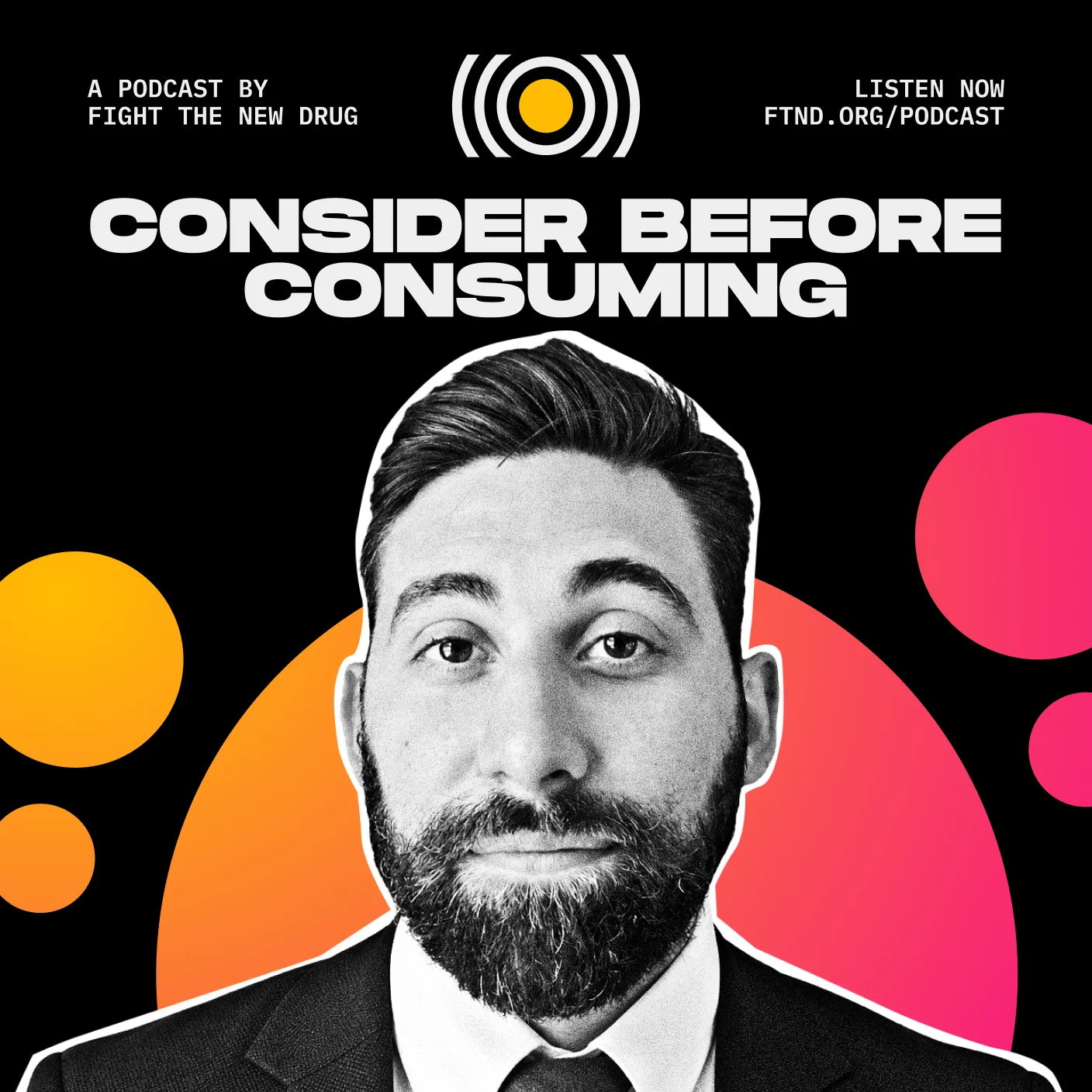
Episode 170
How to Quit Porn: Practical Advice from a Therapist
Available wherever you get your podcasts
Joseph Alto is a Licensed Professional Counselor (LPC) and the Head of Growth at Relay Health, a recovery app designed to help individuals overcome compulsive pornography use through accountability, community, and evidence-informed support.
How do you quit pornography? Why is it so difficult to stop, even when you genuinely want to? What actually helps people experience lasting recovery?
In this episode, Joe shares practical, compassionate guidance for anyone trying to quit pornography. Drawing from both his clinical experience and his own recovery journey, he explains why willpower alone often isn’t enough, how to identify the emotions and patterns driving pornography use, what to do after setbacks, and how accountability, community, and healthier coping strategies can support long-term recovery.
This episode is sponsored by Relay, a secure peer-support app that connects you with a small group of people who understand what you’re going through and help you stay accountable on your journey to quit porn. CBC listeners can try Relay free for 7 days by signing up here.
FROM THIS EPISODE
- Article: How to Actually Quit Porn This Year
- Podcast: Consider Before Consuming Ep. 152: Chris Chandler
- Conversation Guide: Let’s Talk About Porn
EPISODE TRANSCRIPT
Natale, Fight the New Drug (00:00)
Well, Joe, thank you so much for joining me on Consider Before Consuming. I’m so excited to get to have this conversation with you today.
Joseph Alto (00:06)
Thank you so much for having me on.
Natale, Fight the New Drug (00:08)
Of course, our pleasure. To start, can you introduce yourself and tell us a little bit about the work that you do?
Joseph Alto (00:13)
Yeah, so my name is Joseph Alto. I usually go by Joe, go by Joseph professionally, and I have two roles professionally. So I’m the head of growth and partnerships at a porn addiction recovery app called Relay, and I’m also a clinical therapist.
So my work at Relay really focuses exactly what the title says, right? So growth and partnerships, how can I find different avenues to grow our product, and how can I find individuals, or you know, groups of individuals such as churches, therapist groups, right? How can I get them to get on board with the mission and the advocacy that we’re doing with the app?
And then clinically speaking, I have been a licensed therapist in the state of Ohio, and I’ve worked primarily with men, focusing on men’s issues.
Natale, Fight the New Drug (01:08)
Yeah, awesome. And you have a you know, this isn’t your only area of expertise, but with the work that you’re doing with Relay focused on pornography, which our listeners have heard all about Relay, and we’ll talk a little bit more about that in a moment. But what led you to want to help people who are struggling with pornography specifically?
Joseph Alto (01:26)
Yeah, no, absolutely. You know, I have my own personal story of pornography. I’m only thirty-four years old, so I don’t know a lot of men who are thirty-four who haven’t struggled with pornography at some point in their lives. And it really did play a number on my life. I mean, I do remember, just even to, you know, get personal for a second, you know, I remember I was a year into marriage before I really started doing something serious about my pornography addiction. and it and it really did not bode well with my wife, right? And our marriage. So even going through that experience and the work that I’ve done, I’ve learned a couple things, right? Where you know it is possible to recover from this addiction. And that, you know, I would like to pay it forward. I don’t think my story is unique. I really don’t.
I think it’s a very common story, like I said, amongst, you know, my generation. So if I was able to, in whatever way, to help other men specifically find a path through this addiction, yeah, I would, I was all game for it. So that’s really like the motivation behind the work that I do.
Natale, Fight the New Drug (02:38)
You know, it’s so good to be able to understand that on a personal level. And as you mentioned, it’s unfortunately not an uncommon experience. And we hear from so many individuals who, like you, grew up with the internet and technology kind of advancing so that this became pornography became more accessible and more available. And so that is a very common story. And I appreciate you sharing that kind of personal anecdote that’s led you into this work.
Joseph Alto (03:02)
Yeah.
Natale, Fight the New Drug (03:02)
In the work you’ve done with individuals who struggle with pornography, you know, a lot of people think, well, if I wanted to stop, I would. Can you tell us about why quitting is often so much more difficult than people expect?
Joseph Alto (03:16)
Yeah, I mean, I have never met, I guess, someone who’s just done it on willpower. I mean, God bless them, right? If they have. I personally don’t know anyone who’s been able to do that, and I certainly wasn’t able to do that myself. You know, and there’s a lot of things playing against the individual who wants to quit porn but decides they don’t want to use, whether it’s like clinical, whatever type of intervention, right? They don’t want to go to therapy, or they don’t want to try an app like Relay, or they don’t want to at least even get like tapped into a network like Fight the New Drug, right? I wanna do this all by myself. I mean, you’re really fighting against, at this point, billion-dollar companies, right?
Billion-dollar companies that get you addicted to the phone, billion-dollar companies that get you addicted to pornography. And then there’s also, you know, just the commonality of the pornographic culture.
You have all these triggers in your brain, right? And your brain is also, by the way, working against you, right? Because you’re experiencing all these triggers in your brain. So you could even, you know, be listening to, let’s just say, a pop song, right, with graphic lyrics in it. A lot of people don’t realize. Like, yes, that that that imagery that is created in your head will then be the trigger to make you want to look at pornography.
So, I guess to answer your question, I mean, really, it’s I don’t think it’s a very sophisticated answer. I just think you have too many things going against you at any given point for you not to tap into the interventions that exist out there.
Natale, Fight the New Drug (04:47)
So really at the root of it, it’s this idea that’s like, well, if I wanted to quit, I would. But knowing that it can be addictive, knowing, as you said, these billion-dollar companies have worked to prey upon young people, especially. Algorithms are designed to keep people kind of hooked in this cycle of endless content. And then the way that this is working within your brain, as you mentioned, is really keeping you hooked. And so it’s not something that’s just easy to quit. But then you have the other side of it, which is that often individuals who are kind of stuck in that struggle are isolating or withdrawing from their communities, and their families, and their relationships. And so it can be so much more difficult than, you know, many people think.
What have you noticed separates someone who wants to quit from someone who actually begins making lasting progress?
Joseph Alto (05:38)
Yeah, that’s a good question. I see people who are serious about making lasting progress link up with some type of intervention. Again, whether that’s just like one-on-one therapy, whether that’s a group, having an accountability partner, finding resources out there, trying really to get to the why, I would say that’s really the big indicator of a person who is serious about kicking this. It’s what’s the why. Because it’s hardly ever a porn problem and it’s mostly always a pain problem, right?
Like I said, you know, I’m thirty-four years old. I started looking at pornography when I was twelve years old, right? And so the day that I struck out in my baseball game, my dad saw it, and I got really embarrassed and really sad. And then I looked at pornography when I got home, right? That was the reason, right?
So now, you know, as I got older, right, you associate every distressing emotion—boredom, anxiety, depression, what have you, right—with pornography. And you really gotta get to that why. You really gotta figure out what are the themes and patterns of my of my pornography usage. That i if someone if a man and w or a woman can do that, I would say, yeah, they’re on a better track than an individual who’s not.
Natale, Fight the New Drug (06:57)
Yeah. So would you say that, you know, there are common patterns or the reasons that people struggle with pornography, you know, do they tend to be fairly common or do they tend to be fairly different? You just mentioned some, you know, pornography being that emotional coping mechanism for stress or, you know, boredom or anxiety at the time someone’s very young. Do you find that’s really common, or do reasons people struggle tend to vary quite a bit?
Joseph Alto (07:22)
There’s always gonna be individuals on the margins, right? However, I think centrally speaking, for the again, specifically I wanna be very clear about this, specifically for for men, because that’s more of my wheelhouse. But I I would say trying to like centrally locate this, for most men, it is, it is the baby blanket for some type of pain that they don’t want to feel at the present moment. And it’s…what’s really sad is that it gets so unconscious at some point that you don’t ever actually realize that you are trying to mask away boredom. I mean right, I mean, and what’s hard is that these are very just foundational human emotions and the human experience. I mean, I it’s, you know, three o’clock my time. I’ve already been anxious, bored, and depressed today, right? Like these are all these are all emotions that I have felt. So the answer is like we cannot, we we shouldn’t be running away from these very naturally occurring things that are just like caked into our our human anthropology. But we should be recognizing what are the ways in which we are trying to escape from this natural human anthropology that we have.
So yeah, I mean, I really believe that sometimes it’s in theory that simple. You’re bored, you’re depressed, you’re anxious, you’re embarrassed, you’re not feeling loved, right? I want to go to porn. I’m not being noticed. You’re going to porn, right? I do think in theory it’s really that basic.
Natale, Fight the New Drug (08:58)
Yeah.
No, we spoke with someone recently who said adults don’t get addicted to pornography, kids do. And while there certainly are, you know, I’m sure some adults who hadn’t seen pornography until later in life and feel their, you know, compulsive habit or addiction began in adulthood, for the majority of people, as you mentioned, are people who see this for the first time very young. And it does become the response to these very human emotions that if you have kind of that go-to response, you’re not necessarily going to a trusted adult or you know someone’s not talking to you about how to manage that emotion at a young age, and this can kind of be the path that a lot of individuals very naturally find themselves on because this is what is available and normalized, especially for young men.
With all of that in mind, let’s talk a little bit about some principles that tend to help, you know, many people while recognizing that recovery looks different for everyone. So if someone’s listening today who wants to quit, where should they start?
Joseph Alto (10:00)
Yeah, I mean I think like every issue, right, you do have to have some admittance that this is an issue, right? I think that is at at the very least, that is always whether right now if someone’s yes, if someone’s listening to this and they’re struggling, whether it’s to yourself or to your journal or to a friend, right? Admitting, throwing that out into the ether is is is a good idea, right? You have to I mean, that’s why we have language, right, to make ideas into like living things, right? So you need to actually verbalize this in some degree.
And then I I do believe that you have to be like linked up with a trusted individual, an accountability partner, a group. And I know this is probably the most like vulnerable and scary thing for most people to do because they think that I’m the only one. This is so embarrassing. And that’s why it’s important to destigmatize it to some degree, right? I mean, it’s like you you need to just be able to raw share this.
So I would say, you know, find a trusted individual that you know, or maybe it’s something like you know, a group that you might be more comfortable not knowing these individuals so that you can be honest with them. I mean, I think you mentioned it before, it was something along the lines of, you know, this issue is bred in isolation. So the opposite of isolation is connectivity. So according to that, get out there, do something about it.
And then there is also, and I don’t even mean to be tongue-in-cheek about this, but there’s also just a very practical step. It’s like you just gotta get the pornography away. And I people I know even today, they’re like, well, I know, but it’s deeper than that. 100% it’s deeper than that. But you also…but the brain can do like really amazing things when you are not continuously introducing a stimulus, you know, every single day or every single day for a couple of a couple of hours, right? So you do need to, you know, just rid yourself of it in whatever way you can.
Again, and that’s where that connectivity piece comes. You know, ask a friend to, you know, put the password on the phone for a little bit or you know, something like that so you can actually give your brain time to breathe and space to recover.
Natale, Fight the New Drug (12:15)
Yeah, what are some practical changes that, you know, if someone decides they want to quit and they do what you’ve said, they, you know, write it down or tell a friend, they acknowledge that this is something that is a problem for them and you know, they they want to open up to community, what are some practical changes they could make this week that would, you know, genuinely improve their chances of success?
Joseph Alto (12:38)
Yeah, I I don’t wanna get like you know, deep or anything like that, but like we do really do, we really do live in a very like patterned existence, right? Like most of the things that we do are in accordance to some pattern and theme, whether we are conscious of it or unconscious to it. So I would say, like, you know, find a piece of paper or find a journal or you know, do it on your phone or what have you. But when you have an urge, because you’re going to have an urge, when you have an urge, I would task you with noticing a couple things.
Where are you, right? What time of the day is it? What are you feeling? Are you hungry? Are you tired? To try to figure out, like, okay, is this a muscle memory thing? I know a lot of guys who get an urge to look at porn when they, you know, pass the second stop light, you know, going home, right, from work, right? Because it’s that muscle memory. It’s like, I got an urge here one day, so I’m gonna keep on getting urges again.
So it’s again, like keep track of both those, like behavioral and those mental cues so that you can begin to formulate, like I said, what are the themes and patterns of this?
You know, it’s funny, I think, I don’t hear a lot of people say what I’m about to say, but I have personally seen it work is: say what the search would be, right? Again, like give it life. And I won’t like, you know, for the yeah, I won’t I won’t, you know, say anything here, but it’s like say it out loud because it makes you, like, less isolated. So like it it allows you to kind of see in a different light that, what I’m about to do is actually something that I don’t necessarily want to do. And what reminded me of that was saying out loud the search I was going to queue up in my computer, in my phone. If that makes sense, if I’m making sense without getting into, you know, all kinds of explicit details there.
Natale, Fight the New Drug (14:39)
No, absolutely. And I think, you know, it’s always great for people to have those practical tips. So we’ve spoken a little bit about how willpower alone isn’t going to necessarily be for everyone, if not for most people. And we’ve talked a little bit about how community support, how you know, breaking down some of the shame and stigma around this can help. So I wanna talk a little bit about your work with our friends and also sponsors of this podcast, Relay.
For any of our listeners who haven’t heard about Relay yet, Relay is an incredible tool. It’s built around connection and accountability and helping people find that lasting freedom from pornography. From what you’ve seen firsthand, what makes Relay different from other tools that are available? And how have you seen it help people, you know, experience recovery that is actually sustainable?
Joseph Alto (15:30)
Yeah, no, absolutely. Again, I think it always, it’s always gonna go back to the root work. What we have done and what we do for users of Relay, it’s been amazing, right? Like just the data we give them. If they, if you are active in the Relay app, I can almost guarantee that you will begin to unravel this huge onion that is your, you know, your porn addiction or your compulsive, you know, porn behaviors. You begin to see what is the reason, right?
I look at porn for three hours every Tuesday, the first Tuesday of the month. Why? Well, because the car payments do then, and I can’t necessarily afford it. So it’s that root work, and also just our are our great, you know, community feature, our great team feature, the fact that we situate both men and women into these very supportive teams. I really don’t believe that there’s another product out there like us, and we have, you know, the testimonials to show that we are doing good work.
Natale, Fight the New Drug (16:32)
Yeah, and these are virtual groups, right? I think sometimes the idea of a group can be intimidating for someone who thinks, well, I I don’t, you know, live near the people who or I don’t wanna talk to my neighbors about this. Tell us a little bit about how how the how this functions, how this group feature functions.
Joseph Alto (16:50)
Yeah, no, absolutely. Everything’s housed in the app. So like everything is very safe, very secure, housed within the app. It’s all virtual, as you pointed out, Natale. You know, we do that for a couple of reasons. I would say like the underlying philosophy of that is because if you can access porn on your phone in ten seconds, you should also be able to access recovery on your phone in ten seconds, right? And especially even today, right? Like in our in our culture, you know, love it or hate it, you know, where you know texting is very popular, or just obviously, being on your phone is just a greater part of your life. You know, of course, you know, if I if I’m having an urge at eleven o’clock at night, I can text my team about this, I can throw up a red flag, and my team can come to me for support. I wouldn’t necessarily be able to do that, right? It’s gonna be a little more difficult to maybe like call someone at 11:30, and you know, for them to be up. So yeah, the fact that you know we’re we’re aggregating individuals into groups across different time zones, more than likely someone is going to be able to respond to your call for help.
Natale, Fight the New Drug (17:55)
And you know, for our listeners, I’m sure anyone who listens frequently has heard lots about Relay, because it is truly something that we’re so glad exists and we’ve heard wonderful things about it from those that we know who have utilized this resource. So I would encourage any of our listeners who are interested to check it out, and we’ll continue to talk a little bit more about it throughout this podcast.
For anyone who maybe, you know, is using Relay or isn’t using Relay, can you tell us how someone can identify what is actually behind a trigger or what is actually triggering their pornography news use you kind of mentioned a second ago okay they notice they have an urge at this time at night and you took it one step further to say and it’s because this bill is due and I can’t afford it and that’s stressful. How can someone start to identify those kinds of connections to triggers they’re having?
Joseph Alto (18:44)
Yeah, I mean that’s a, that’s a great question. It’s a difficult question to answer, right? Because really it I how I’m perceiving this is really like the underlying element of this question is like consciousness. Like, you need like a level of consciousness in order to do this, which is I th–that’s difficult.
I mean, I I know a lot of people that I, that are addicted to porn that are necessarily kind of they’re just floating through life, right? Because they’re just, you know, kind of on their, they’re they’re they’re on their own, they’re doing their own thing necessarily. I don’t know. But yeah, no, consciousness, it really comes down to that. So I think the question is like, how can you be more conscious about any behaviors that you’re engaging in, right?
We really do, I think, exist in a really peculiar moment right now where a lot of what we do is just very I won’t even call it spontaneous, but it’s without thought, right? I mean, how many times I literally, before this episode, I think I like went on ESPN like three times just because– I don’t know, just because, right? It’s like, why was I doing that, right? So I think if you can, like there is some practice that you can do. It’s like stuff like that. Like, why are you going on, why are you going on your ESPN app just like four times for no reason? You know, why are you bringing your phone to the bathroom? Right? Why are again, like why are you doing these things? Why do you have this relationship with technology that you currently have?
So, say, even like practicing those principles, right? For example, it’s like I again I have no social media. It’s good for my recovery, and it’s what I need to do, but I’m still scrolling my email like I would scroll Instagram. That’s weird, right? And I swear to god, I actually do that. That’s weird, right? So it’s like, again, how can you gain greater consciousness to your relationship with technology?
Natale, Fight the New Drug (20:36)
Yeah, it’s so important to know it’s not just assessing your behaviors with pornography specifically or your coping mechanisms that lead you to pornography specifically, but it’s starting to kind of take an inventory of all of your behaviors broadly, you know? Starting to track your habits and patterns and when you do feel an emotion, how are you responding to it and having that consciousness about that, which I think for so many people, that can really start when you decide you, you know, to make a change with regard to your relationship to pornography or its influence in your life.
But I think sometimes we get so stuck on this small piece of what we’re focused on. You know, that if I tell you not to think about a pink elephant, what are you thinking about? A pink elephant. It’s focusing instead of focusing solely on that pornography piece, start to say, okay, well, this is a behavioral, compulsive behavior. Let’s look at my other behaviors. Let’s look at my other compulsive behaviors and assessing that, which I think is so important to remind people to kind of zoom out a little bit.
How do you help prepare people, you know, for these difficult moments instead of simply reacting to them? How do we set people up for success to be prepared when we get to these urges, when we get to these triggers, rather than just being in a position to always react to them?
Joseph Alto (21:54)
Yeah, you know, there is a very, you know, I I was talking about like all like the different billion-dollar companies that you’re fighting against. You know, it Idon’t think looking at pornography is natural. I just wanna make that very clear. But you are also, you know, in some way battling against, you know, biological instinct that is also ingrained in all of us, right? So I think, you know, I would say, you know, you have to calm down, and you cannot think of yourself as you know, a disgusting individual.
I’m some depraved, disgusting cretan because I’ve had this urge again. It’s like, no. You are someone who has been conditioned, regardless if you did it yourself, right? You still have been conditioned to want to look at this. And you are still a dignified individual. All right. So I would say like you need to cut that out. You’re not a Cretan, you’re not a monster, you’re just an individual who’s dealing with something, right? So yeah, that’s the that’s the advice that I would give.
I think that’s the best way to, again, you really want to get rid of the shame piece. And I think the shame and the guilt are two different things. I think it’s totally fine actually to feel guilty about. You’re still not an absolute monster, right? Like you’re still not a complete, you know, disgusting individual. You have dignity still. So that’s a very nuanced conversation that I won’t get into for the, you know, the sake of time right now. But yeah, it’s that line of thinking if, again, if that makes sense.
Natale, Fight the New Drug (23:27)
Like guilt can be a healthy motivator, but shame that says, you know, I am bad versus guilt that says I did something unhealthy, or whatever, It sets you up in a different spot for your recovery if you’re having those beliefs
Joseph Alto (23:38)
Absolutely.
Natale, Fight the New Drug (23:39)
about yourself. So breaking down that shame is so important. And sometimes, you know, for people the shame comes from saying, Okay, I’m gonna quit and then having a slip up or a relapse. For many people who will quit, you know, for a few days or a few weeks, it’s so common right to find themselves back in this pattern it’s probably extremely rare for someone to say I’m gonna quit and then truly never never look at it again while that, while that’s certainly the goal eventually for everyone, can you talk to us about relapse is it always a sign that someone’s back at square one? What would you tell someone who’s in that position?
Joseph Alto (24:20)
I think a relapse actually is, you know, and we even see this at Relay, it’s like, what can you learn from the relapse? That’s actually like what you have to do. If you have a relapse, and you know it it opens the floodgates again to, you know, essentially binging porn all the time, I would say, okay, well then we really need to stop and actually think about this. But if you have a relapse and going back to that consciousness, right? Like if you have a relapse and you can actually be conscious again of why you had it, it could actually be in some weird, twisted way, better for your recovery than not. Because you’re learning something about yourself, right?
When you fall, like you are learning about, you know, what part of the, maybe my knees are weak, right? Like, you know, what it was something, right? So when you have that relapse, you learn something about where you’re at in your recovery and where you’re at with yourself, where your mind is. So again, it’s very nuanced, but I do think it actually could be helpful in the long run.
Natale, Fight the New Drug (25:20)
Right. Because what tends to keep people stuck after relapse is often that shame, or I can never overcome this, or you know, what I’m not sure what other things you have heard.
Tell us about what tends to keep people stuck versus being able to say, Okay, let me evaluate what just happened, take this information, learn from it, and move forward.
Joseph Alto (25:39)
Yeah, you know, I mean it’s, you know, let’s just say like I don’t know, let’s just say like on average, let’s say you start looking at pornography when you’re twelve, and you just now decide to seriously do something about it.
Let’s say twenty-seven, right? So that’s a lot; that’s that’s that’s that’s that’s a decade plus, right? So then I see a guy, and it’s been like five weeks, and he’s relapsed three times, and it’s like, man, like I’m never gonna be able, I’m never gonna be able to like figure this out. And I have to be like, dude, dude, slow your roll. You’ve been like looking at porn for like fifteen years, and like you’ve just like not been looking at porn for five weeks. I mean, just even like measure that. Like it’s just not realistic necessarily. I’m not saying that it’s a one-for-one. I’m not saying that it’s gonna take fifteen years to recover if you’ve been looking at it for fifteen years. But I do, you know, you need to give yourself some grace. Like you do need to be kind to yourself, right?
And frankly, like you are doing something that most people don’t actually, as of right now, statistically do, which is try to recover from this. So you are on like this hero’s journey, if you will, right? And and and part of that hero’s journey is, you know, you fall, and you get up, and there’s always that sage individual to help you with that, right? I’m not the sage individual, more so like those again, I go back to those like accountability groups or those accountability partners and whatnot. But yeah, you know, I think that’s a big piece is that people just think that there’s a magic pill or a magic timeline to recovery, and that’s just never the case.
Natale, Fight the New Drug (27:11)
Yeah. What are some ways–you mentioned giving yourself some grace and kind of referencing the time you’ve been stuck in this habit versus the time you’ve been in recovery–what are some ways that someone trying to quit porn can measure their progress beyond simply counting days or streaks? I think that’s a place so many people find themselves is just counting days or streaks and not being able to see the progress beyond that.
Joseph Alto (27:36)
Absolutely. And I, you know, I just want to be clear, I have nothing wrong with streaks. I was never a streak guy. More power to the individuals that get power from the streaks, right? But I find people like to fall in love with the streak, and then if the streak ends, then that could actually be more, you know, hurtful for them.
But to answer your question, I would say, let’s go back to that emotion discussion that we were having a little bit ago. When you have that natural inclination, again, that every person has at every single day probably of their lives. When that natural inclination of boredom comes up, or you get anxious about something, right? Someone’s calling your phone that you don’t know, right? It’s a random number, and you get anxious about it. You know, are you still thinking about immediately looking at porn, right? Is porn the first thought? I think that’s a a great measure.
Maybe the maybe porn’s like the second or third thought. Well, great. Congratulations. At least it’s not the first thought anymore, right? So that is a great way to track development. Again, if you are not immediately associating pornography with every distress and emotion that you feel at any point in the day, yes, I think you’re making great progress.
Natale, Fight the New Drug (28:51)
Yeah. And even a step before that is if maybe someone is associating pornography still with those emotions, but they’re not going directly
Joseph Alto (28:58)
Yes.
Natale, Fight the New Drug (28:58)
to consuming it, that also is progress, right? Of okay, that’s still there, that’s still something I’m noticing now though, when I previously would have gone and given in right to that urge, whereas now I’m noticing it and I’m I’m gonna choose something else. That’s also a great way to look at progress.
Joseph Alto (29:14)
Absolutely. Well, really, really quick, I do want to say something, one thing.
Joseph Alto (29:17)
That’s a couple questions ago. That’s another thing. It’s like you gotta give yourself some grace. Just because you think about looking at porn, that’s completely different than actually looking at porn. And you have to be able to distinguish that, and you have to actually identify that as a win. You know, just because you think of it doesn’t mean that you’re actually like, and you don’t linger on it, especially. Doesn’t mean that you’re not. That’s totally different than actually going to it and looking at it. And again, I think that’s a serious win.
Natale, Fight the New Drug (29:47)
Yeah, absolutely. Speaking about those emotions, so we’ve talked about how many people use porn to cope with stress or loneliness or anxiety or other difficult emotions. We’ve kind of talked about, you know, getting out of an environment where you can easily consume porn and we’ve talked about noticing your triggers and noticing your behaviors. How do we get to that deeper layer of saying, Okay, I’m now aware that these are the emotions that I’m experiencing that are leading me to porn, and how do we replace the coping mechanism or the coping strategy of consuming pornography with healthier ones?
Joseph Alto (30:26)
Yeah, and yeah, healthier ones sometimes don’t even actually look like healthier ones. I’ll give an example. You know, one thing that I even learned in my clinical work, you know, both when I was in school and then actually practicing counseling, you at some point you do have to let the anxiety just like wash over you. Now to hear that, like as like a lay person, you’re just like, no, that’s actually the opposite of what I should be doing. It’s like, no no no. It’s actually probably what you should be doing is you should actually just like let that wave of anxiety literally roll over you ’cause it’s going to pass, right? It’s kind of like that with urge as well. If you like let it ride out, it’s going to pass.
But I again, I want to focus on that main part of your question. It’s okay for your brain to be conditioned to things. Like that is actually okay. So if your brain can get conditioned to every time that you I don’t know, like you get yelled at by your boss, and your inclination now is that I’m gonna go talk to my spouse. Great. Let’s condition the heck out of that. That’s amazing, right? Like that’s that’s that’s perfect, right? Because again, what does it do? It gets you out of isolation, it gets you into connectivity. So I think it’s, you know, being able to really identify what are the things that aren’t porn that at the same time aren’t destructive to you as well. What are the things that even make you feel two percent better in the moment by doing it?
A lot of people are just like, it needs to feel…I need to feel amazing, or I need the distress and emotion to totally be, you know, gone. No, no, no. Shoot for two percent, right? Because at least two percent, you’re better than where you were, right? So if that’s a walk, if that’s a conversation, if that is, you know, even in the early stages, even if that is, again, it’s nuanced, but even if it is like, you know, going on ESPN, right?
Again, if you’re in the early stages, it’s better than the alternative, right? So it’s how can you identify what are the things that make you 2% better and really like conditioning yourself to do those instead of looking at porn?
Natale, Fight the New Drug (32:38)
That’s well said. If someone’s partner knows that they’re trying to quit, what kinds of support from a partner are actually helpful?
Joseph Alto (32:46)
Yeah, when I know the answer to that, I will I will let you know.
Joseph Alto (32:52)
No, because it is, I joke around because, you know it it is very difficult. And it is, I mean, I’m even thinking again, I’m not gonna expose my personal laundry here, but like I work in this space. Like I literally like work for a porn addiction recovery app. My wife is obviously still sensitive about my, you know, recovery journey, right? Because the betrayal is so deep, right? And every individual is obviously different, but I would say a commonality is that the betrayal is so deep, it’s very difficult. Some individuals might be a little more reticent to hear about their spouse’s or their partner’s recovery because it might trigger something in them, right? So I guess I’ll answer this question by not directly answering it, and I will say both.
Say, you know, if you’re a partner, I think at first you know you need to take care of yourself because unless you are taking care of yourself, you are not in a you’re you’re really not gonna be in a position to be like receptive to, you know, your partner who you feel betrayed by.
But again I always go I’ll always go back to dialogue. I think both parties need to be able to dialogue with each other, honest dialogue. And I think again, I’ll use like, the dichotomy between
the man and the woman, just because it’s easier for me to discuss. It’s like, yeah, like if your wife or your girlfriend or fiancé comes to you and she is upset about this, you should probably just like listen to it and not be defensive and just kind of take it on the chin. Even if you don’t think she’s correct, or even if you’re, you know, you she or she’s, she’s swelling a bunch of negative emotions in you. I think listening and just having that wonder, wondering why. What’s making my partner respond this way? Hearing them, I think that is very powerful.
Natale, Fight the New Drug (34:49)
And just a reminder, for you know, both individuals involved, there’s always support available for both sides. So therapy can be helpful individually, therapy together is something that if you’re not in a place to have that dialogue in a way that’s productive and helpful for both parties, can be a great tool for individuals together. but a big piece of this is also rebuilding trust. So how can someone begin rebuilding trust after pornography has damaged a relationship?
Joseph Alto (35:18)
Yeah, no, absolutely. A few different like pretty common ways. It is, you know, sometimes it is going to therapy or talking about this or, you know, scheduling time to you know, maintain some type of conversation about this. know, the the first part is like, don’t lie about anything for you know, because anything that you are lying about,
Is going to be understood as you’re still a liar. and and and now you’re looking at porn. You know, it’s like you could be lying, no, II went out and I bought milk, and then you come home, and then you know they realize you didn’t buy milk. Why did you lie? You lied because you’re still addicted to porn. It always like that’s always like the story, right? And that is never never good. so I would say again, the dialogue, don’t lie.
You know, you have to tell the truth. And then I think for like in the beginning stages, like yes, like accountability is key. I think there’s nothing wrong with showing your partner, you know, your phone or having some type of like software on your device or some type of accountability system. I think, especially in these early stages, whatever you can do to like build some type of trust, I think is key. I’m always going to believe though that beyond
accountability software, the best type of trust is built in intimacy. Intimacy is only cultivated through honesty and dialogue.
Natale, Fight the New Drug (36:52)
You know, it sounds like what you’re saying is for someone to be able to rebuild that trust within a relationship, they have to really be committed to the path of recovery, to I mean, even if there are slip-ups along the way or, you know, relapses, to be willing to be honest about those things and everything else and to be willing to be vulnerable. And rebuilding that trust is kind of the only way to be able to move forward in a relationship, to have that intimacy, to have that safety and that trust.
What’s something you’ve seen in your clients that really gives you hope when so often individuals wanting to quit porn who try and and in their mind they fail because they say I’m gonna quit and then they can’t, and I’m gonna quit and then I can’t. What gives you hope that you could also share with them to know that this is absolutely something that individuals can recover from?
Joseph Alto (37:45)
Well, what gives me hope is that this is not this isn’t gonna be like anything like, you know, inspiring necessarily, but it’s inspiring for me. It’s the fact that they keep on showing up.
If I have a guy who, you know, was like, hey, you know, I, two weeks ago, looked at porn, comes in the next week, looked at porn, comes in the next week. It takes, actually, a lot of gusto; it takes a lot of courage to just keep on coming back to tell the guy, right? That like, hey, I actually looked at porn again.
So the fact that you continuously come back, I think, is actually so inspiring, and it gives me a lot of hope. And I think it actually speaks to just the condition that we as humans face, which is, you know, we’re on this constant path of falling and getting back up. And I think that’s actually the beautiful thing about that; that’s just obviously the inspiring thing about humanity, right? So yeah, it’s that.
And then obviously like the wins that I do see. Like the hey, you know, me and my, you know, partner celebrated X anniversary. We really made it through. Like that also gives me a tremendous amount of hope and encouragement. To actually see how, you know, like they’ve used porn to also, like, deal with other things in their lives. I again, I’ve worked with a lot of guys. Right now, big thing is, you know zinning, and you know using your nicotine pouches. I’ve seen a lot of guys use those same principles that they have used to, you know, gain control over their
porn addiction to actually gain control of another type of, you know, compulsive behavior. Again, I think something like that is also inspiring.
Natale, Fight the New Drug (39:34)
Well said.
We often hear from individuals who are parents who are struggling themselves with pornography, and they’re not sure, you know, how to approach the topic with their kids. They think they’re not qualified because it is something they struggled with or struggle with presently, or they’re worried that their kids will think of them differently.
What advice would you give for someone in the position on how to approach this topic with their kids, knowing that kids need education about this, knowing that kids need safeguards around this? What advice would you give them?
Joseph Alto (40:08)
No, absolutely. There’s a couple of different ways. I don’t know honestly which is the best, whether and I when I say this is the best, I mean I don’t know if like telling your kid I don’t know if like telling like your your I let’s just say, like eleven, twelve, thirteen year old that like I have, you have a porn addiction. I don’t know if that’s the case. Honest to God, I wouldn’t, that wouldn’t be the approach that I take, right? So I think there’s also something said to the whole, you know, Solomon’s paradox, which is you don’t necessarily, like in a situation like this, you don’t necessarily always have to be perfect in order to give like good advice. Right. I think that’s just like a key principle.
Obviously, this is very important to talk about with your kids. And I think kids can be a great motivating factor for why you want to, you know, get rid of your to to rid yourself of of this you know compulsive behavior. Because they deserve a good dad. They deserve a good mom. You’re still a good dad, let me say this, you’re still a good dad, and you’re a good mom, even if you are looking at pornography, right? However, when you think of like, thinking of like the best version of my father, that’s a father who is present. That’s a father who is conscious to what the needs of his kids are.
So like when you have something all-consuming on your mind, like pornography, it does, even if it’s a couple percentage points, it still takes you away from your family and from the heartbeat of the familial culture. So that’s one part of what I wanna say.
The other part is no, totally like talk to your kids. I think you should. I mean, my wife and I are like probably, to be honest with you, like a little too sensitive to content because again of my story. If you’re a person living today and you’re thirty-four, you’ve experienced some type of like pornographic you know imagery in your life. But regardless, I do think it’s important to talk to your kids. I do think honestly, side towards being like the weird parent compared to not being the weird parent. I would rather be the weird parent than the cool parent, right? Because I don’t want my, you know, sons and daughters, you know, sexualized at such an early age, right? To any kind, to anything. And I think if your kids have questions about it, you know your kids probably better than most people, right? By the nature that they’re your kids. So you’ll be able to to handle these conversations, I think, well.
I definitely think that’s why like, what you guys are doing, I think that’s honestly huge. I think even some whatever way if you can approach why pornography is dangerous, in whatever regard, whether it’s physiological or how it’s actually very degrading towards, you know, the individuals making it or, you know, whether it’s like the question of, you know, sex slavery or what have you. I think any angle at a young age for someone young to just say, like this is actually a problem and it affects other people other than me, I think that’s very important and very huge.
Natale, Fight the New Drug (43:07)
Yeah, well said. And just a reminder to parents, it’s not if it’s when young people are gonna see this, right?
Joseph Alto (43:13)
Yeah.
Natale, Fight the New Drug (43:14)
Also, a reminder to anyone who finds themselves in an addiction or compulsive habit to pornography now, you know, it really wasn’t if, it was when you were going to see this. And if there weren’t any trusted adults speaking to you about this, and you did grow up with the internet and with pornography being more accessible, affordable, available, and anonymous than ever before, that’s kind of a reminder of some space for some compassion, some self-compassion on you know the journey of of navigating recovery from pornography to note that as you’ve mentioned, these industries prey upon young people. They’re designed to keep you coming back, so they have a customer for life. And so you know it’s it’s not a small thing to struggle with. It’s something that the systems really have all been designed to keep people hooked in this, and it takes a lot of courage, a lot of capacity and energy to be willing to take a step and say, you know what, I think I wanna try to live life without this.
And if someone listening has maybe tried to quit dozens of times and feels like they’ll never change, what would you want them to hear today?
Joseph Alto (44:24)
That from personal experience I know that it’s possible. And I am not the world’s most disciplined man. You know? It’s a real possibility in that, you know, the clarity, the mental focus, the the sense of self that it gives you when you are, you know, not like legitimately like incapacitated by this compulsion or by this addiction. I mean, that is just like really like intoxicating in and of itself. Like that that that you can live a life that isn’t all consumed by something that is degrading to both you and other people, that’s like intoxicating. And that’s something that I think everyone should pursue.
But yeah, no, I mean if you’re someone who has continued and you know you’re you’re you’re fighting still, the fact that you are listening to this, right? That’s very hopeful. Like you actually really want to do something. You wanna better your life. So don’t take that for granted, you know. Don’t take that for granted.
Natale, Fight the New Drug (45:38)
Yeah, beautifully said.
Joe, it’s been so great to chat with you. If any of our listeners want to try out Relay, do you want to tell them where to go?
Joseph Alto (45:48)
Yeah, I mean, a great place to go to is ftnd.org/joinrelay. You’ll be able to find our information there. There’s gonna be clickable links, and you know you’ll even get a promo code where you can have a free trial to see if this is something that is right for you.
Natale, Fight the New Drug (46:11)
Joe, is there anything you wanted to share today that we haven’t had a chance to speak about yet?
Joseph Alto (46:16)
Yeah, you know, obviously we all know that this is a very insidious and pervasive issue going on in the culture right now. So I will say this: if there are I’m thinking about, like the young guys, I’m thinking even of like, just guys in general in your group chats and your friends make fun of you that, you know, you are on this journey to quit pornography. Again, because that is very much my professional wheelhouse. Continue to be an advocate, right? I mean, people get inspired by other people and people will be inspired by seeing your change. So, you know, even if you feel embarrassed or you know you you you feel like there’s not a lot of people in your corner, continue to fight and continue to better your life.
Natale, Fight the New Drug (47:02)
Joe, thank you so much for joining me on Consider Before Consuming. It’s been so wonderful to have this conversation with you today. I want to remind our listeners again, there’s so much hope, there’s so much help available no matter what side of this issue you find yourselves on. We’ll have some resources linked in the show notes. And again, please remember to like and subscribe if you’d like to hear more conversations like this. Thank you.
Fight the New Drug collaborates with a variety of qualified organizations and individuals with varying personal beliefs, affiliations, and political persuasions. As FTND is a non-religious and non-legislative organization, the personal beliefs, affiliations, and persuasions of any of our team members or of those we collaborate with do not reflect or impact the mission of Fight the New Drug.
MORE RESOURCES FROM FTND





A database of the ever-growing body of research on the harmful effects of porn.