

Episode 158
Can a Marriage Survive Porn Addiction?
Available wherever you get your podcasts
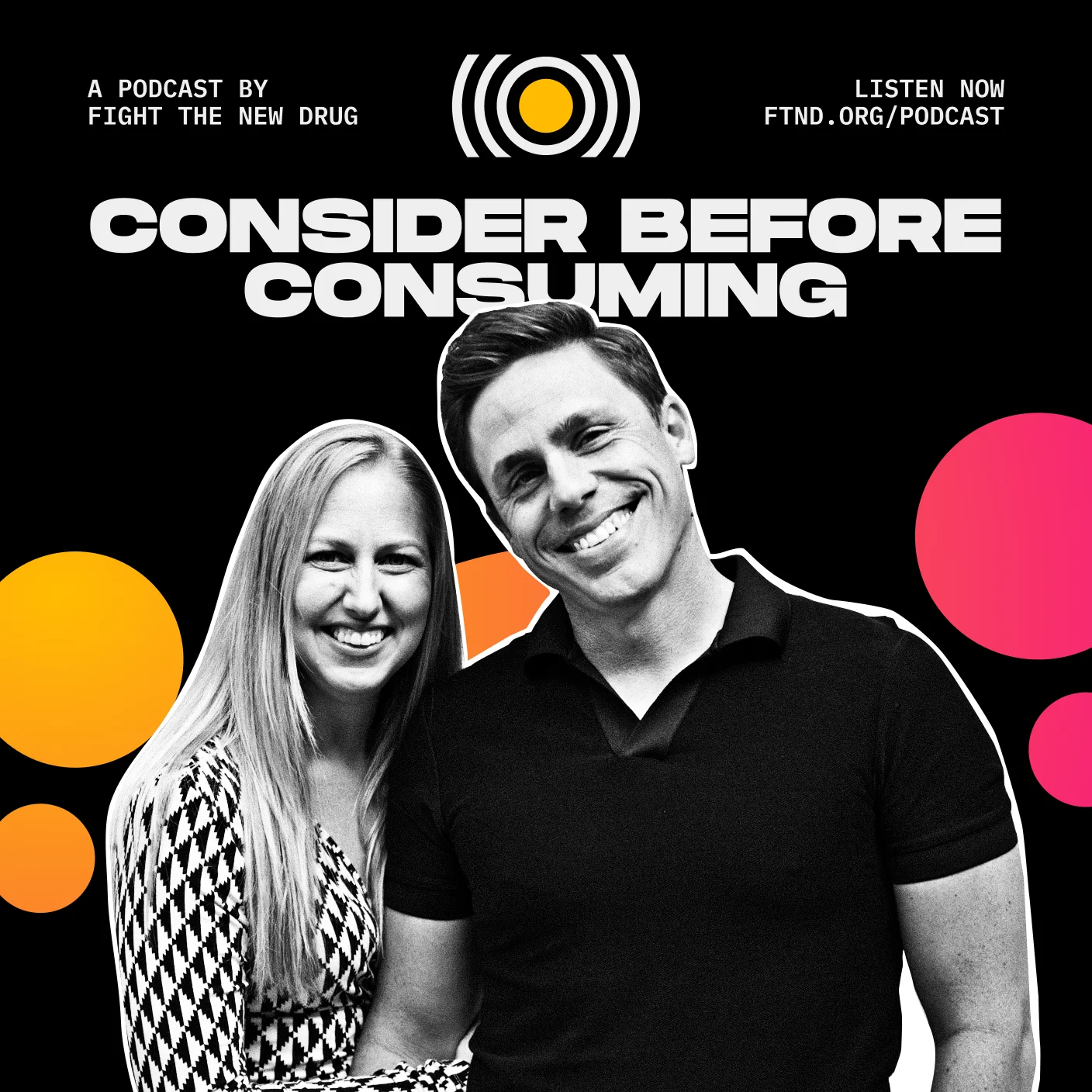
Matthew Raabsmith is a certified professional coach and relationship specialist, and Joanna Raabsmith is a licensed marriage and family therapist who specializes in trauma and betrayal recovery. Together, they co-lead The Raabsmith Team and help couples rebuild connection after addiction and relational pain.
After pornography addiction and secrecy deeply impacted their marriage, Matthew and Joanna began a recovery journey that transformed both their individual lives and their relationship. In this episode, they share what porn addiction actually did to their emotional intimacy, how betrayal trauma affected Joanna’s sense of safety and identity, and why stopping porn was only the beginning of healing.
They address questions many couples quietly wrestle with: What does pornography do to a marriage over time? Can a relationship survive porn addiction? What is betrayal trauma, and why does it feel so devastating?
Matthew and Joanna explain why honesty must come before trust, why rushing forgiveness can create more harm, and what sustainable recovery really looks like for both partners.
Whether you’re navigating betrayal, struggling with porn use, or hoping to build a healthier relationship in the future, this conversation offers clarity and grounded hope.
FROM THIS EPISODE
- Article: When Porn Use Shatters Trust: A Therapist Explains Betrayal Trauma
- Video: Our Experience on Porn Recovery and Betrayal Trauma
- Podcast: Consider Before Consuming Ep. 94: Dr. Jill Manning
- Matthew and Joanna’s Website: The Raabsmith Team
EPISODE TRANSCRIPT
Fight The New Drug (00:00)
Welcome to our podcast today. We’re so grateful to have both of you here. To start, can you each share a bit about who you are and what brought you to the work that you’re doing today?
Matthew And Joanna Raabsmith (00:12)
Yeah, we’re Matthew and Joanna Raabsmith and we got into this work because our life was wrecked by pornography and sexual addiction and our marriage was practically destroyed by it and…
We really liked each other. We liked who we were as a couple. And we really weren’t satisfied with the idea that our marriage was going to be either over or just kind of limp along for the rest of our life. And so we really made an effort to figure out what was really happening, what we needed to move forward. And then, how to help other people.
Yeah, I was gonna say personal recovery and relational recovery turned into going to professional trainings and then starting to help other couples. I’m a licensed marriage and family therapist. We’re both professional coaches. And so we grew very passionate about helping couples through this journey because there’s a lot of resources for the individuals but fewer for the relationship. And we didn’t realize how much sex addiction, porn addiction impacts the relationship before we went through our own journey.
Fight The New Drug (01:21)
And I’m so grateful you’re both here today because we’ve had people speak about these issues from so many different angles. And it’s so helpful to have a couple who’s been through this, who’s willing to share their story, who has also done trainings and has seen this kind of from both sides of the aisle. And so I’m really excited to get to speak with both of you today.
When you reflect on your own journey, what was something you initially misunderstood about pornography addiction or betrayal that later became foundational in the work you’re doing?
Matthew And Joanna Raabsmith (01:53)
Pornography addiction wasn’t a word that was getting thrown around back then. You know, we’ve been in recovery for over 13 years now, you know, porn was a thing, and digital porn use was definitely growing and expanding, but this idea of addiction really never crossed my mind when I was using. It was something I was doing. I knew I didn’t like. It didn’t feel like it was aligned with my values. It didn’t feel like it was who I wanted to be, but it was also a secret that I kept from everybody, including Joanna specifically, and so I one of I think the misunderstandings that I had was that it didn’t affect me I kept thinking that it was there but it really wasn’t having an impact on me it wasn’t having an impact on our relationship it was just this thing that I would do from time to time that I didn’t like doing almost almost like kind of like eating you know in unhealthy ways it was just this little side habit and and that really is what allowed it to fester in my life for so long.
And then I think the other misunderstanding was that it had no impact on Joanna. I made the assumption that this was my issue, had nothing to do with her, and it had no impact on her that she wouldn’t really care or it mattered to her. I was telling myself those lies and kind of believing that through much of the process.
Yeah. I think for me, several misunderstandings. I think the first one was assuming that my spouse would be completely honest with me, right? I got married wanting thatkind of relationship that was completely open and transparent. This is my best friend. can tell them anything. And I assumed he felt the same way. I assumed that he would never hide anything this important, this significant from me. And so I got into marriage based on those assumptions, similar to Matthew. It had very little understanding of pornography addiction. I knew porn was a thing that guys use, that it was hard for them to stop using it. That was about it. That was the extent of my education around that. And then
In terms of my experience, it actually took a while to even hear the words betrayal trauma and understand that this is not just about the porn addiction, the lies, the deception, the manipulation has caused so much pain, so much damage to our relationship and that has to be dealt with. I have to heal personally from that experience.
And again, yeah, like Matthew said, over 13 years ago, betrayal trauma was barely a thing. The codependent, co-addict model was what was usually used with partners. So a lot of the resources I connected with at first did not feel like they fit. They weren’t resonating with my experience until I realized, no, this is a traumatic experience for someone who’s been betrayed by their intimate partner. And that’s really when my healing journey began.
Fight The New Drug (04:46)
Right. To validate what both of you are saying, know, Fight the New Drug was founded in 2009. So a little bit before your recovery journey started. And we’re called Fight the New Drug because at that time, the concept of addiction to something that wasn’t a substance you put into your body was kind of new. know, understanding behavioral addictions was new.
Fight The New Drug (05:10)
To give a little perspective as well to the context that you were in at that time, you know, a lot of our work in the early days was just educating people on the fact that this could be addictive at all, that this could be a compulsive behavior at all. I think now that we have cell phones and people are…you know, a lot of people will casually say, I’m addicted to social media, or I’m addicted to my phone, or whatever. That concept is a little less foreign, but at that time, you over a decade ago, it was definitely a different landscape. from your perspective, how does pornography erode emotional intimacy over time, even before the betrayal is disclosed?
Matthew And Joanna Raabsmith (05:41)
Absolutely. You know, what pornography ultimately was doing for me was a way to medicate the emotional experience that I was having. I didn’t know it at the time, but as I did my own recovery and we’ve done our own research and work in the field, you really begin to understand that it had very little to do with the sexual side of things. It was really tied to the emotional side of things. And so, because I was numbing the emotions that I didn’t want to feel, like I was a failure or not enough, or I would feel alone or hopeless. I was also numbing, feeling close, feeling connected, feeling desired, feeling wanted. And so there could be no emotional intimacy because I didn’t have any emotions really to give to the relationship. We could get along really well. We had a lot of the same kind of interests. We had a lot of the same really deep core values. We felt that there was a reason that our relationship existed. And people knew us as like this super couple that had it all together.
But whenever we would try to connect on a deep level, it was like we hit this glass ceiling. And it was really confusing for me because…there would be times when Matthew would show up healthy and regulated and we could connect and it would feel good. And then the next day, I would move in to create connection, and he would get angry or withdraw or shut down. And I had no idea why. I didn’t realize that he had been using pornography and he was in a shame spiral and he was reacting to that, but I had no clue what was going on. I just knew our emotional connection, it is not stable, and I don’t know why. It was almost the knowing why that felt more scary than the instability itself.
Fight The New Drug (07:37)
And how long had you two been together at that point before this was disclosed?
Matthew And Joanna Raabsmith (07:41)
Yeah, we had been together for about three years, and I was, you know, I was under that belief that this is gonna go away when we get married, right? You know, I…I love her, we love each other, we have this great connection, we had a good physical connection, and so I thought this is not going to be something that comes back into my life. I really felt like it was going to be over. And it started kind of dripping in little bits by little bit, and then just really started to progress more and more.
And it was over those years that I could see slowly, it was kind of becoming apparent to me that it was creating a habit. Because like Joanna said, I would act out, and then I would go into this huge kind of shame and even performance cycle. I would kind of pull away from her emotionally but I would also try to do everything right. I would want to do everything perfect and right, which meant that I would also get really defensive if she didn’t like something right. I would when I would act out I would do things like clean the whole apartment so she would come home happy.
She might not say anything about the apartment and then I get really disappointed and moody and be like I’ve done so much for you, totally hiding the fact that I had been leaving the relationship, right, sexually all the while that she was out there like working on her relationship, putting into our relationship.
And was really when I finally heard a man give his story of…being in sex addiction, healing, going into recovery from sex addiction, and then the relational repair. Sharing his story, sharing his journey, I got educated, Those misunderstandings all of a sudden. I learned some things about sex addiction and what it looks like in a relationship. And as he was sharing, I was like, he is describing our relationship to a T. I was like, this has to be the thing. And if I had not heard that story, I don’t know how long our relationship would have been stuck in this spiral honestly, and so much to the point that I don’t know if we could have recovered but that after I heard that story I came home and I was like I asked Matthew point blank is this going on are you struggling with sex addiction is this the thing that is keeping us stuck and for years that answer had always been no absolutely not that’s in my past I don’t struggle with that anymore but what is it interesting was a couple months prior to that it was really coming clear to me what damage porn was doing in my life and how much it had a hold on me.
And I had gotten to this place where I was at my wits end, and I was like, if I can find a way out, if there’s a path forward, I know that I’ll take it. And Joanna came and she started telling this story about this person who made it and whose marriage made it and whose life made it. And I think in that moment, it was just the spark I needed to go from denial and kind of lying. And she asked me, point-blank, is this what you’re struggling with? And the words, yes, came out of my mouth and it was terrifying because I was like, my god, I’ve just ended my marriage, I’ve just ended everything that I care about, and she handed me the piece of paper with all the resources that she had jotted down from that talk, and she was like, okay, here you go, like, let’s get to work, and that’s really when our recovery began.
Fight The New Drug (10:52)
Yeah, and thank you for sharing all of that. That kind of evolution over the course of those couple of years until you got to that moment, was that something that, Joanna, you noticed getting progressively worse or that distance, or both of you maybe noticed that kind of decline over time?
Matthew And Joanna Raabsmith (11:14)
It’s kind of interesting because for our story, it got better and worse. We had some…this wasn’t the only cycle we had in the relationship, right? We had all these grand goals of how great our relationship was gonna be once we got married. Then we got married, and we realized relationships are really hard. And yes, there were a lot of great, wonderful moments we had. Then there were also some really nasty moments that we had where we would get in fights together, and it would escalate. We would spiral. We would hurt each other, and we knew we did not like those moments at all. Those moments were starting to ruin all the other moments we were having.
And so we actually started reaching out, looking for resources to help with those emotional spirals of cycles we would get into as a couple. And so we actually found some resources that dramatically changed a lot of those cycles. Within a period of about six months, we went from having pretty serious rage and anger issues from Matthew. We’d get into these spirals…night and day difference. I had never seen change like that happen before. We learned to understand the underlying emotions that were driving our behaviors, the impact our behaviors have on the other person’s emotions, which then drive their behavior, which hurt our emotions, right? And we learned to track that out and change it. And so we experienced some pretty significant changes, which those were wonderful.
But like we shared a little bit earlier, we kept getting stuck. And I think that’s where some red flags really started coming up for me. I was like, wait, if we could make these dramatic changes but still get stuck in these weird areas that I don’t understand, like something else has to be going on. Something has to be going on that I don’t know about. And I think it was partly that that made me think, okay, I have to figure out this other thing. Something has to be hidden.
Fight The New Drug (13:08)
And at that point, was it just, okay, you we’ve discovered what the hidden thing is. Now it’s just about stopping that behavior and we’ll be good to go. Or, you know, what was the process of learning? Maybe it wasn’t just about stopping the behavior as well.
Matthew And Joanna Raabsmith (13:19)
Yeah. I mean, it was an,”oh crap,” crap, right? I really was like, I don’t know what’s going to happen next. And luckily for us, the person who had given their testimony had also really laid out all the resources that they had taken. And one of the things that he had done was he had gone to a weekend intensive for men who were struggling with sexual addiction. And, you know, we had me signed up, I think probably within the week, I was going to be on a plane going to this intensive. And that I think really changed the game for me because really early on in the process, I got to see the full history.
One of the things we did at that intensive was we really laid out our life before our small group of men and they do an exercise called a trauma egg, which is as hard as it sounds. You basically put all your trauma into one picture. They have you draw it, which is just insane, right? And then you talk about it with people and I’m thinking this is not how this southern boy grew up. We don’t talk about bad things, right? We don’t mention anything hard, but we did that. And as I did that,
Icould see that this wasn’t just a porn issue, that this had so little to do with porn and so much to do with medicating pain. And that was so key because then it wasn’t about, I need to have just the right blocker or I just need to, to be a better person or to want sex less. It was all these things, all these confusions that I think I was able to bypass and to see that core emotion that helped me get sober really quickly. Um, but it also was helpful because they didn’t joke around about it.
When I came back from my intensive, I got started in a 12-step program, an essay program, and they were serious about sex addiction. It wasn’t, hey, it’d be nice if you could stop. It was really clear, this is gonna kill you, and it’s gonna kill everything you care about. And if you don’t want that, you’re going to have to give yourself fully to recovery. And that really woke me up, and I think that helped me to see how far I had lost myself, how really far I was away from who I thought I was as a person. I really had this idea that I was this like kind of chivalrous nice guy that cared about women and and being justice oriented and my pornography use was everything against that right? It was harming me, was harming Joanna, it was harming people across the world and I was so in my denial of my addiction and recovery helped me to see I am not who I want to be but recovery also helped me to see like but I can be who I want to be and that was the key for me was really being able to chase who I knew I wanted to be. That’s really what recovery came for me and I think was made recovery successful early on.
I know, for me, I definitely thought that in the beginning, was like, okay, he screwed up. I don’t know what he’s going to choose. Maybe he gets into recovery and he heals. Maybe he doesn’t. So I think at first I was just kind of in this holding pattern waiting to see what he was going to do if he’s going to stop the behavior.
And I thought okay if he does that I guess maybe there’s hope for us. I don’t really know what that looks like and he dove into recovery He started doing the work, started seeing progress, and I wasn’t feeling any better And I got to wonder like okay, what’s going on here? And that’s when I stumbled upon this term betrayal trauma. It was this idea that I’ve been through something too in this experience that I didn’t cause any of the pain that I was experiencing, but I was responsible to do the healing from that pain.
So getting connected to resources that help me process my experience, the impact that being in a relationship of betrayal has on a person, it changes the way I experience the relationship. And so being able to then have conversations together relationally around, we’re not just healing from porn use, we’re healing from a whole system that has entered our relationship that has been so toxic and we really have to create a completely different relationship moving forward.
Fight The New Drug (17:28)
Many couples wanna just move forward as quickly as possible after betrayal is disclosed like this. and based on your experience, what are the risks of kind of rushing that healing process after betrayal?
Matthew And Joanna Raabsmith (17:42)
First of all, we get it. We do not want to sit in the pain any longer than we have to. So absolutely understand why that would be the hope, that would be the goal. Unfortunately, when you do that, you create a lot of damage and destruction that you have to then go backwards and clean up.
One of the ways we help couples understand this is a framework we created for couples healing from betrayal called the intimacy pyramid. It is basically if you imagine a triad that looks similar to Maslow’s hierarchy of needs, with the different layers built on top of each other and it’s really important that couples go in that order of building healthy intimacy after betrayal. That first layer is honesty, right? Because of betrayal, because of the lack of honesty, everything else has crumbled.
Honesty is the absolute foundation of a healthy relationship and so on top of honesty there’s safety. On top of safety you have trust. On top of trust is vulnerability and at the top is intimacy. And for couples who jump into vulnerability and intimacy before building that foundation of honesty, safety and trust, eventually they get hurt again. It crumbles, pain starts and they feel like they shouldn’t have ever taken that risk to be vulnerable in the first place. And it’s harder than to get back to that place of vulnerability and intimacy, even if they do go back and rebuild the right way.
It really slows down the process to try to speed it up. Yeah, we let couples know when we meet with them for the first time. It’s a little bit like breaking a leg for the relationship. so early on we’re going to put it in a hard cast, and it’s going to be very immobile. There’s not going to be much you do. It’s not going to feel the way it’s supposed to feel. And that gets really frustrating for couples.
But if you do let the relationship heal by focusing on the individual processes first, that will then strengthen the relationship enough to put it in like a walking boot, right? And then a brace and then maybe eventually you are running without anything in the way. And that’s what’s really amazing is when we see couples take their time and go through the process really methodically, they actually do speed up. It actually goes faster because they have the right pieces as their foundation. And those are what really bring life to things like trust, vulnerability, and intimacy.
Fight The New Drug (20:12)
Right. Getting to that place where couples are building that foundation, starting with honesty, how do you help them work through or think through honesty and disclosure in particular in a way that supports healing rather than causing additional harm?
Matthew And Joanna Raabsmith (20:29)
Yeah, think really understanding, I work a lot with spouses who deal with addiction, the betraying spouses, right? And I will usually tell them that your disclosure has to be for you. If you’re doing a disclosure for someone else, it won’t work the same way. It really needs to be your opportunity to take a fearless moral inventory, the way they say in 12-step groups, of really what’s happened. And that’s so that you can understand really clearly for the rest of your life, this is not something I want to play around with, want to mess with and so your disclosure really becomes about this reminder for you that says I know how far I can be removed from my core values and so I’m doing this disclosure yes for my relationship yes so that my partner can have the information they need to choose the relationship but I’m also doing it for me one of the things that I failed to realize was that by lying to Joanna I was preventing from ever feeling chosen.
I thought that I was being chosen by keeping all of this from her. I thought that if she learned these things, she wouldn’t choose me. But by keeping them from her, I didn’t really know the answer. I didn’t know that if certain information came out, if she would stay or go. And doing my full disclosure really let me see. No, if she knows it, she gets the choice, and that’s terrifying for me. But I also get the experience of someone knowing me fully. Every detail, everything.
Choosing me.
And thinking about right, like Matthew said, there’s a purpose in it for the betrayer. There’s a purpose in full disclosure for the betrayed and there’s a purpose for the relationship and getting really unified on the goal then helps structure how you go about it. For betrayed spouses, I sometimes describe it as oftentimes there is what we call trickle disclosures where they get a little bit of information now, a little bit of information tomorrow or next week, in a few months we get a little bit more information and it’s just these bits and pieces trickling out which is so extremely damaging, so extremely painful. It’s like they have all these little pieces of a puzzle but they have no idea if they have all the pieces. They have no idea how those pieces fit together to create a coherent picture of the reality that they’ve lived through and that in itself is extremely traumatic to not know your story, to not know your own reality, your history.
And so one of the first steps with couples is what we call a therapeutic or a professionally guided full disclosure, where all the pieces are put together, that puzzle is put fully together and presented to that betrayed spouse so they finally can be grounded in reality and then relationally so they can be grounded together in reality. That’s really the only way a couple can move forward and heal. If you’re living in two separate realities and trying to create a relationship together it does not work and so making sure couples are aligned on the purpose, the vision, the goal, how this can be a healing step, and then the way we go about it, making sure it honors those things.
Fight The New Drug (23:42)
I love that perspective of allowing someone to fully know you and accept you and choose you and not starting with you making the decision to fully accept yourself and your own truth and what you’re experiencing as well, someone may, you know, they get to respond however they choose and you have to be making that decision for you. And that’s such a difficult place for people to find themselves on both ends of that.
Speaking about betrayed partners for just a moment, how do you support betrayed partners in separating their partner’s behavior from their own sense of worth and identity? And Joanna, did what you experienced when you first experienced betrayal shape the way that you help others now?
Matthew And Joanna Raabsmith (24:29)
Absolutely. Helping betrayed partners understand what trauma does in the brain and normalizing it, I think, is such a good first step for a lot of partners. They did feel secure in who they were. They did feel secure in their identity. They didn’t question any of that before betrayal. And then all of a sudden, through this trauma, their brain is thinking differently about themselves, their worth, their value. Are they loved? Are they accepted? And so helping them understand that trauma is so traumatic. It’s less about the thing, it’s more about how it impacts your brain, how it changes the narratives, the way you see yourself, the way you see the world.
And learning, okay, when those trauma triggers come, I start believing that new warped narrative of my identity, and you kind of get a choice, right? You either go with the trauma brain that has been created, or you go, no, I don’t want to live that way. I don’t want to give away my past to this person who is broken and in pain, but treated me in ways that were not okay and that were not acceptable. I refuse to let that inform me about my self-worth. And so it’s learning how to claim that self-worth narrative in those moments when externally, it’s really easy to believe a different narrative, right?
And so we do a lot of narrative work, we do a lot of work understanding when those pains are getting triggered, when my brain is going back into that trauma narrative and then what are the tools that can help me in that moment reground healthy narrative that I’m choosing for myself and that was absolutely a process that I went through and again We had a leg up because that was sort of the process we had gone through even before discovery when we were trying to heal our relational patterns, I realized that’s what’s happening when I get in my emotional pain I start to believe a narrative about myself about us that is not true and that’s informing my actions my decisions and so being able to go okay now is just going to impact that even greater, right? It’s going to make that even harder to get out of that pain narrative, but it’s the same steps and the same tools.
And if I can say also add to that something that we’ve seen both in our own journey and in the journey of all the couples that we’ve had a chance to walk through, it also matters a lot if the partners not, they’re not alone in their understanding of betrayal trauma. As much as sex addiction has become, I think, much more kind of culturally understood reality and especially around pornography, for you, betrayal trauma is still something that even in our professional field is still really being understood. It’s often overlooked or misdiagnosed.
A lot of times, professionals will want to talk about, you know, the partner is showing up and they’re being very controlling after they found out their husband has a porn addiction and that’s them, right? Doing the thing and they’re not realizing this is a trauma response of safety seeking.
And in our own relationship, Joanna was talking about betrayal trauma well before I was actually
in a place willing to accept it and willing to actually acknowledge the impact of what I’ve done. And that really held our own relational recovery back for years because I wanted to think, no, this has nothing to do with you. It shouldn’t have affected you that much. And it wasn’t until I started really understanding betrayal trauma and we started talking about it as a couple that our relational journey changed as well. And that’s really, really important.
And so a lot of good can be done by the spouse who is recovering from addiction to learn about betrayal trauma, but also the people around them. A lot of folks, like family members, religious leaders, these are all folks that can be really served well by understanding the dynamics that are happening in a betrayal relationship like this.
Fight The New Drug (28:24)
I’m so glad that you mentioned that because you know, it’s something that I think a lot of people can empathize with if they haven’t experienced betrayal trauma on their own, they can empathize with the idea that, you know, they understand what betrayal is in a surface level sense and they can empathize with, you know, OK, someone lied to you. People have lied to me before. But I think it really is a different thing that people don’t understand the depth of the person closest to you who you trusted the most, who you built a life with, you’ve built an identity with, who you’ve shared everything with maybe or maybe you haven’t, but you’ve shared vulnerably. You’ve you’ve had an idea of what your relationship together was and to learn that it’s entirely different than you thought it was and to learn that there’s been information you didn’t have and and you chose something, you know, without all the information, the depth of that pain and the depth of the way that that makes you question yourself. And it’s so big. And I think it’s something a lot of people truly don’t understand.
And both things can be true that your addiction started before you met, I’m assuming, and has nothing to do, where that was built had nothing to do with your partner. So it’s something you think of as separate, but the way that it affected your relationship very much is together. And so I’m so grateful that you mentioned that as well.
Matthew And Joanna Raabsmith (29:49)
And the healing journeys are also really different. You know, one of the things we acknowledge when you, when a betrayal couple comes into our office, we know we have two traumatized people. have someone who an addict was traumatized usually early on in life, some type of experience, either, either big T trauma or a little T trauma experiences. And then they maladaptively decided to use these behaviors to mask and numb. And they’ve got that trauma to deal with.
And you’ve got now a partner who’s got that trauma, but they’re living in the relationship where the trauma took place. I was doing my recovery and the relationships where my trauma took place were gone. They were out of my life. I wasn’t exposed to them. I didn’t have to deal with the people who terrorized me in middle school. didn’t have to face the relationships that were so difficult for me.
Joanna was showing up to that relationship every day and I wasn’t showing up great a lot. I was showing up defensive, demanding, hey, when are we going to get over this? Can’t you see how long I’ve been sober? And I think that’s the other piece that people often is that I’m healing from this trauma in the relationship it took place. That’s tricky. That’s challenging. It’s a different kind of level of work. And so that sensitivity to that experience, it’s always going to help the process.
I think people think that if we’re sensitive to the betrayed spouse, we’re sometimes denying the addict or the person who’s in recovery. We’re not. We’re just realizing the different experiences and how knowing those things will actually help you both make progress in a real way.
Fight The New Drug (31:21)
Very well said. You’ve spoken to this, you know, why it’s so important for each individual to do their own healing work instead of, you know, sometimes I think when an issue like this comes up, it’s perceived as just, we just need couple work, we need to work on this together. Any additional thoughts on why that’s so important in your experiences or those you’ve worked with, why it’s so important for each individual to do their own healing work as well as couple work?
Matthew And Joanna Raabsmith (31:46)
Kind of like Matthew said, both people are usually carrying a lot, a lot of trauma or lot of personal things that they need to work through before they can take responsibility for a relationship. And so doing some of those things, the other piece that we think is so important is in the safety level, when we work with couples on safety, of honesty safety, those are very individual levels where a lot of that individual work is happening. There’s still relational pieces and aspects to it, but one of the pieces in safety is called self-regulation.
And that’s where we really want both people to be empowered to regulate themselves when they get dysregulated, because man as we start to move in towards the relationship and work on the relationship, guess what’s gonna happen? We are both going to get dysregulated a lot. It’s hard. It’s painful That’s really normal and so we want both people to have the tools to be self-aware of when something is going on something is coming up for me and what do I do in that moment and that is partly to create, again, safety for the relationship, even in that individual work.
When we started recovery I knew if I was in any way responsible to regulate Matthew or help him feel better when he’s not feeling great then I am ultimately responsible for his recovery for his sobriety and that’s not a place I ever want to be that’s not a role I want to play I can never feel safe in that relationship and in the same way when my pain comes up, are those questions start coming up about my worth and my value? If I’m expecting Matthew to fix that, the person who betrayed me and demonstrated he can’t even take care of himself to the extent that he would, right, move into addiction, like that doesn’t feel like a great idea either, right? And so helping both people take their power back, learn those tools to care for themselves well, then allows them to step into that relational space a lot more quickly.
Yeah, and this is a myth that a lot of people just have about marriage and relationships in general. A lot of people think that if I can find a healthy relationship, I’ll become a healthy person. It’s just not how it works. If I’m a healthy person I’ll build a healthy relationship. What’s really cool about betrayal couples, they figure that out real fast. They realize, wait we’re going nowhere if one of us is healthy or we’re thinking the marriage is going to be the thing that saves us. We’re going to save ourselves and in doing that we’re going to create the best version of who we could be together. And that’s what’s really special.
What’s amazing about our work, we graduate couples who have the most incredible relationships. They are happy, they are playful. If you met them and knew half of the things about their story in their past, you would think, there’s not possibility that they’re this in love and this connected. But it’s because they recognize we each have a journey that we’re on and we’re going to improve our relationship by improving ourselves. That’s going to be the thing that’s going to pay the most dividends for our relationship down the line.
Fight The New Drug (34:53)
That’s beautifully said. And when we think of recovery, I think in this sense, we often think of it as only, you know, recovery for the addict and then just a healing journey. But really, you’re both recovering from these traumas as we’ve spoken about. What does sustainable recovery really look like long-term for both people in a couple as well as the couple together?
Matthew And Joanna Raabsmith (35:16)
It’s usually a lot about I think learning the rhythms that work really well for you and recognizing that those rhythms are going to be things that serve me individually but also serve our relationship. And part of the way I think this helps is recognizing that recovery life is the good life. Joanna has said so well that people think of recovery as this like wall that keeps out addiction, right? I build this wall and I can keep pouring away. That will never really be enough to satisfy. someone. They will always be thinking about what’s on the other side of the fence.
Instead, what the best is is to see recovery life as the good life. I don’t miss my addiction. I really love my recovery life. I love that my recovery life includes reflections, conversations with Joanna. It includes talking about what I’m really feeling, journaling, all of those things that I’ve learned to do in recovery and we’ve learned to do as a recovery. It’s improved everything and when you have that mindset it makes the whole process easier. It’s not something that I’m fighting the rest of my life as much as I’m embracing. And it’s mindset and it’s practical.
You have to create recovery rhythms that work for you, that work for your relationship. And so getting really practical and go, what kind of life do we want? What’s our shared vision? What are our goals as a couple, as a family? Who do we want to be? Okay, how do we live that out? And really what boundaries?
When we teach on boundaries, we talk about values-informed boundaries. These are not boundaries like Matthew said that are walls to keep us away from something. They’re healthy structures that help us live in the way we want to live if you imagine your home and the walls and the roof and the doors, right? Most people like having some boundaries in their home. I don’t know too many people who just live in a glass house with no walls and so right the boundaries in our home helps us live into it and enjoy it the way we want to. And we get to choose what those structures are, what those boundaries are, what it looks like based on our personal values.
But again, seeing them as this is what allows us to thrive rather than this is the hard work I have to do to never go back there again. That is not very encouraging.
Fight The New Drug (37:40)
How did your day-to-day life begin to change once you had all of those right tools in place, once you built that foundational safety and honesty and you were both on your own recovery journeys and leaning into that? How did your day-to-day life and your relationship begin to evolve?
Matthew And Joanna Raabsmith (37:57)
We talked a lot more, and a lot more about deeper things, about our emotions, the tools we learned helped us get into the relational context that we were experiencing. One of the things we did started very early on in recovery was a daily check-in where we would share, very structured check-in where we’d share about certain things, our needs, our desires, our feelings, what we were needing to own for the day, gratitudes, right? All these different things that we would share, we would connect.
We learned to talk about our experience of the things we were living rather than just the details, the content of those things. And really learned how to, I think, assess the connection in our relationship together. To be able to sit down and talk not just about me, not just about you, but about this third thing we’re creating together. We learn to talk about our relationship. We learn to care for our relationship. Advocate for the health of our relationship in a way that we didn’t before.
I think in general we also just got more intentional. Those early years, I want to go back and be like, do something, right? Make a decision, you know, just even just spend time differently because I think we would, days would go by and we’d go, what did we do? I don’t know. And recovery taught us about being more intentional and intentional might look like, are we going to watch that show or not? Is that really what’s going to be good for both of us? And we might say yes to that. And I said, but we would be intentional about it rather than just kind of letting life kind of flow through us.
I really felt like recovery taught us to take hold of our life, to start really choosing what we wanted, making that choice together, and feeling better about those decisions. And I think raising our standards and expectations a little bit more.
You learn so much in recovery and right and more than probably most people wanted to or expected to learn right and so not just about the unhealthy pattern of addiction or even betrayal but all the things in life that can pull us out of our experience that can distract us that can cause us to numb emotions and so we have a lot of intentions as a family around how we spend time in front of screens or if we spend time in front of screens, the foods that we are eating and how that impacts what we’re feeling, how much sleep we get, right? What kind of movies, all sorts of things, are informed because of what we learn through the recovery process.
Yeah, I grew up in a house where we had probably maybe two TVs in every room. Like it was just that you had a TV everywhere, and I can remember we had a neighbor come over a couple months ago and needed to borrow something. He was walking around our house and we were leaving and he goes, okay, I just got to ask you, where are your TVs?
And I was like, oh yeah, don’t really, mean, there’s one in a closet that we pull out for movies every once in while. And he was like…how do you do it?
And I was like, it’s just, it’s how we live now, right? And so those are the kind of things that are different and it’s not less than, it’s more than. We still like movies. We love watching things and entertainment, but we recognize the place it has in our life. And that feels like we have control of it rather than it having control of us.
What recovery taught me, porn had control of my life. It was running the show and really, recovery gave me the choice to say, do you want it back? Do you want control of your life back and I kind of like that. Most people like having control of their life and once they get it they’re like I’m gonna keep it that way.
Fight The New Drug (41:31)
And I love just the note of zooming out a little bit because I think so often when couples, you know, there is a disclosure or they want to disclose or they know this is going to come up, there’s this fear that this will be the only thing we ever talk about ever again for the rest of time. And even in the recovery process, it does, you know, consume so much of your capacity and your individual work and your work together. But also as you begin that healing and you have more of that vulnerability and that those foundational levels of honesty,
Fight The New Drug (42:01)
and safety, then you have space for the intimacy in other areas as well. You have space to share and be seen and known in other ways as well that I think is such a beautiful piece of this that sometimes gets forgotten when we’re so focused in on that trauma.
We would love to ask both of you some of the misconceptions that we often hear on social media or get responses to because of your work, because of your experiences. A few often that we hear are, quote, “porn doesn’t destroy marriages, it helps them.” That’s a common sentiment that we see.
Or, this is a direct quote, “take care of what you should be taking care of and he won’t have any reason to look at porn”. We unfortunately see things like that as well. I would love to hear your thoughts on those sentiments.
Matthew And Joanna Raabsmith (42:55)
I’ll take the latter, maybe let you take the former.
It’s so, yeah, it’s like cringe, they’re both cringe-worthy, right? It’s like, ooh, it’s so scary that those are still being proliferated, those kinds of ideas, because we sit and we see the damage firsthand, the pornography that betrayal does. And not even talking about the relational betrayal aspect that’s so damaging, pornography just on its own is so incredibly damaging.
It warps, it shapes how people view intimacy, view sexuality, what it should be, what healthy sexuality looks like. And there’s been a lot of scary research recently, just the direction pornography is even headed and what people are consuming and then bringing into their relationships, whether they’re conscious of it or not. It’s amazing how many couples we work with and ask, how is that informed how you’ve showed up in our relationship sexually? And the addict sometimes goes, it hasn’t. And the wife sitting there going like, no, I could name tons of experiences that now make so much sense because I now know that you are addicted to pornography, right? Really dangerous. Yes, my gosh.
Fight The New Drug (44:14)
Talk about losing control, right, of, you know, and having something else control you.
Matthew And Joanna Raabsmith (44:19)
Absolutely, and so just thinking about like the warped understanding and just the selfish nature of pornography, it is not built for creating relational intimacy. It’s what I want when I want it how I want it with who I want, right? Like, there’s no collaboration there. There’s no give and take with that person. There’s no true vulnerability on both sides and intimacy being created.
And when that is shaping my view of a relationship with sexuality, then I come into a relationship, I expect that. And if I don’t get it, I may go into, we call it destructive entitlement, and I may show up in emotionally abusive ways in the relationship. And so, yeah, there’s so many reasons it’s damaging to relationships.
one of our professors in grad school said this, I think so wonderfully, said porn and bad sex in general is like candy. It satiates but it never satisfies and it actually leaves us more hungry than before and so we talk to people about pornography and destructive sexuality because of the damage it does to you. It gets you further from what you want and this idea that using pornography or going outside of the relationship ever has to do about the way the other person is showing up is an absolute falsehood.
Joanna was showing up faithfully to the relationship and I took that faithfulness and still chose that destructive entitlement. It had nothing to do with her. She could not have produced in me my own sobriety, my own freedom from that. And that’s, think, something that’s so important. People assume that, he or she even is going to this because of the way the other person is showing up.
Absolutely not. It’s a choice I make and and knowing that it’s a choice because like Joanna was saying if it’s her job I have no freedom I’m now under her control and so part of learning that it was my own addiction was helpful to be like I’m the one that gets to decide if this comes back. Joanna doesn’t have to decide it and I don’t have to look to her to decide it for me I actually get to decide that and if she stays with me I get to decide it if she does not I still get to make that choice for me and I think that’s where the true freedom is.
These quotes honestly hurt people because they’re they’re lying about what’s real and what’s possible for people and I think that’s what we’ve really dedicated ourselves to is wanting people and couples to know it is so much better on the other side like this is not like hey you’re kind of sick and we can make you a little less sick it’s like hey you’re dying we can bring you to life like you can’t even imagine.
Fight The New Drug (47:03)
Thank you for responding to that. I think it’s something we see more often than we would like to, unfortunately. The victim blaming and it’s rough out there on the internet, as we all know. And I think it goes back to the sentiment so many people have of, okay, well, porn’s something I can just do because I’m single, but when I’m in a relationship, it will just stop. And that always outsources the control over this habit to someone else and the responsibility to someone else.
And the truth is, it is, as you mentioned, a choice that a consumer is making. And it’s important to be able to always acknowledge that and take accountability for that.
As we wrap up today, what do you most hope that our listeners take away from hearing this conversation?
Matthew And Joanna Raabsmith (47:50)
I hope that they picked up something along the way that gives them new energy to step into a path of healing for themselves wherever they are along the journey. If it’s on their own, if it’s in relationship, just to know that healing is absolutely possible.
And like Matthew was sharing earlier, it’s really, really good on the other side. It’s a place where you feel like you’re thriving. You’ve taken back control of your life. You’re able to feel joy and hope and connection again that it’s worth the hard work no matter where you’re at to keep moving forward.
And I think we didn’t mention this specifically but something that’s important to know is any couple can radically change where they are any person can.
One of our couples that we worked with a number of years ago, there had been a secret addiction to pornography and sexual acting out for close to 40 years in their relationship. And you would have thought with that much history, there’s no way that that person, one, would be able to stop or two, that that couple would have a connected relationship. And their recovery journey was amazing. The level of connection and joy and understanding that they have with each other, really, it almost feels like they didn’t have that as a part of their journey, but it’s that they work through it.
And so if you’re out there and you’re thinking, well, but it’s been too long, right? There’s too much that’s happened. I will tell you, it’s incredible how resilient relationships are and how resilient people are. We are amazed at the fortitude of betrayed spouses, their willingness to really step into the process and say, if this person’s willing to get help, if they’re willing to try to change, more often than not, that betrayed partner is not just sticking it out but really becoming a part of the healing process.
So just encouraging people if they’re wondering like can this actually be our story? It can. It is amazing the amount of transformations we’ve seen and how radical those transformations are from where people feel at those moments of their lowest.
Fight The New Drug (49:59)
And you know, for the work that you do and so many couples that are on this journey that do find a way through this and recover and have beautiful, thriving, wonderful relationships, there are also couples who find their way through this and in that healing journey, decide not to stay together as couples. And do you have hope for those individuals as well?
Matthew And Joanna Raabsmith (50:20)
Yes, my goodness, absolutely. And that’s part of what we love about the intimacy pyramid. It is not just for couples. It is the healing path for the individuals as well. And being focused on your own individual healing will bring you freedom no matter what your partner decides to do. And so I always tell betrayed spouses that the power is in you to heal. It can be really easy to think, I’ll never be over this pain unless this person heals and repairs.
You don’t have to wait on them for your healing. And so I’ve worked with so many women who have been committed to doing their own work, even in the face of a spouse who is choosing not to. And it’s incredible to see the strength. They start using their voice. They start trusting their gut. They start standing up, having boundaries. They are connected to their self-worth again. It’s beautiful to see how they can flourish when they stay focused on their own healing journey.
Fight The New Drug (51:19)
For you, Matthew, for someone who maybe discloses and their partner chooses not to stay and work through it with them. Do you have hope for that individual as well?
Matthew And Joanna Raabsmith (51:27)
Absolutely, we’ve seen the same thing. You know, not every relationship makes it, but what I’ve seen is people who choose their own recovery, they never feel sorry for that. They never regret that decision. They’re always so thankful for the journey that they’re on.
And I’ve seen men that I have worked with whose marriages were not saved, who’ve gone on to new relationships or gone on to seasons of singleness and they are 100% fulfilled. Like Joanne is saying, they’re not looking for that relationship anymore to fulfill them. But then when they find it, they recognize, this is the way I was designed to be in relationships from the get-go. This is the way the relationship was designed to work.
And so it is always worth it. We used to say that at our 12-step meetings, right? If the work is worth it and you’re worth it, and it’s so true, we’ve really always seen the work we do on a relationship and the work we do individually to pay off. It is dividends that continue to grow year in and year out.
Fight The New Drug (52:28)
Thank you both so much. As always, I would love to ask if there’s anything else you were hoping to share today that we haven’t been able to speak about yet.
Matthew And Joanna Raabsmith (52:39)
We did it. I think we got it.
Fight The New Drug (52:43)
Amazing.
Well, I want to thank you both so much for your time today. I’m really excited for our listeners to get to hear this conversation. I know this will be something that helps individuals and couples or maybe individuals who aren’t even in relationships right now but hope to be in the future. And I…
I think that the ripple effect of conversations like this is so much more powerful than any of us can really see or tangibly know. And I’m so grateful that you both were willing to share this and for the work that you’re doing as well to help others.
Matthew And Joanna Raabsmith (53:14)
Thanks so much for having us.
Fight the New Drug collaborates with a variety of qualified organizations and individuals with varying personal beliefs, affiliations, and political persuasions. As FTND is a non-religious and non-legislative organization, the personal beliefs, affiliations, and persuasions of any of our team members or of those we collaborate with do not reflect or impact the mission of Fight the New Drug.
MORE RESOURCES FROM FTND





A database of the ever-growing body of research on the harmful effects of porn.